
Last updated September 20, 2026
Full 25-point door and opener safety check with every visit - springs, cables, rollers, tracks, and your LiftMaster or Chamberlain opener included
You get a price before we start. It does not change when the truck arrives.
 Before
 After
After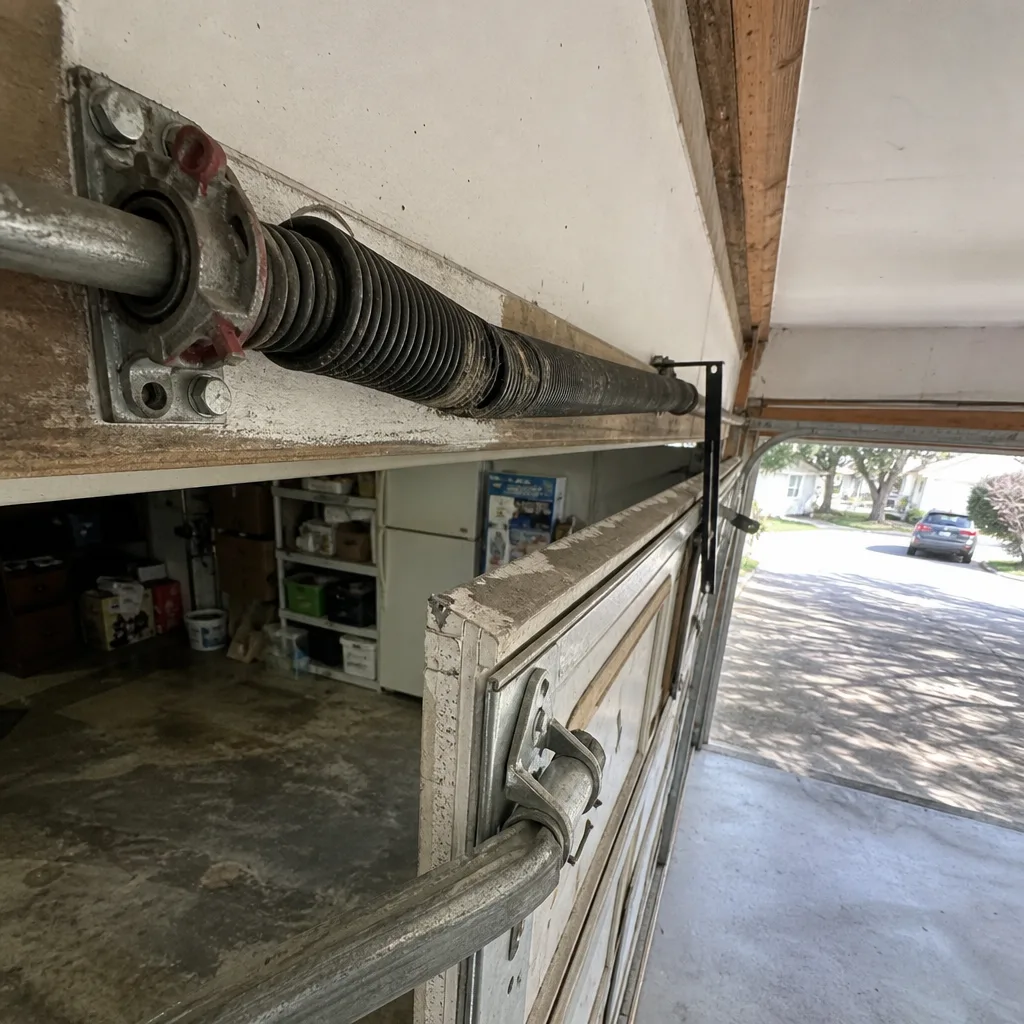 Before
 After
After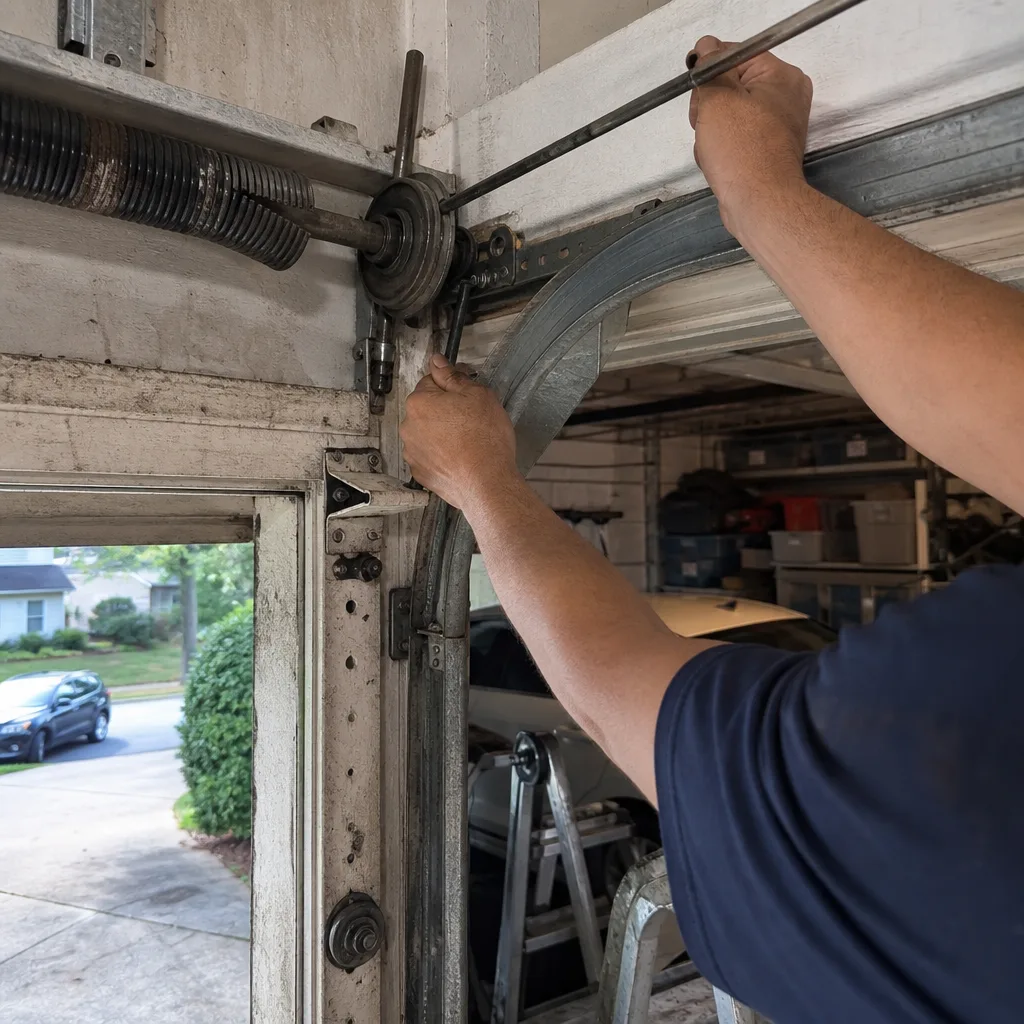 Before
 After
AfterGarage Door Repair Maintenance Checklist for Johns Creek Homeowners
The word “inspect” appears eleven times on the average garage door maintenance checklist without once describing what a failed component actually looks like. That’s not a checklist. That’s liability padding. In Johns Creek, where summer humidity sits above 70 percent and winter temperature swings can drop 30 degrees in a single afternoon, your garage door cycles through conditions that accelerate wear on specific parts in specific, predictable ways. This guide names those failure modes. You’ll learn what a torsion spring looks like before it breaks, how to spot cable fraying early enough to act, which lubricants make sense in Georgia’s climate, and when to photograph a component instead of touching it.
Quick Answer
A garage door maintenance checklist for Johns Creek homeowners should cover seven components twice a year: torsion springs, lift cables, rollers, hinges, tracks, the opener’s safety sensors, and the balance test. The checklist only works if each item describes what failure looks like. A torsion spring with a visible gap between coils is weeks from breaking, not months; cable fraying at the drum-end gives you a repair window, while fraying at the bottom bracket means the cable can drop the door without warning. Most items take under ten minutes and require nothing more than a smartphone camera and a can of the right lubricant, but anything involving spring tension or cable replacement belongs with a licensed technician offering Garage Door Repair services.
Table of Contents
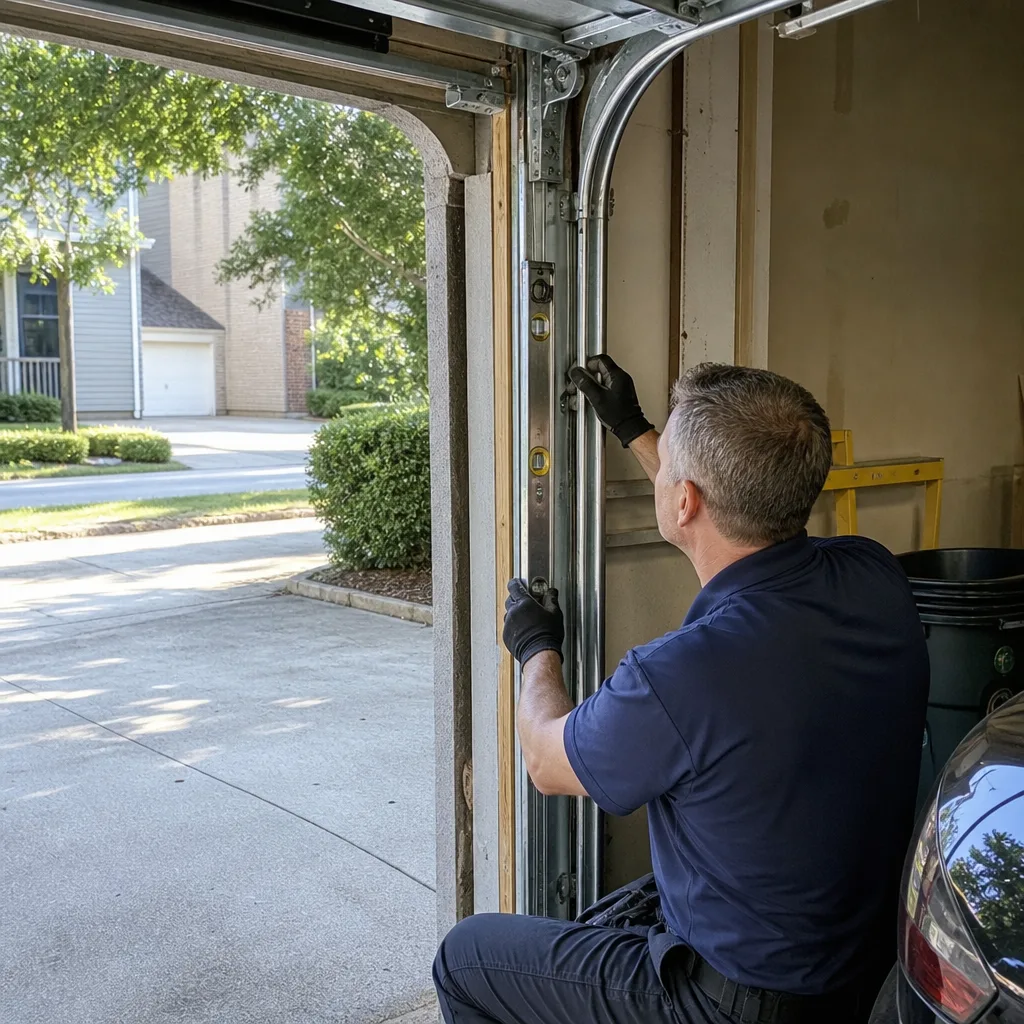
- Torsion Springs: The Gap That Predicts a Break
- Lift Cables: Drum-End vs. Bottom-Bracket Fraying
- Rollers and Hinges: Georgia Heat and the Wrong Lubricant
- Tracks and Alignment: What a Gap on One Side Means
- Safety Sensors: The One Test You Should Run Monthly
- Seasonal Timing: March and October in Johns Creek
- The Photo Documentation Habit
BeforeAfterTorsion Springs: The Gap That Predicts a Break
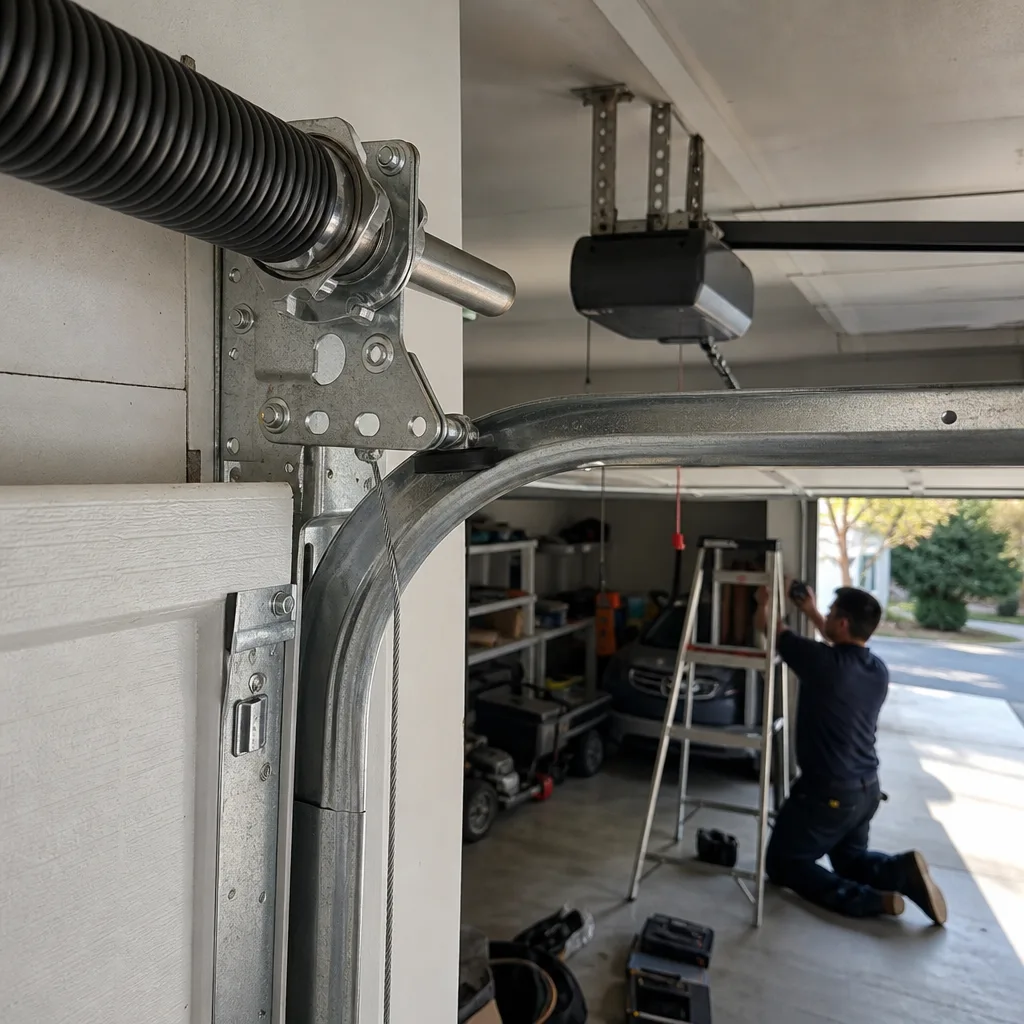
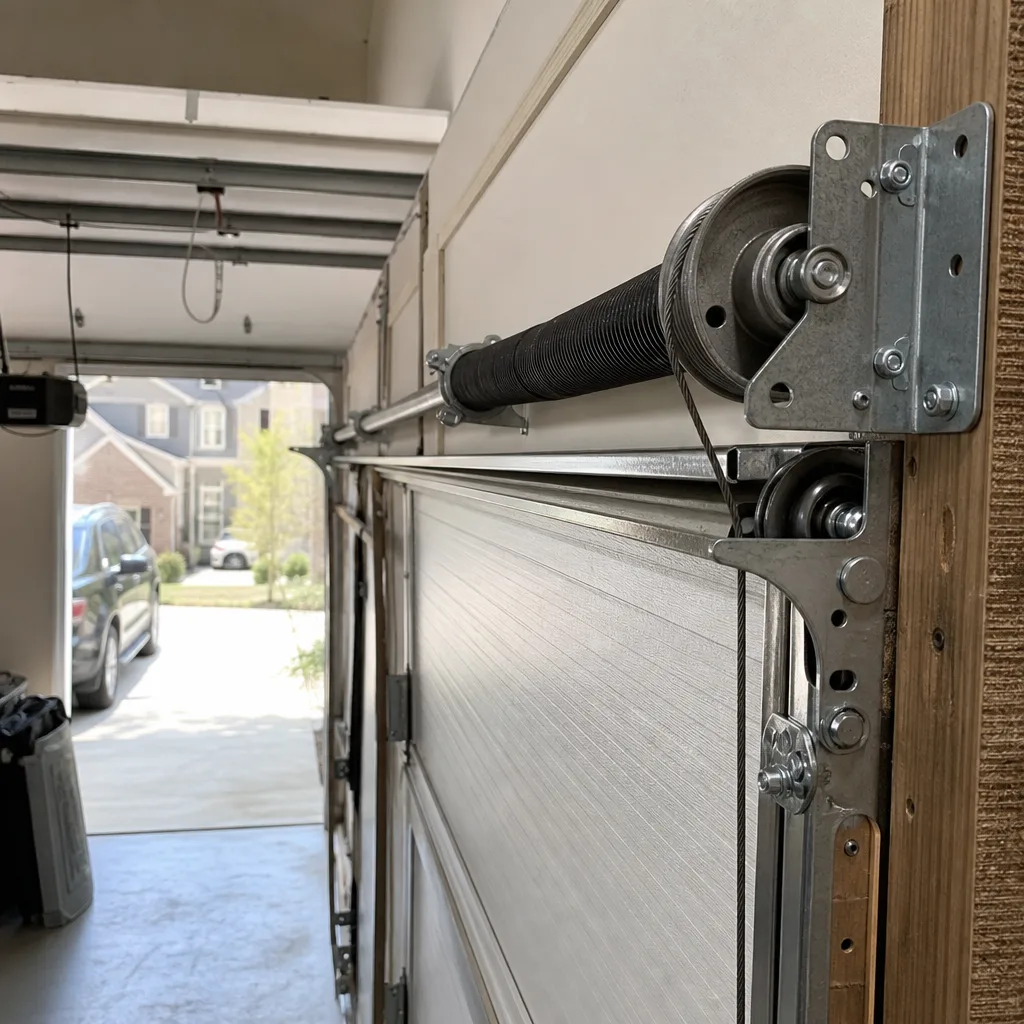
Torsion springs are the steel coils mounted horizontally above your garage door opening. They counterbalance the door’s weight, which means they hold enormous tension at all times, even when the door is closed. In Johns Creek, most single-car doors use a pair of springs rated for 10,000 cycles, which translates to roughly seven to nine years of normal use. A spring that has lost wind starts showing a visible gap between adjacent coils.
Here’s what to look for, and what it means:
- A gap of 1/16 inch between coils: The spring has begun to fatigue. This is normal wear, but it’s also the earliest warning sign. Photograph it and re-check in three months.
- A gap of 1/8 inch or more: The spring has lost noticeable tension. You’ll likely also notice the door feels heavier when you operate it manually. Schedule a replacement. This is the window where a new spring costs the standard rate, not the emergency rate.
- A clean break with separated coil ends: The spring has failed. You’ll typically hear a sound like a firecracker from inside the garage. The door will not open. This is the failure mode that turns a $280 repair into a $700 emergency call.
In our experience across Johns Creek neighborhoods like Medlock Bridge and Abbotts Bridge, springs most often break in October and November. That’s when the first significant temperature drop of the year contracts the steel after months of humid Georgia summer expansion. A spring that measured no gap in August can show a 1/8-inch gap by mid-November. Checking in October, before the first cold snap, catches most of what will fail that winter.
Do not attempt to adjust or replace a torsion spring yourself. The tension in these springs is sufficient to cause serious injury. The winding cone, the cast-iron fitting at the end of the spring, is under constant rotational force. A trained technician uses specific winding bars and a precise procedure, and even then the work carries risk. This is not a cost-saving task for a Saturday afternoon. If you see a gap, photograph it and call a professional. For a deeper look at how spring failures connect to broader repair needs, see our guide on Garage Door Repair in Johns Creek.
Lift Cables: Drum-End vs. Bottom-Bracket Fraying
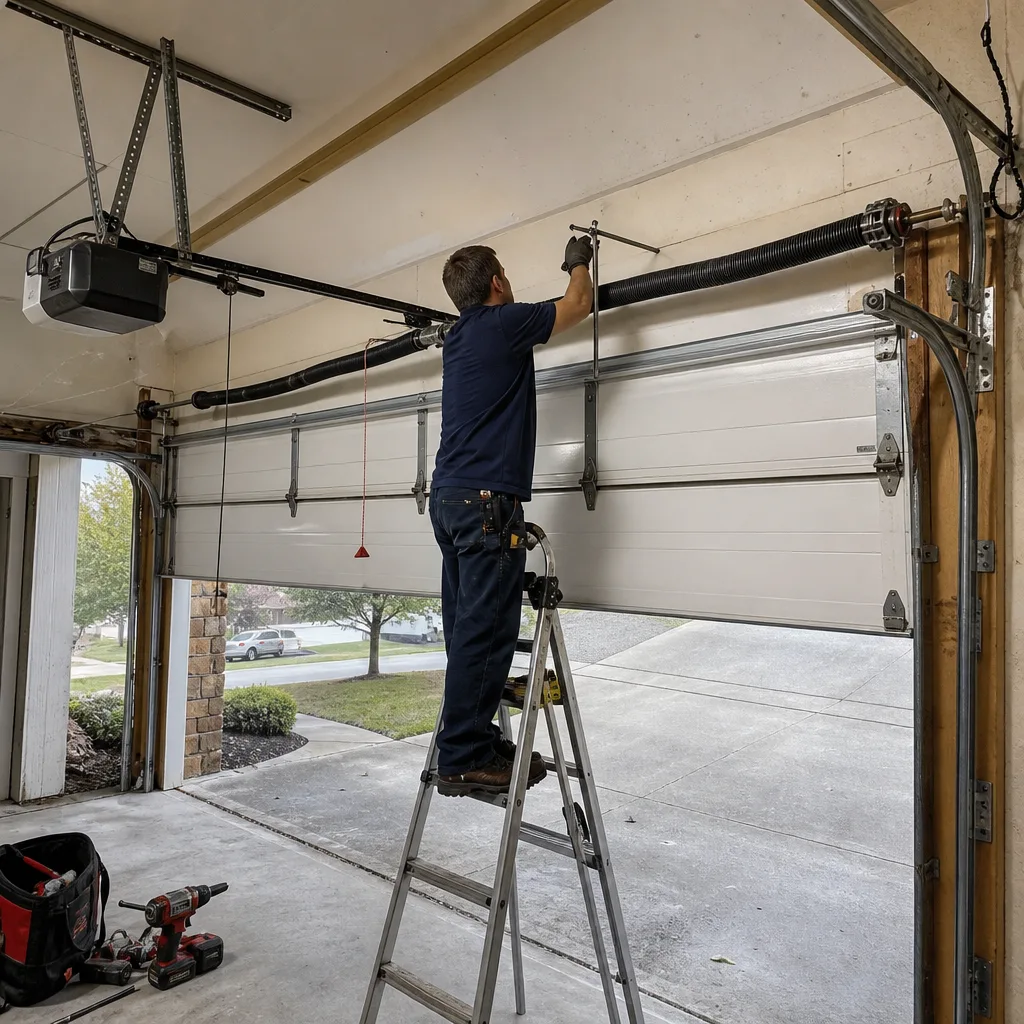
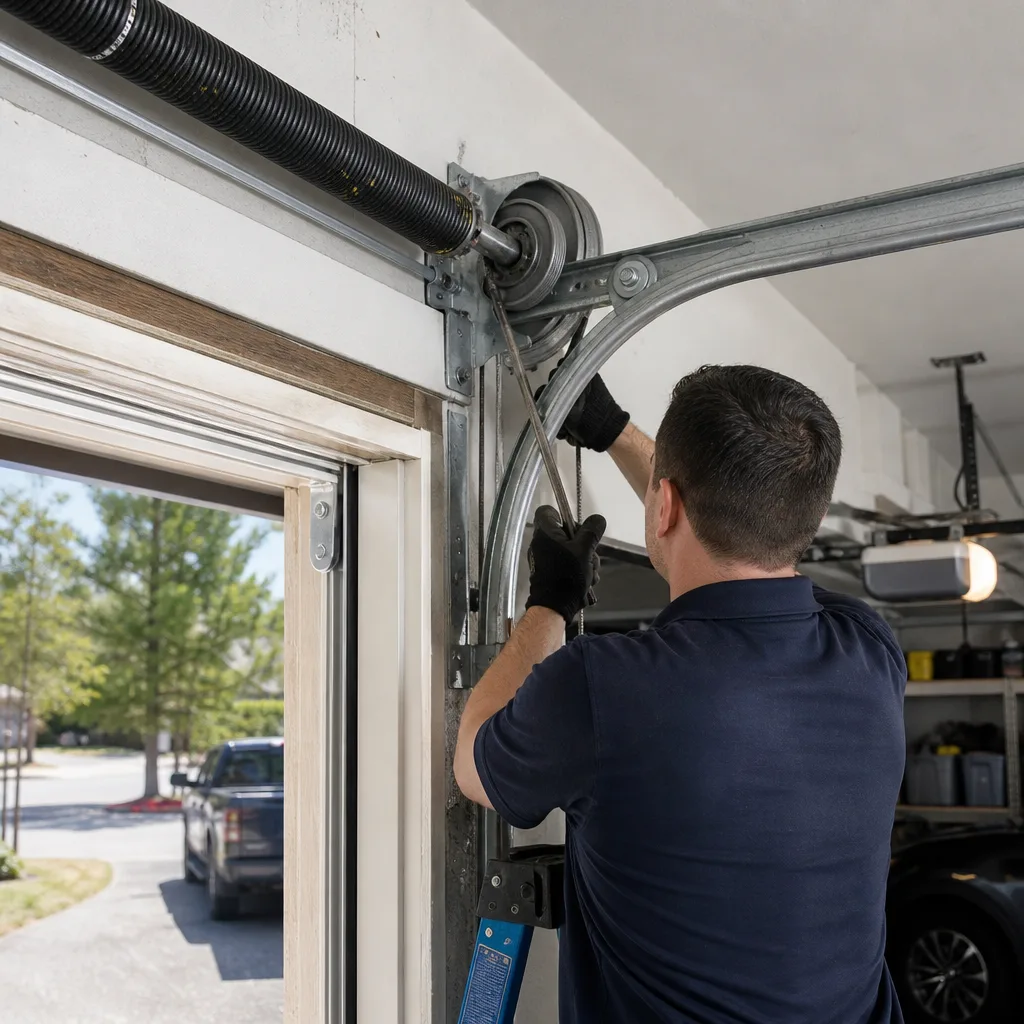
Lift cables are the steel cables that run from a drum at each end of the torsion bar down to a bracket at the bottom of the door. They carry the door’s weight during every cycle. Cable failure is the most dangerous failure mode in a garage door system because when a cable snaps, the door can drop without warning. The door doesn’t slowly sag; it falls, or one side drops hard enough to derail the entire assembly.
Fraying happens at one of two locations, and the difference matters:
Drum-End Fraying (Act Early)
When a cable frays where it wraps around the drum, you’ll see individual wire strands poking outward from the cable’s surface, usually near the top of the cable run when the door is closed. This is the good kind of bad news, because drum-end fraying progresses over weeks. The cable remains under tension and continues to work while the warning sign is visible. Photograph it, stop using the door if you can, and schedule a cable replacement. In Johns Creek’s humid summers, drum-end fraying accelerates when exposed cable strands start corroding. A rusty strand at the drum in July will typically snap by September.
Bottom-Bracket Fraying (Act Immediately)
When a cable frays where it attaches to the bottom bracket, near the floor on either side of the door, the failure window is measured in cycles, not weeks. The bottom bracket is the point of maximum stress concentration. Fraying here means the cable’s effective diameter has already been compromised. One more full cycle can be the one that drops the door. If you see shiny wire strands, a visible thin spot, or any broken strand near the bracket, stop using the door until a technician has replaced the cable.
The bottom bracket cable is typically held by a small retention clip and a looped end. It cannot be safely re-secured once the cable has begun to unravel. Replacement requires releasing tension at the drum end, which means working near components under high spring tension. This is technician work. What you can do is identify the fraying early enough to schedule replacement before the failure.
In a Garage Door Installation in Johns Creek, our technicians photograph every cable at both ends, and we include those photos in the documented record the customer receives. But the same habit works for homeowners: a smartphone photo of each cable end, taken in March and October, gives you a direct comparison against which to judge wear.
Rollers and Hinges: Georgia Heat and the Wrong Lubricant
Rollers are the small wheels that ride inside the vertical and horizontal tracks, connected to the door by hinges. Johns Creek garage doors typically use one of three roller types: steel with ball bearings, nylon with ball bearings, or, on newer doors, nylon without exposed bearings. Each wears differently in Georgia’s climate.
Here’s the failure mode for each:
- Steel rollers: Listen for a rumbling or grinding sound during operation. That’s typically a bearing that has lost its lubricant and is running metal-on-metal. The roller will eventually seize, which then grinds a flat spot and causes the door to shudder in the track.
- Nylon rollers with bearings: Look for visible chipping or a flattened area on the wheel’s outer surface. Nylon degrades under prolonged exposure to high heat, and Johns Creek garages routinely reach 110 degrees in August. A chipped nylon wheel can throw the door slightly off balance mid-cycle.
- Nylon rollers without bearings: These wear fastest of all, typically showing visible play within three to four years. You’ll see sideways wobble when the door is in motion. Replace them when the wobble is visible, not when the wheel fails.
Hinges are the metal brackets that connect each door panel and hold the roller stems. Worn hinges show as visible lateral movement in the roller stem, a rounded-out hole where a bolt should sit tight, or a door that bends slightly at the joint during operation. The hinge is failing when the roller is no longer held perpendicular to the track.
The lubrication point matters more in Johns Creek than in most markets because of our humidity cycles. Petroleum-based lubricants, including WD-40, will coat a nylon roller and attract dust and pollen in the dry weeks, then oxidize in the humid weeks, leaving a sticky residue that accelerates wear. What you want on nylon rollers is no lubricant at all on the wheel surface. A silicone-based lubricant on the roller stem and the hinge pivot points is the right call. For steel rollers with exposed bearings, a lithium-based grease applied sparingly to the bearing face is correct. Never lubricate the track itself. A greasy track causes the rollers to slide instead of roll, which wears flat spots faster.
If you’re working on a door installed by Clopay or Amarr, check the manufacturer’s roller specification first. Clopay’s standard nylon rollers are rated for 100,000 cycles in normal conditions, but the rating assumes a clean, dry environment. A Johns Creek garage in August is not a clean, dry environment. The practical cycle life in our climate runs closer to 60,000 cycles, which for a door averaging four cycles a day works out to roughly 11 years, less if you park two cars and the door cycles six or seven times daily.
Tracks and Alignment: What a Gap on One Side Means
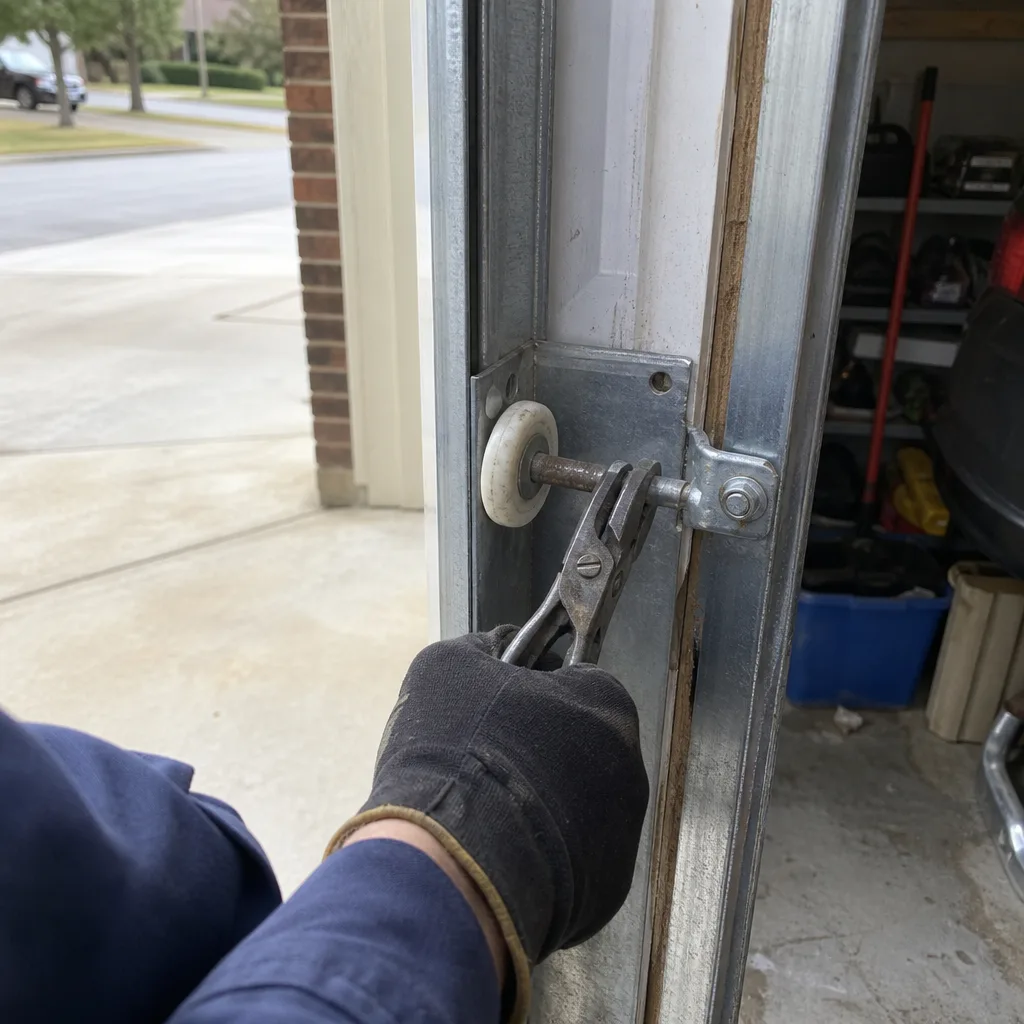
The vertical tracks run up either side of the opening, curving into horizontal tracks that carry the door back into the garage. Alignment problems show up in several specific ways, and most are visible without touching the door.
Stand at the back of the garage and sight down the track on each side. Healthy track is straight in its entire run, with a consistent gap to the door edge. What you’re looking for:
- A gap between track and door edge that’s wider at the bottom than the top: The track has been knocked out of vertical. This usually happens when a car bumper clips the track or when a lawn mower gets pushed into it. It’s a bracket adjustment, not a track replacement.
- Shine marks or grooves on the track interior: Normal wear, but if the groove is deep enough to feel with a fingernail, the track surface is no longer smooth, and the rollers will chatter. This is most common on the curved section where vertical meets horizontal.
- Loose mounting brackets: Try to wiggle the track by hand. Any movement at the bracket means the lag screws have loosened. In Johns Creek’s clay-heavy soil, garage slabs shift seasonally, and that shift transmits directly through the track brackets. A loosened bracket is a two-minute fix with a socket wrench, but an ignored one eventually pulls the track out of alignment enough to derail the door.
Listen to the door during operation. A consistent scraping sound that doesn’t change with the door’s position is usually a track alignment issue. An intermittent squeak that matches the roller rotation is a roller bearing issue, not a track issue. Knowing the difference saves you from lubricating a track or replacing rollers that were never the problem.
Track alignment adjustments can move the door’s center of gravity. On a door with torsion springs, even a half-inch track adjustment changes the load distribution. It’s not a task that requires dangerously releasing spring tension, but it does require understanding the door’s balance. If you’re not certain the adjustment is minor and safe, this is where a scheduled maintenance visit makes sense.
Safety Sensors: The One Test You Should Run Monthly
The safety sensors, mounted six inches off the floor on each side of the door opening, project an invisible infrared beam. If anything interrupts that beam while the door is closing, the opener reverses. This is not a convenience feature. It’s the component that keeps a door from closing on a child or a pet. Federal regulations have required these sensors on all residential openers since 1993, and every major brand, including LiftMaster, Genie, and Chamberlain, builds them the same way.
The test takes 30 seconds:
- Press the wall button to close the door.
- As the door closes, wave your foot through the beam path between the two sensors.
- The door should immediately reverse and return to the open position.
If the door does not reverse, check the alignment indicator light on each sensor first. A lit green or steady light means alignment is good. A flickering or unlit sensor typically means the bracket got bumped, which is common in garages where bikes hang on the walls or storage racks sit near the door opening. Gently adjust the sensor bracket until the light steadies, then repeat the test. If the sensor won’t align or the light stays unlit, the sensor may have failed internally. Replace the pair, not just one. Sensors are sold as matched sets, and mixing an older sensor with a newer one on the same opener can cause inconsistent triggering.
Dust on the sensor lens is a common problem in Johns Creek during pollen season, which runs from late February through April. Pollen accumulates on the lens and diffuses the beam, triggering false reversals. Wipe the lens with a dry microfiber cloth monthly during pollen season. This is the most common cause of “the door won’t close” calls we field in March and April.
If your opener is old enough that you’re not sure when the safety sensors were last checked or replaced, a full Garage Door Opener Repair & Installation in Johns Creek assessment may be worth scheduling. Openers have a service life, and the safety system is not the place to stretch it.
Seasonal Timing: March and October in Johns Creek
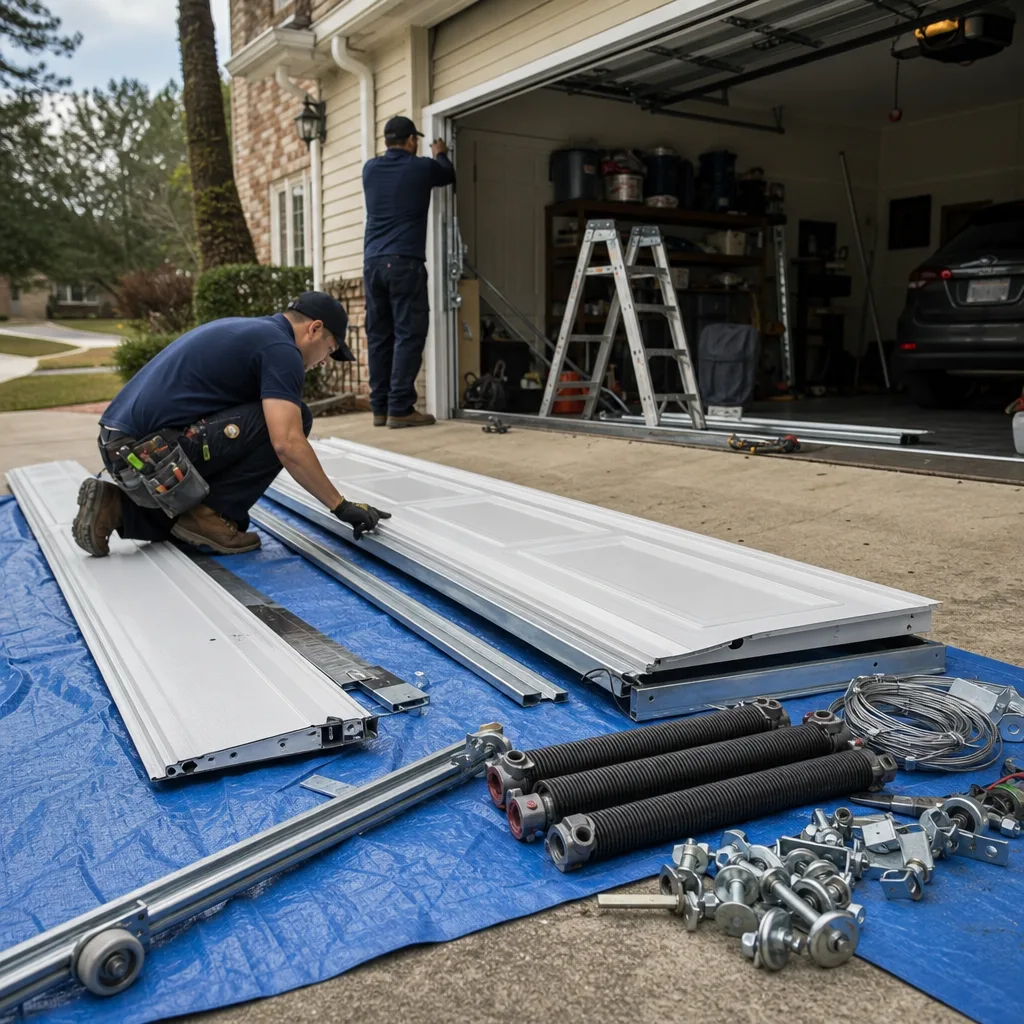
Most national garage door maintenance advice says “twice a year” without telling you which twice. For Johns Creek, the answer is specific: March and October. Here’s why.
March (pre-humidity season): By early March, the pollen is starting but the heavy humidity hasn’t arrived. This is the right window to do the maintenance that prepares the door for the hard months. Lubricate hinge pivots and roller stems with silicone, because the lubricant will still be in place in July when the humidity hits. Check the safety sensor lenses, because pollen season is starting and they’ll only get worse through April. Inspect cables at both ends for any rust that developed over the relatively dry winter. Wipe down and photograph the torsion springs so you have a clean early-warm-season baseline.
October (pre-temperature-swing season): October is the month when Johns Creek sees its first meaningful temperature drop, often a 20-plus-degree swing in a single week. This is when torsion springs snap and bolts loosen as metal contracts. Check the torsion spring gap against your March photos. A spring with no gap in March and a 1/16-inch gap in October is still serviceable, but it’s telling you something. Re-tighten any mounting brackets that loosened over the summer’s expansion cycles. Inspect the bottom bracket cable ends for wear that may have worsened during the humid months. Lubricate again with silicone, since the dry winter ahead is easier on components than the summer just ended, but a freshly lubricated hinge set survives the temperature swings better.
Skipping October in Johns Creek is the single most common mistake we see. Most spring failures happen in the fall, not because the spring reached its cycle count, but because the first cold snap caught an already-weakened spring. The fall check finds the weakened spring while there’s still time to schedule a routine replacement.
The Photo Documentation Habit
Every maintenance task on this list is more useful if you photograph the component first. A dated photo creates a comparison baseline. Six months later, that baseline is the difference between “I think the gap is bigger” and “the gap measured 1/16 inch in March and 1/8 inch in October.”
Here’s the simple version of the habit:
- Stand in the same spot each time. For springs, that’s about three feet back from center, level with the torsion bar. For cables, that’s close enough to see individual strands at the bottom bracket.
- Take the photo before you do anything else. No wiping, no adjusting, no lubricating. You want the condition before maintenance, not after.
- Name the file with the component and the date. “spring-left-2025-03-14” takes ten seconds and makes next season’s comparison instant.
- Take a second photo after you’ve done the maintenance, so you can see what “maintained” looks like compared to what “six months old” looked like.
This is the same principle behind the documented photo record included with every Servo Garage Doors Johns Creek home visit. When a technician photographs the failed component before quoting a replacement, you’re not being asked to trust a verbal description. You’re seeing the same evidence the technician saw. That founding rule is Clause 4 of The Haven Standard, and it traces back to Servo’s start in 2015: photograph the failed part, show it to the customer, then quote the fix. The homeowner version of that habit costs you nothing and makes every future inspection actually useful.
For a full picture of what a documented repair looks like in practice, our page on Garage Door Repair in Johns Creek walks through the written-price-first process in detail.
Common Mistakes to Avoid
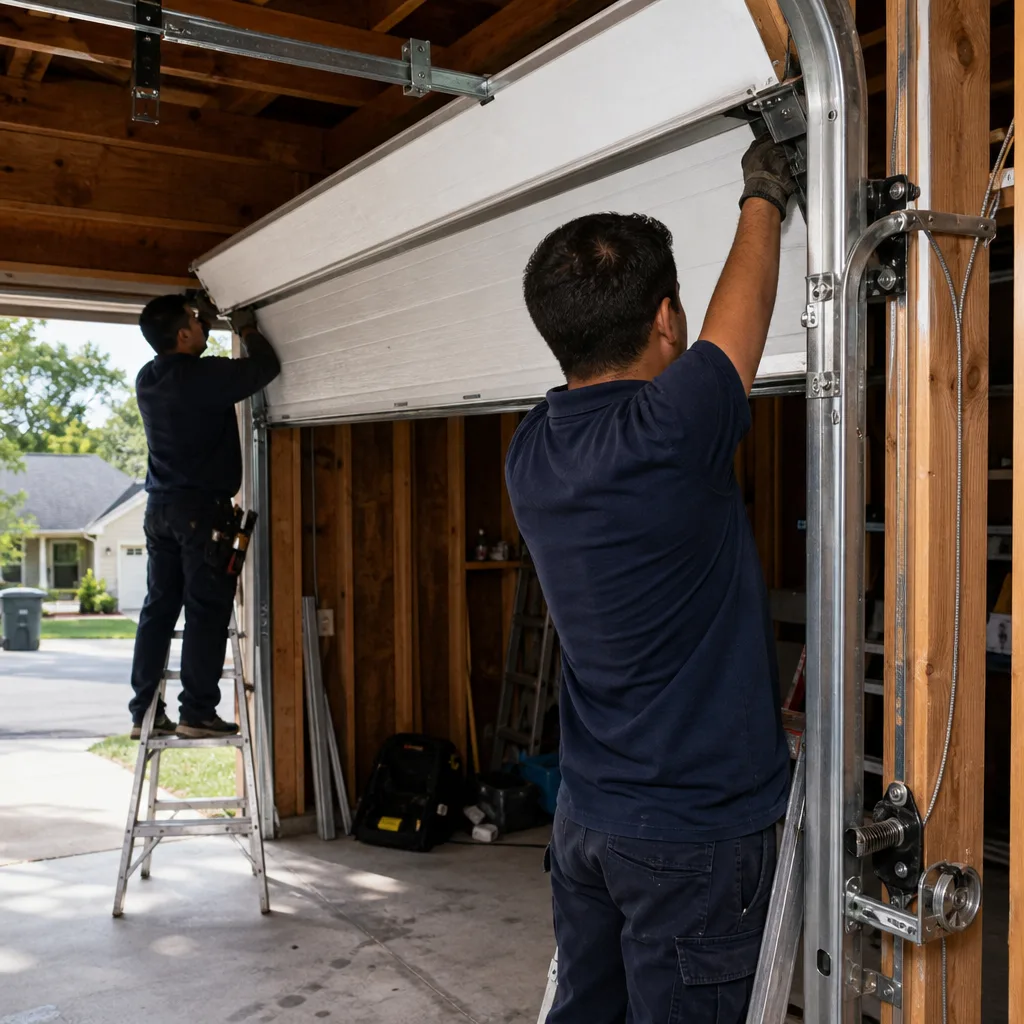
- Lubricating the track. The track needs to be dry so the rollers roll instead of slide. Grease on the track collects abrasive grit and wears flat spots on the rollers faster than anything else you can do to a garage door.
- Using WD-40 on nylon rollers. WD-40 is a solvent, not a lubricant, and on nylon it oxidizes into a sticky film in Johns Creek humidity. That film attracts pollen and accelerates roller wear.
- Ignoring a torsion spring gap because the door still works. The gap is the warning. By the time the spring breaks, you’ve spent three times what routine replacement would have cost, and the door is inoperable until the repair truck arrives.
- Testing safety sensors during pollen season without cleaning the lenses first. A false reversal from a dusty lens can look like a sensor alignment problem. Clean the lenses before you test, or you’ll chase a problem that isn’t there.
- Replacing one torsion spring on a two-spring door. Springs are rated as a matched pair. If one has failed, the other has the same number of cycles on it. Replacing both now avoids a second emergency in six months.
- Waiting until the door stops working to check the cables. Cable failure is not gradual in the way most people expect. By the time the door won’t open, the cable has already snapped and possibly damaged the track, the door edge, or the panels along the way.
When to Call a Professional
Most of this checklist is safely done by a homeowner with a smartphone and a can of silicone lubricant, but several items are not. Any torsion spring work, including winding cone inspection beyond a visual gap check, belongs with a licensed technician. Cable replacement at either end means releasing spring tension, which is dangerous work even for experienced people. Track realignment that involves moving the door’s center of gravity should be done by someone who understands door balance. And any time a door has fallen, derailed, or slammed shut unexpectedly, stop using it entirely and call.
Servo Garage Doors Johns Creek offers free estimates for Johns Creek homeowners and provides a flat, written price before any work starts, per Clause 1 of The Haven Standard. Every visit closes with a documented photo record of findings and completed work. Call (470) 380-0642 to schedule maintenance or discuss something you found on this checklist.
Frequently Asked Questions
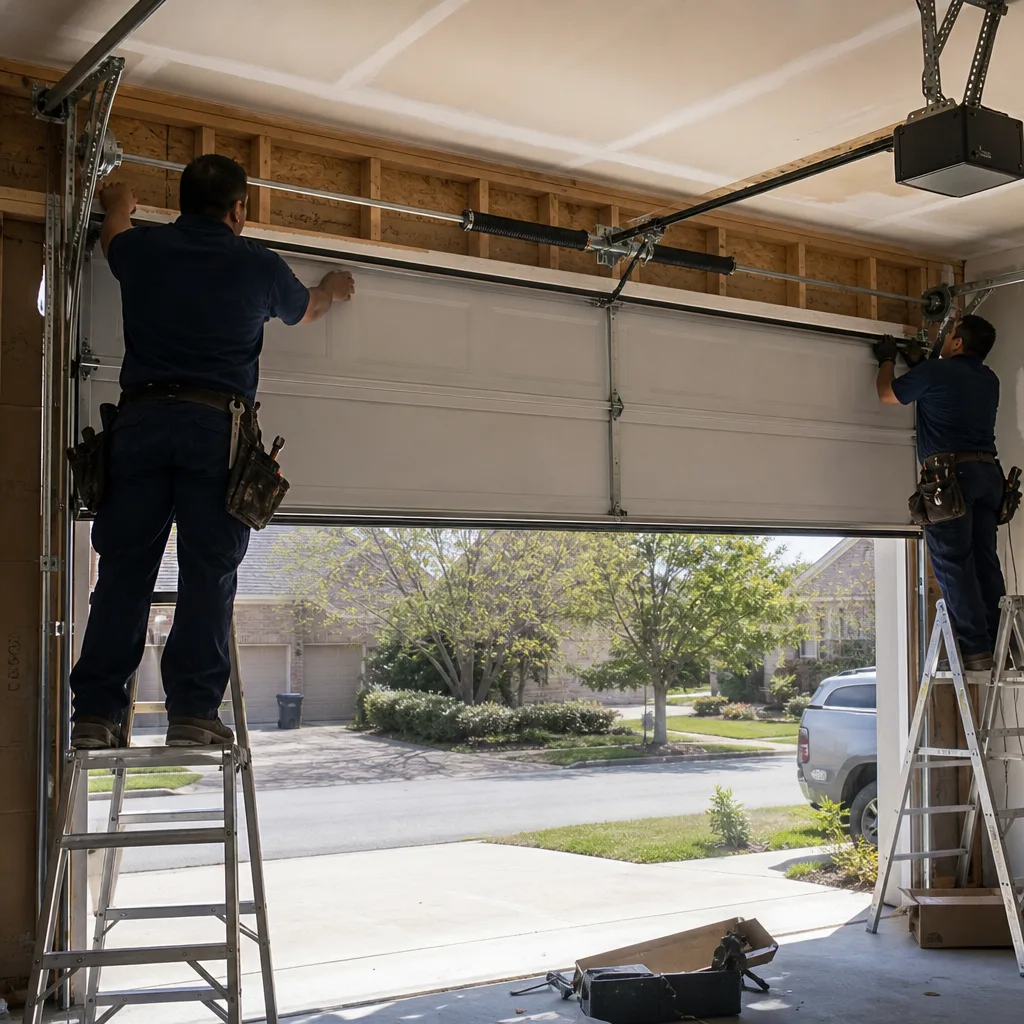
Twice a year is the practical minimum in Johns Creek, and the timing matters more than the count. Do a full inspection in March before the humid season and again in October before the first major temperature swing. Between those two inspections, run the safety sensor test monthly and wipe the sensor lenses weekly during pollen season, which runs roughly late February through April.
A scheduled maintenance visit from a Johns Creek garage door company typically runs $89 to $149, depending on what’s included. At Servo Garage Doors Johns Creek, that visit includes a written list of findings, a flat written price for any recommended work, and a documented photo record of each inspected component. If we find something that needs repair, the maintenance visit price is typically applied toward the repair.
A visibly separated gap between the coils of a torsion spring is the earliest reliable warning sign. A gap of 1/16 inch is early fatigue, and a gap of 1/8 inch means the spring is close to failure. Springs don’t break randomly; they almost always show the gap for weeks first. Photograph it and call for a quote before it breaks mid-cycle.
The squeak is usually a roller bearing or a hinge pivot that lost lubricant, and Johns Creek’s humidity accelerates the loss. Petroleum-based lubricants break down in hot, humid conditions, leaving metal to run against metal. A dry track can also cause squeaking, but if you’ve followed the advice here, your track is intentionally dry while the hinge points are lubricated with silicone. If the squeak persists, photograph the hinges with the door in each position and call for an assessment.
No. Cable replacement requires releasing tension at the drum end, which means working in proximity to a torsion spring under full tension. Even if the cable itself isn’t under direct tension during the replacement, the process of removing and reinstalling it involves components that are. A steel cable under spring tension that releases unexpectedly can cause severe injury. This is one of the repairs where the cost of a professional is the cheapest insurance available.
Most torsion springs installed in Johns Creek homes are rated for 10,000 cycles, which translates to roughly seven to nine years of normal use. The rating assumes a dry, temperature-stable environment; Georgia’s humidity and temperature swings reduce practical life by about twenty percent on average. If you’re at the six-year mark on springs you didn’t install, start checking for the coil gap each March and October.
The Bottom Line
A garage door maintenance checklist is only as good as your ability to recognize failure before it happens. In Johns Creek, that means checking torsion springs for the coil gap, cables for fraying at both ends, rollers and hinges for wear patterns that the humidity accelerates, and safety sensors weekly during pollen season. March and October are the right months for the full inspection, and a dated photo of each component turns next season’s inspection into a comparison rather than a guess. Most tasks here are approachable for a homeowner with a smartphone and a can of silicone, but spring tension and cable work are not. For anything that involves those components, call (470) 380-0642 for a written price before the work starts and a documented record when it’s done.
Written by Marcus Deller, Owner at Servo Garage Doors Johns Creek, serving Johns Creek since 2015. Explore more guides & resources on garage door care.