
Last updated September 20, 2026
Full 25-point door and opener safety check with every visit - springs, cables, rollers, tracks, and your LiftMaster or Chamberlain opener included
You get a price before we start. It does not change when the truck arrives.
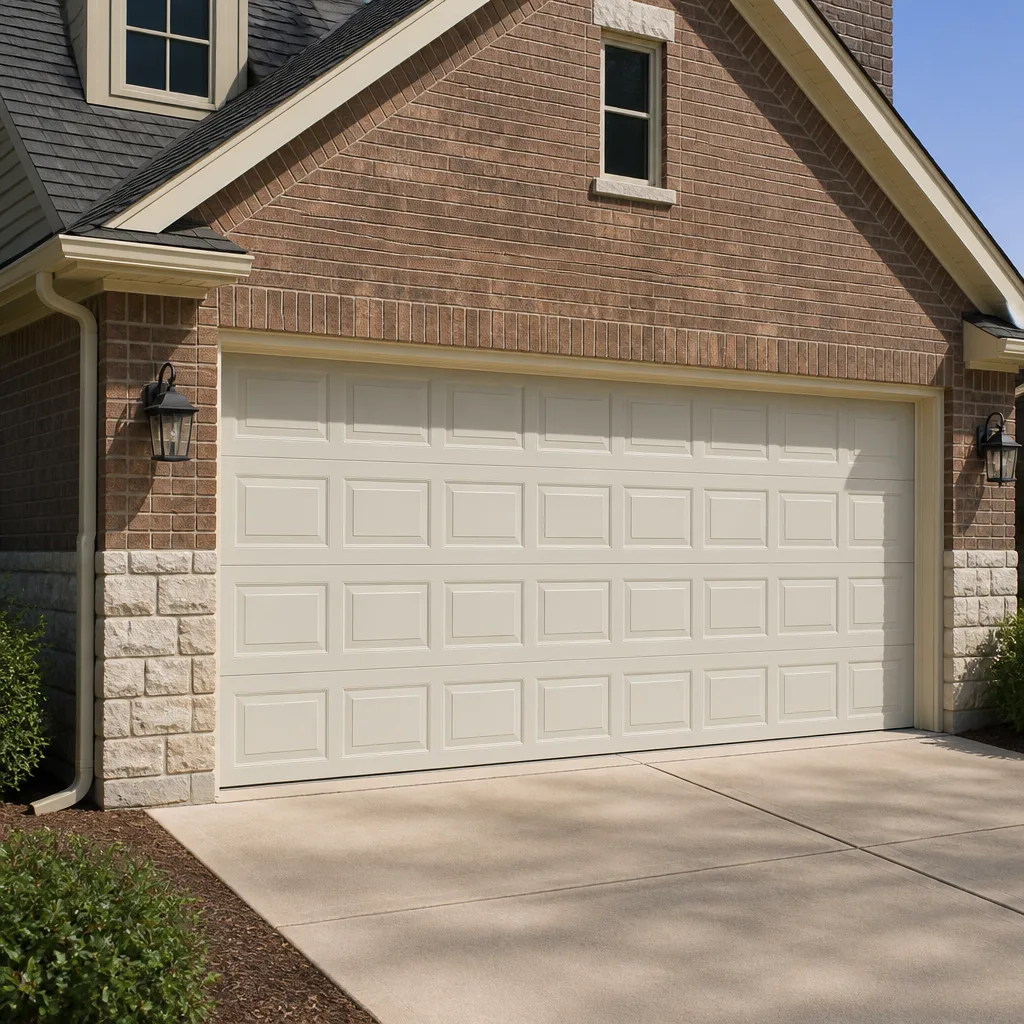
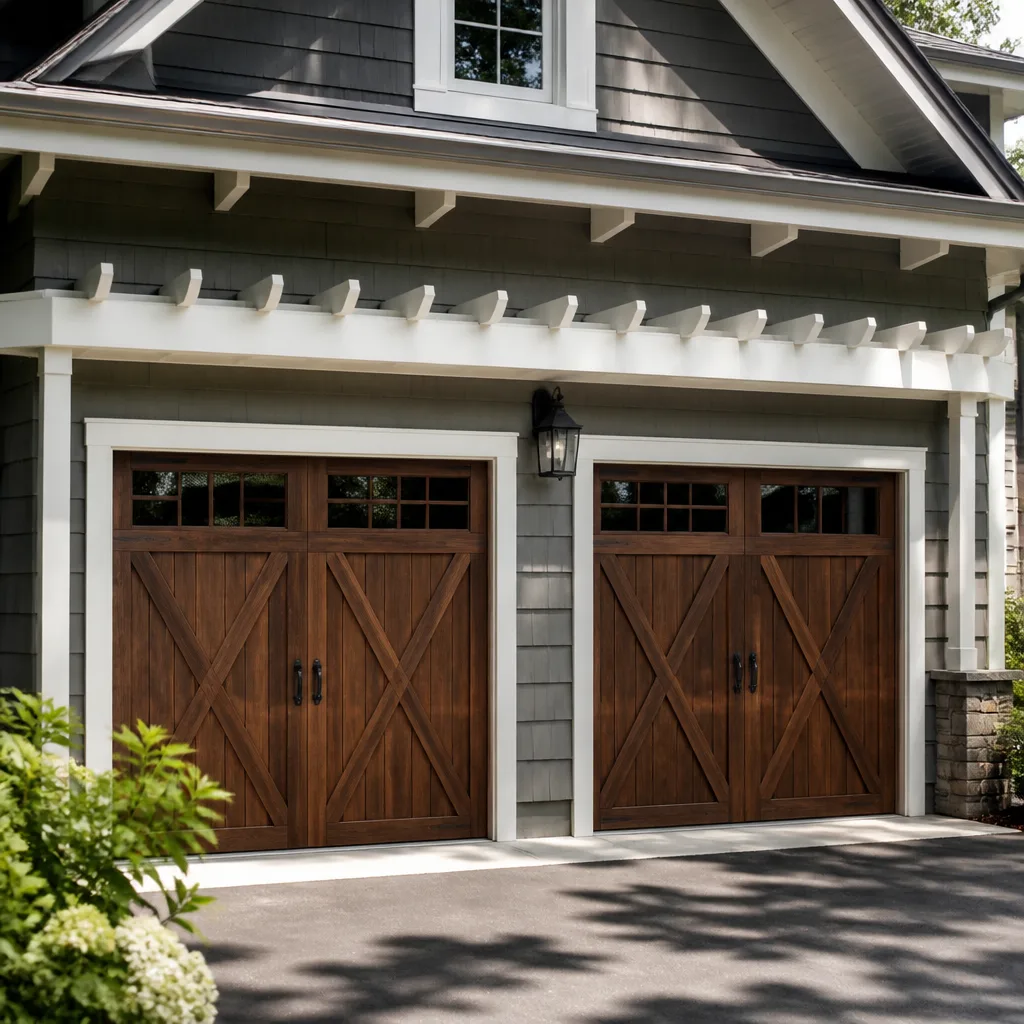
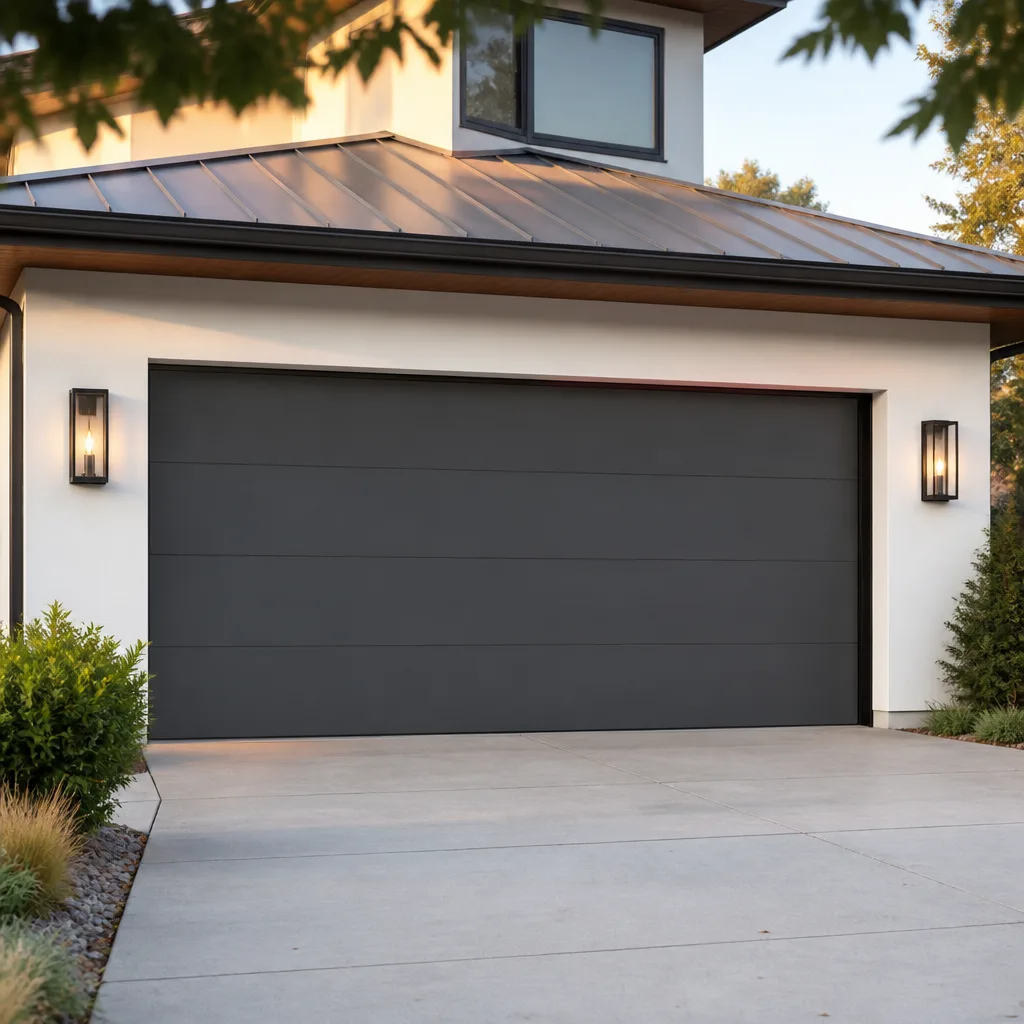
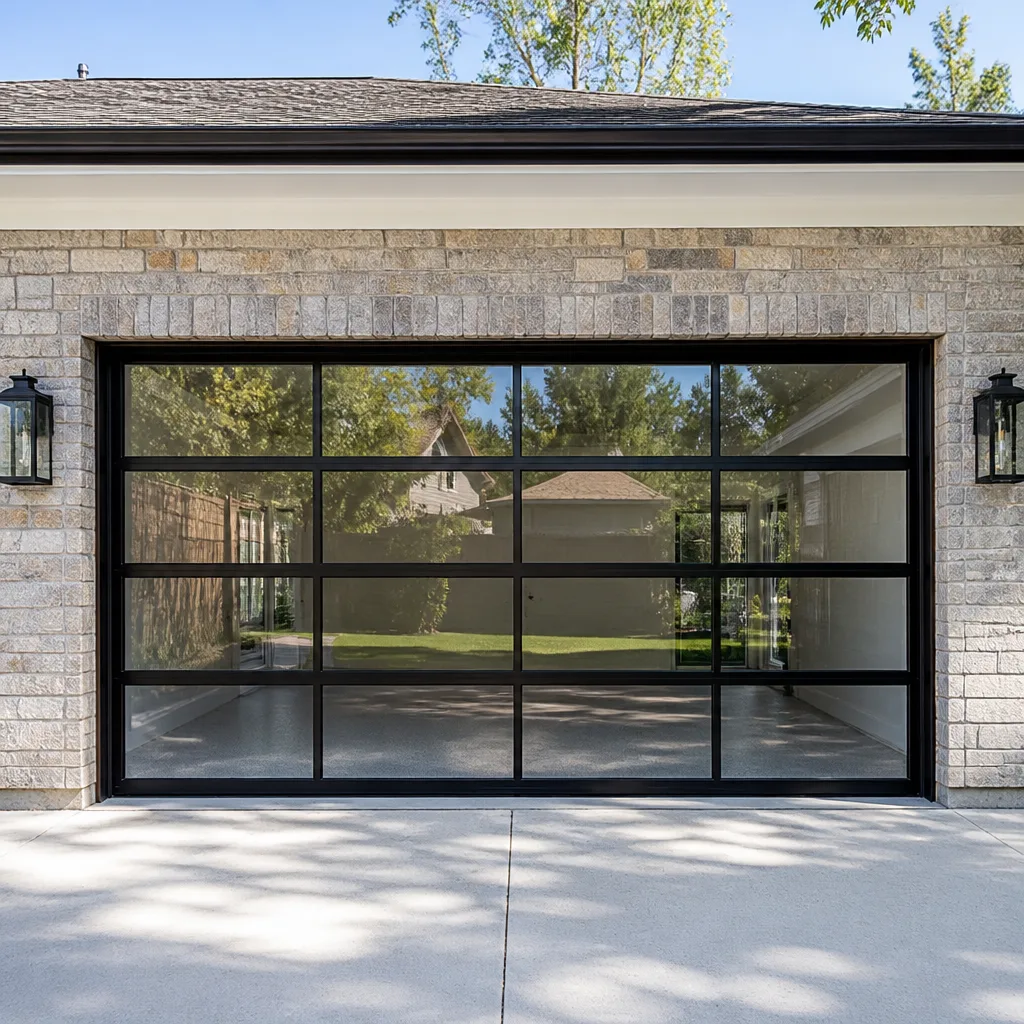
 Before
 After
After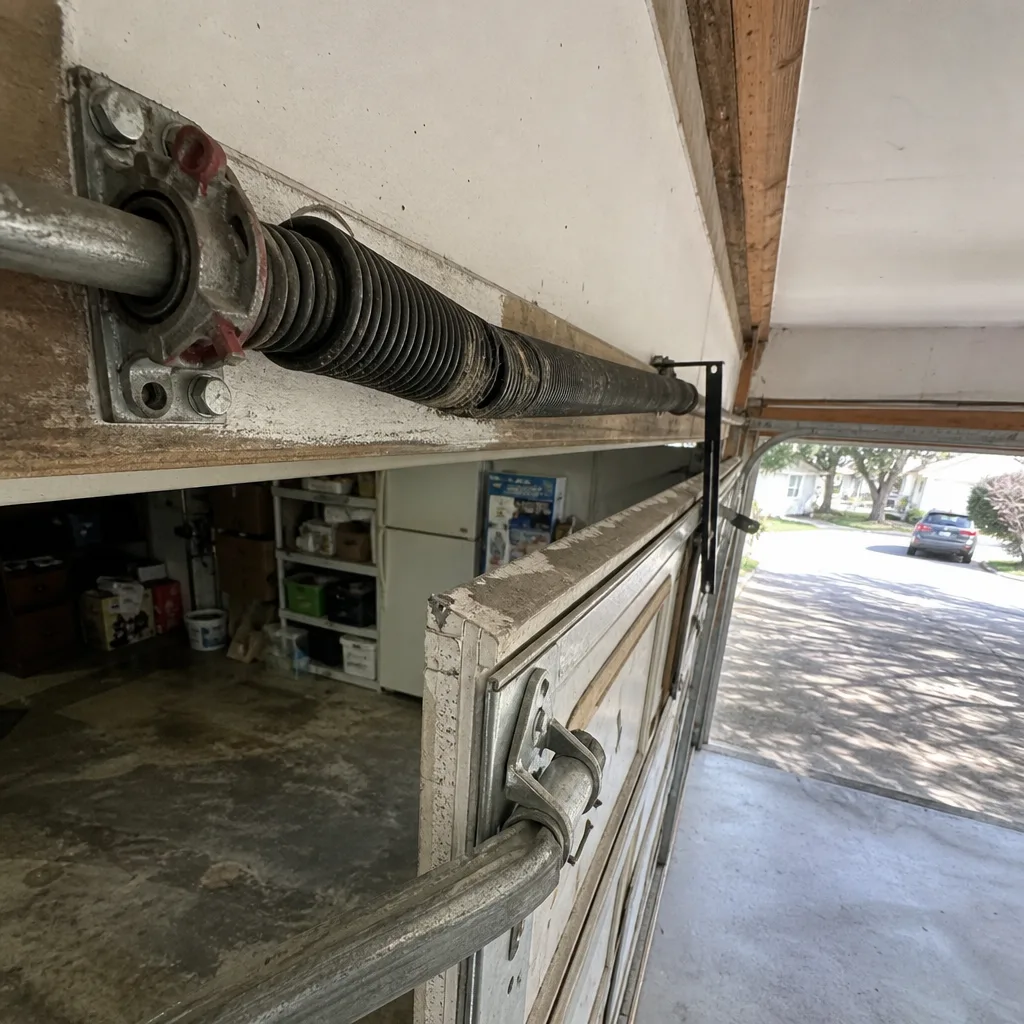 Before
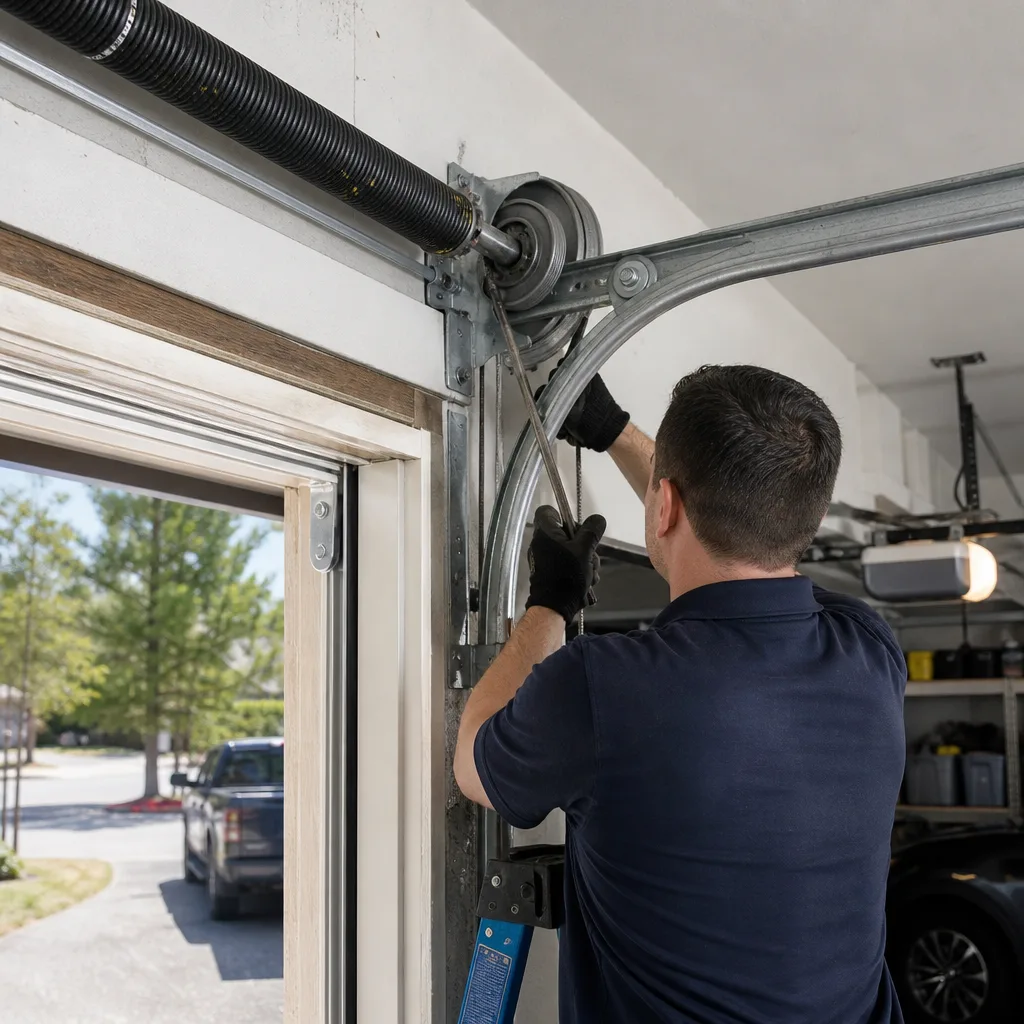 After
After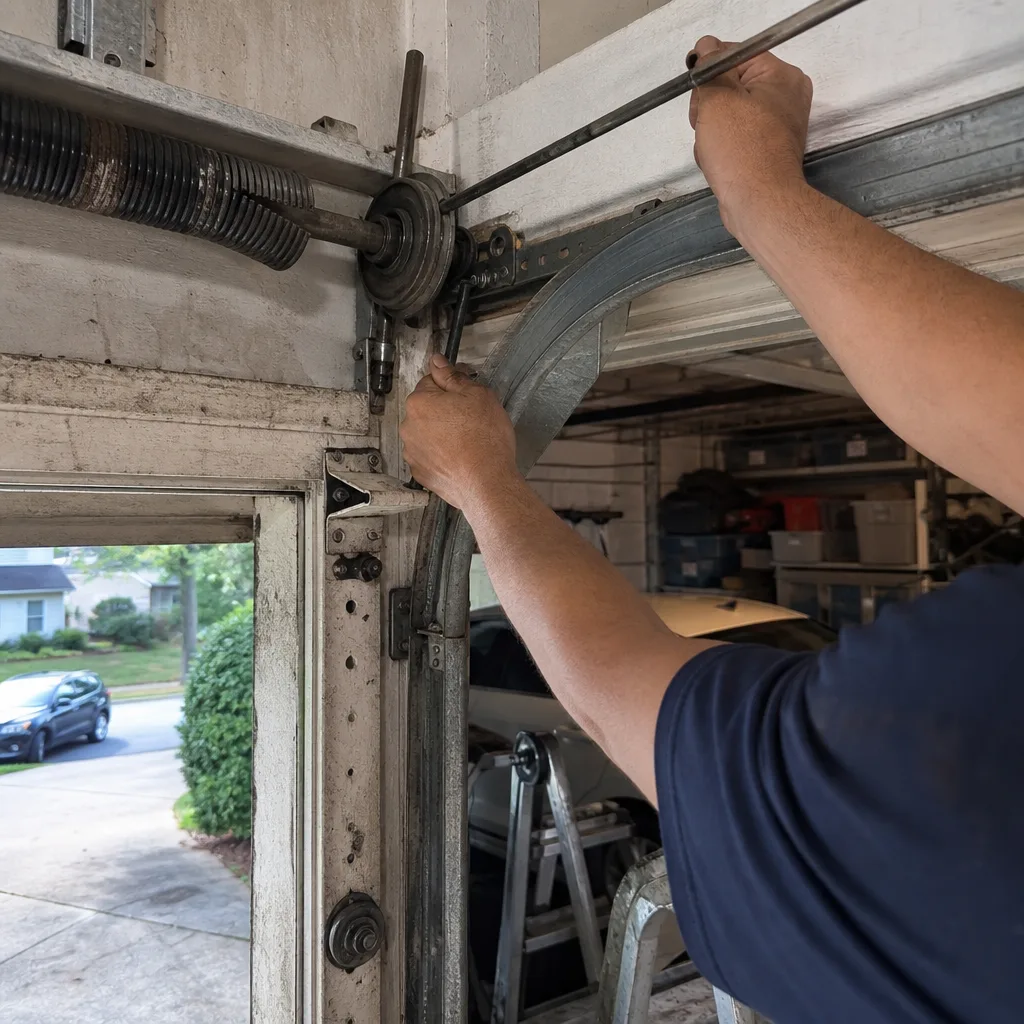 Before
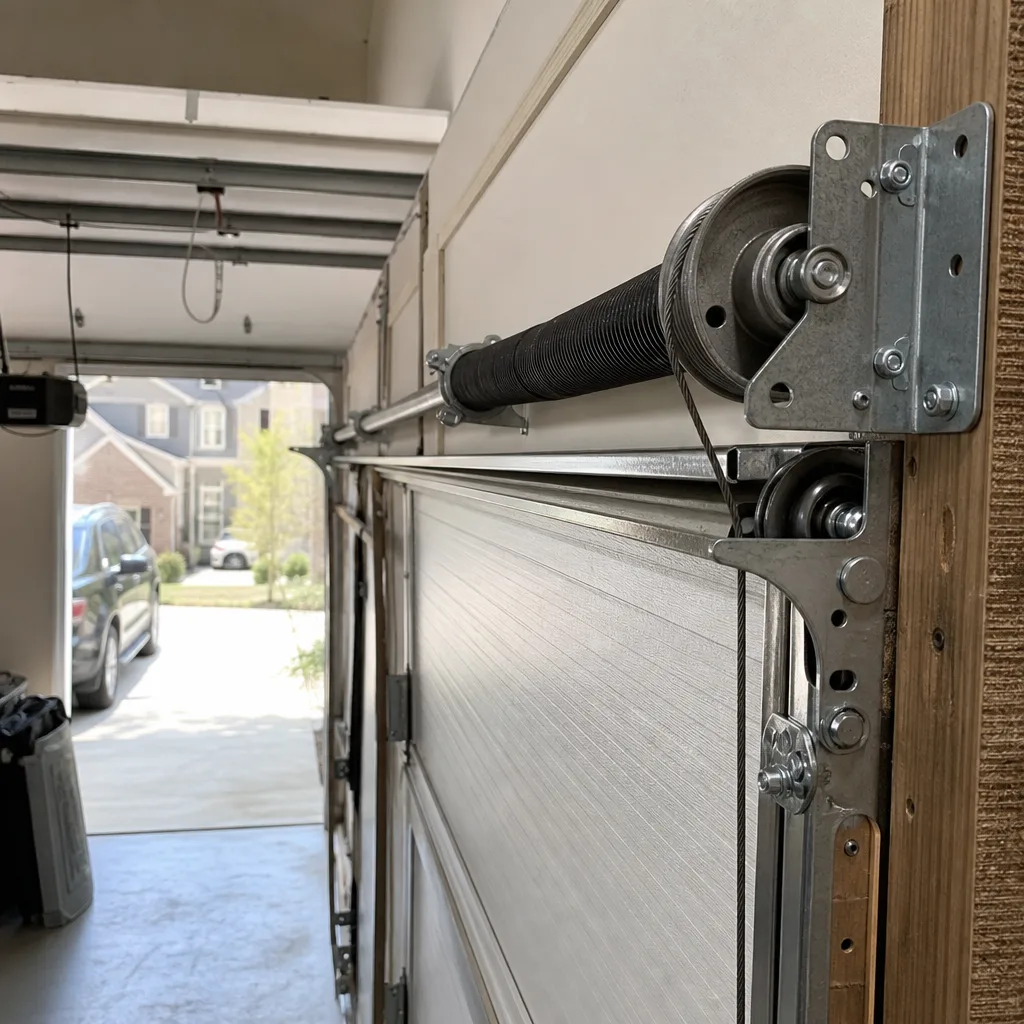 After
AfterGarage Door Permits, Codes & Inspections in GA: What You Need to Know
Here’s a counterintuitive fact about Georgia garage door work: the most common repair we perform in Johns Creek, a torsion spring replacement, requires zero permits and zero inspections under state and local code. Yet a full door replacement on the same house may require a building permit, a wind load verification, and a final inspection, depending on which jurisdiction your address falls under. Get that distinction wrong in one direction and you’re paying for paperwork you didn’t need. Get it wrong in the other and you’ve created a documented gap in your home’s improvement record that resurfaces when you sell, refinance, or file an insurance claim. This guide maps the exact thresholds in Fulton County and Johns Creek so you know which side of the line your project falls on before anyone touches a track bolt, and you can find more guides & resources on our blog.
Quick Answer
In Georgia, garage door permits are triggered by scope, not by assumption: spring, cable, roller, and opener repairs never require a permit, while full door replacements may require one depending on your jurisdiction and the structural attachment details of the existing opening. In Johns Creek specifically, the city operates its own permitting process separate from unincorporated Fulton County, so the same door replacement can have different requirements depending on whether your address is inside city limits or in the county pocket surrounding it. If your project needs a permit, the contractor should produce the permit number before work begins, not after.
Table of Contents
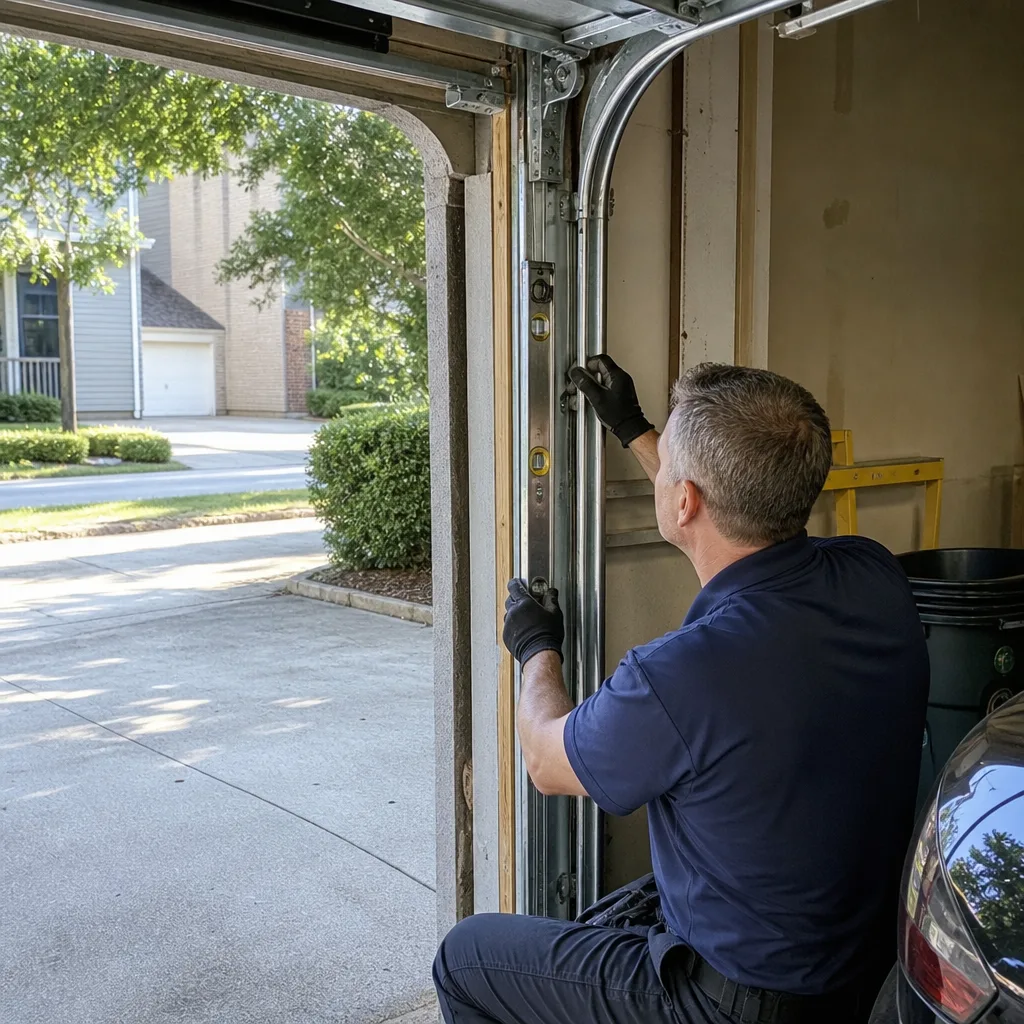
- What Actually Triggers a Garage Door Permit in Georgia
- Johns Creek vs. Unincorporated Fulton County: Two Different Processes
- How to Verify Which Jurisdiction Applies to Your Address
- Wind Load Requirements for Garage Doors in Fulton County
- The Insurance Clause That Makes Unpermitted Work a Liability
- Why ‘We Handle Permits’ Means Nothing Without a Permit Number
- Step-by-Step: The Permit Process for a Johns Creek Garage Door Replacement
- Common Mistakes to Avoid
- When to Call a Professional
- Frequently Asked Questions
- The Bottom Line
BeforeAfterWhat Actually Triggers a Garage Door Permit in Georgia
Georgia’s residential building code, which incorporates the International Residential Code, treats a garage door as part of the building envelope. That means the trigger for a permit is whether the work alters the envelope or simply repairs a component within it. The distinction matters because it determines whether you’re paying a permit fee and scheduling an inspection, or just scheduling a technician.
Here’s the threshold list as it applies to a typical Johns Creek home:
- No permit required: torsion spring replacement, extension spring replacement, cable replacement, roller replacement, hinge replacement, track realignment, opener motor replacement, logic board replacement, limit switch adjustment, sensor replacement. These are component repairs on an existing, installed door. The envelope hasn’t changed.
- Permit may be required: full garage door replacement where the new door has a different weight, size, or wind load rating than the original, or where the opening’s structural framing is modified. Removal and replacement with a comparable door in the same opening generally falls into a gray zone that your jurisdiction resolves, not the contractor’s opinion.
- Permit always required: any work that widens or heightens the garage opening, adds a new garage door where none existed, or alters load-bearing framing around the opening. This is structural work, not door work.
In our experience at Garage Door Repair in Johns Creek, roughly 85% of the jobs we schedule are repairs that need no permit at all. The remaining 15% are replacements where the answer depends on the door’s wind load rating and the jurisdiction. We verify before we quote, and the written scope we deliver under Clause 1 of The Haven Standard states the permit status in plain language so there’s no ambiguity later.
Johns Creek vs. Unincorporated Fulton County: Two Different Processes
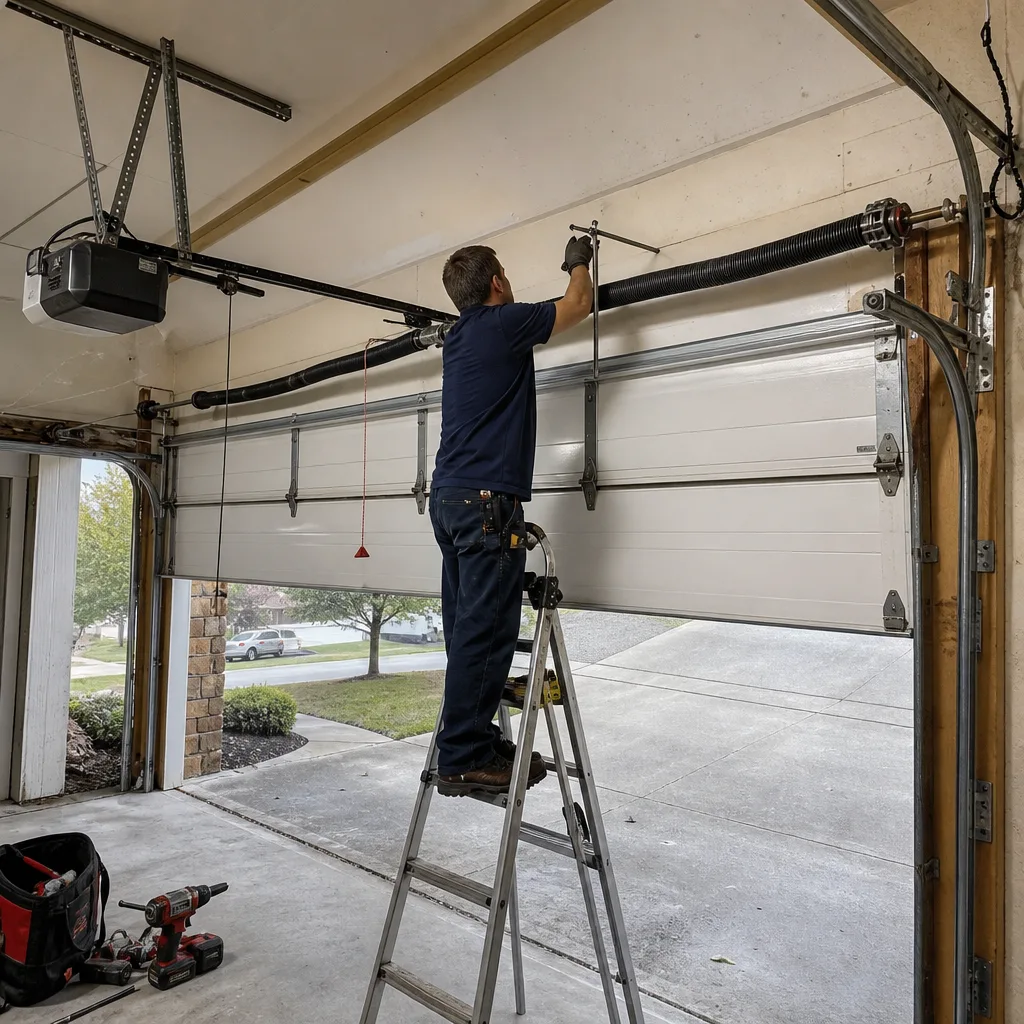
Johns Creek is a city within Fulton County, but it operates its own building permitting through City Hall. That sentence sounds bureaucratic, yet it contains the single most important variable in whether your garage door replacement needs a permit. Your address determines your jurisdiction, and your jurisdiction determines your requirements.
Inside Johns Creek city limits, the city’s Community Development Department processes residential door permits directly. The city uses the Georgia state minimum code plus local amendments, and a garage door replacement that involves structural attachment points or a change in door weight triggers a building permit. The city’s permit fee for residential door work is modest compared to the cost of redoing unpermitted work later, and the inspection is typically scheduled as a single final visit after installation.
In unincorporated Fulton County, which surrounds Johns Creek and includes several pockets that use a Johns Creek mailing address but are not inside city limits, the county’s permitting process applies. Fulton County’s trigger is more explicit: the square footage of the opening and whether the door is attached to structural framing determine whether the work needs a building permit or qualifies as a simple contractor pull. A door replacement on an opening larger than a standard two-car size, or any opening where the header is being modified, crosses into building permit territory.
Here’s the practical version: a homeowner on a Johns Creek street inside city limits calls the city. A homeowner on a Johns Creek mailing address in the county pocket calls the county. Neither process is difficult, but starting with the wrong one delays the project by days. A contractor who works in this area regularly should know which one applies to your street before the first visit. We do, and it’s stated in the written scope we deliver before work starts.
How to Verify Which Jurisdiction Applies to Your Address
You don’t need to trust a contractor’s word on which jurisdiction governs your property. You can verify it in under three minutes, and the documentation you get from that verification becomes part of your improvement record.
Here’s the step-by-step:
- Check the Fulton County property records map. Fulton County maintains an online parcel lookup that shows your jurisdiction field plainly: “City of Johns Creek” or “Unincorporated Fulton County.” The parcel number is on your property tax bill.
- Look at your utility bill. If you pay Johns Creek city taxes or receive city services like sanitation directly from the city, you’re inside city limits. If those services come from the county, you’re in the county pocket.
- Call the jurisdiction directly. Johns Creek Community Development answers residential permit questions by phone. Fulton County’s permitting office does the same. Ask one question: “Does my address require a building permit for a full garage door replacement, or does it qualify as a component replacement?” Write down the name of the person who answers and the date. That note is your paper trail if anyone disputes the decision later.
On every replacement job we quote in Johns Creek, we run this verification before writing the flat price. Clause 1 of The Haven Standard, the written-price-first rule, includes the permit determination in the scope document. You see the permit status, the jurisdiction, and the permit number if one applies, all before we schedule a single day of work.
Wind Load Requirements for Garage Doors in Fulton County
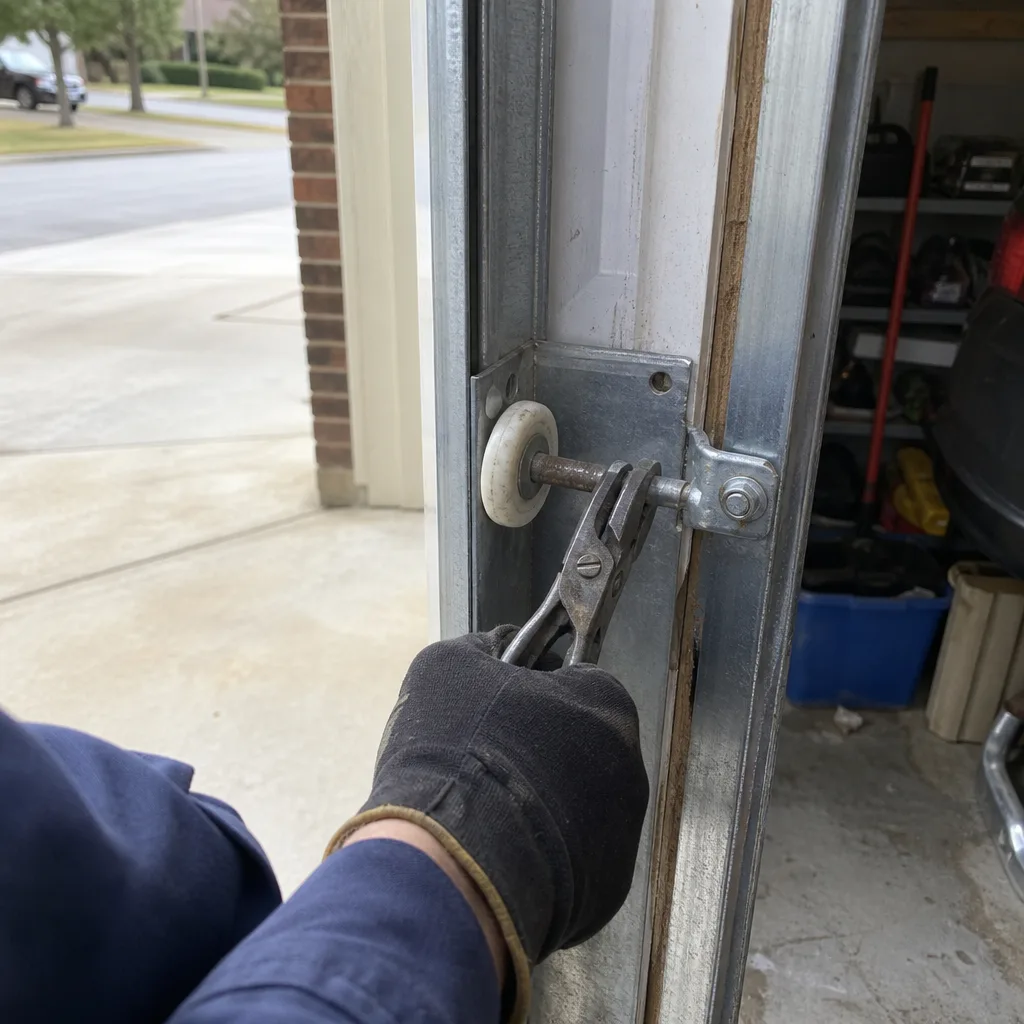
Georgia adopted the 2020 IECC for energy code and the IRC for structural requirements, and Fulton County enforces a wind load provision that many homeowners never hear about until a replacement door fails inspection. The requirement exists because a garage door is the largest unreinforced opening in most homes’ wind-facing elevations, and a door that fails in a wind event doesn’t just damage the door, it pressurizes the garage and can lift the roof structure.
The specific requirement: a replacement garage door in Fulton County must meet the design pressure rating for the wind zone assigned to your property. In practice, that means the door’s label must show a design pressure rating, expressed in pounds per square foot, that matches or exceeds what the code specifies for your exposure category. Most of Fulton County falls into a zone requiring a design pressure rating in the range of 25 to 35 psf for residential garage doors, depending on whether your home is in an open exposure area or a sheltered suburban subdivision.
What this means in plain terms: when you buy a replacement door, look for the wind load label. Door manufacturers such as Wayne Dalton, Clopay, and Amarr print the design pressure rating on a certification label attached to the door. A contractor who can’t tell you the rating of the door they’re proposing, or who proposes a door without a label, is proposing a door that may not pass inspection in Johns Creek or unincorporated Fulton County.
We photograph that label as part of the documented photo record we deliver on every visit. It’s Clause 4 of The Haven Standard applied to the permit question: you see the evidence that the door meets code before it goes into the opening, not a verbal assurance.
The Insurance Clause That Makes Unpermitted Work a Liability
Here’s the section most Garage Door Warning Signs: A Johns Creek Homeowner’s Reference Guide and other guides skip, and it’s the one that costs homeowners the most money. Your homeowner’s insurance policy almost certainly contains a clause that limits or excludes coverage for damage related to unpermitted work. The exact language varies by carrier, but the pattern is consistent: if a loss occurs, and the investigation finds that the damage relates to work that required a permit and didn’t get one, the carrier can deny the portion of the claim attributable to that work.
The policy language to look for appears in the “Exclusions” or “Conditions” section, often under a heading like “Concealment or Fraud” or “Permits and Code Compliance.” It typically reads that the policy does not cover loss or damage caused by, or resulting from, construction or repair work that was performed without required permits or that fails to comply with applicable building codes.
A garage door replacement that required a permit but didn’t get one isn’t a theoretical risk. It’s a documented gap. If a wind event tears off that unpermitted door and damages your vehicles and the garage interior, the adjuster will pull the permit records. When the permit record is absent, the claim gets complicated fast. The same gap shows up on a buyer’s inspection report during a sale, where it becomes a negotiating point against you, or a repair credit you’ll pay at closing.
Before you decide to skip a permit on a borderline project, open your policy and search for the word “permit.” Read the paragraph around it. If the language limits coverage for unpermitted work, the permit fee is the cheapest insurance you’ll ever buy.
Why ‘We Handle Permits’ Means Nothing Without a Permit Number
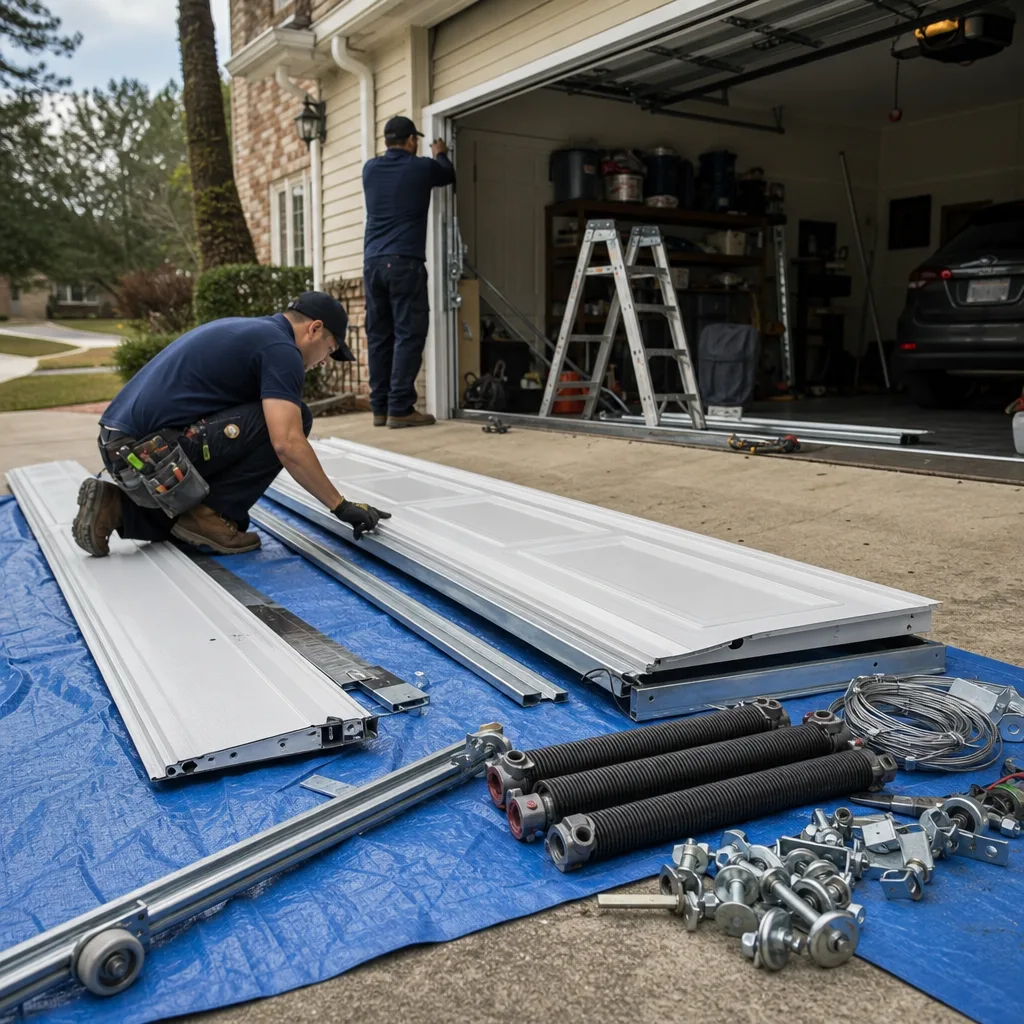
Every garage door company in the Atlanta metro says they handle permits. The phrase is free, and the verification is not. Here’s what “we handle permits” should mean in practice: the contractor has applied for the permit, the jurisdiction has issued it, and the permit number exists in the jurisdiction’s online lookup system before the first day of work. Not after. Not “we’ll pull it once we start.” Before.
The Fulton County permit lookup tool shows permits by address and by permit number. Johns Creek’s online permitting portal does the same. Both update in close to real time. If your contractor tells you the permit is “in process” or “being pulled,” open the lookup tool on your phone and type in your address. No record means no permit has been issued. A contractor working without an issued permit on work that requires one is exposing you, not themselves, to the insurance and resale consequences described above.
We state the permit number in the written scope before we schedule installation on any replacement that requires one. That’s not a marketing line. It’s the same logic as Clause 4’s photo record: the customer sees the evidence before the work, not a promise about the work.
Step-by-Step: The Permit Process for a Johns Creek Garage Door Replacement
When your replacement does require a permit, the process in Johns Creek follows a predictable sequence. Here it is from application to final inspection, with the roles divided between what the contractor does and what happens at City Hall:
- Jurisdiction verification. Confirm whether the address is inside Johns Creek city limits or in unincorporated Fulton County. This determines which office receives the application.
- Application submission. The contractor or homeowner submits the permit application with the door specifications, including the wind load certification label from the manufacturer. Johns Creek’s application asks for the door’s design pressure rating, the opening dimensions, and the attachment method.
- Permit issuance. The jurisdiction reviews the application and issues a permit number. This number appears in the online lookup tool. Work should not begin before this number exists.
- Installation. The door is installed to the manufacturer’s instructions and the submitted specifications. The wind load label stays on the door.
- Inspection scheduling. The contractor or homeowner schedules the final inspection with the jurisdiction. In Johns Creek, this is typically a single visit where the inspector verifies the installed door matches the permit application.
- Final inspection and closeout. The inspector signs off, the permit is closed, and the paperwork becomes part of your property record. That closed permit is what you’ll show the insurance adjuster or buyer’s inspector if the question ever comes up.
At Garage Door Installation in Johns Creek, we run this sequence on every replacement that crosses the permit threshold. The customer receives the permit number before installation, and the closed permit documentation is included in the photo record and paperwork we hand over when the job is done.
Common Mistakes to Avoid
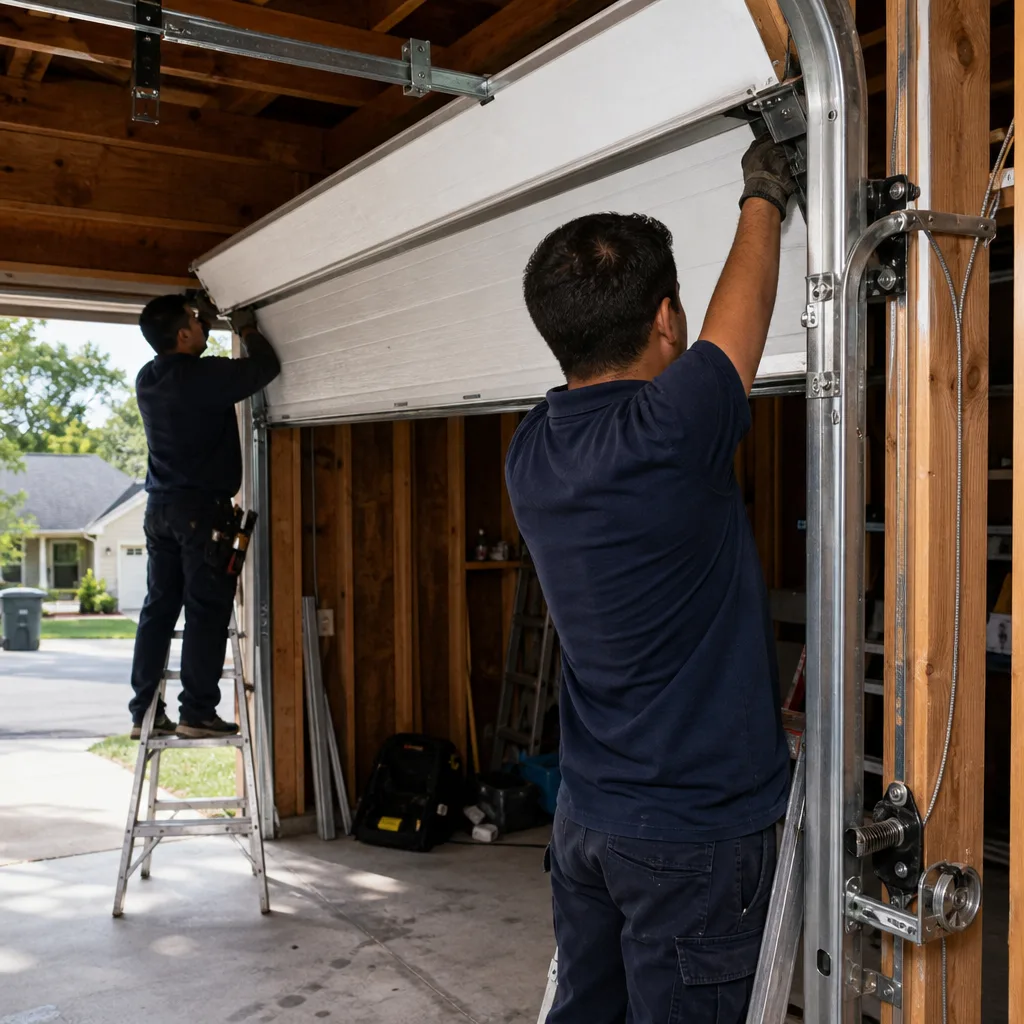
- Assuming all garage door work needs a permit. A spring replacement in Johns Creek needs no permit, no inspection, and no City Hall interaction. Paying for a permit you don’t need is money spent on a process with no purpose. Ask the jurisdiction directly before paying anything.
- Assuming no garage door work ever needs a permit. The inverse mistake is more expensive. A full replacement on a county-pocket Johns Creek address can trigger a building permit based on the opening size. The insurance clause makes the skipped permit a time bomb.
- Taking the contractor’s word on jurisdiction. “You’re in the county, no permit needed” is an opinion. The Fulton County parcel map is a record. Check the record. It takes three minutes.
- Accepting a door without a wind load label. A replacement door in Fulton County needs a design pressure certification. No label means no inspection pass, and a label adds nothing to the price if you’re buying a proper door in the first place.
- Letting work start before the permit number exists. “We’ll pull it once we start” is the tell. The quote tool shows permits in near real time. No number, no work.
- Throwing away the closed permit paperwork. The closed permit is a permanent part of your improvement record. File it with your closing documents. You’ll want it when you sell.
When to Call a Professional
A garage door weighs between 130 and 400 pounds depending on size and construction, and the components that move it operate under sustained tension. If your repair involves a torsion spring, a cable, a track that has come loose from its mounting, or any component attached to the spring system, call a trained technician. The spring stores enough energy to cause serious injury if it releases while you’re working on it. If your replacement involves a permit, a wind load verification, or an opening where the framing will change, the permit process and the code requirements are easier to navigate with someone who runs them regularly in your jurisdiction; see our Garage Door Repair Maintenance Checklist for Johns Creek Homeowners for what to verify before work begins. Servo Garage Doors Johns Creek offers free estimates in Johns Creek, with a flat written price and written scope delivered before any work starts. Call (470) 380-0642.
Frequently Asked Questions
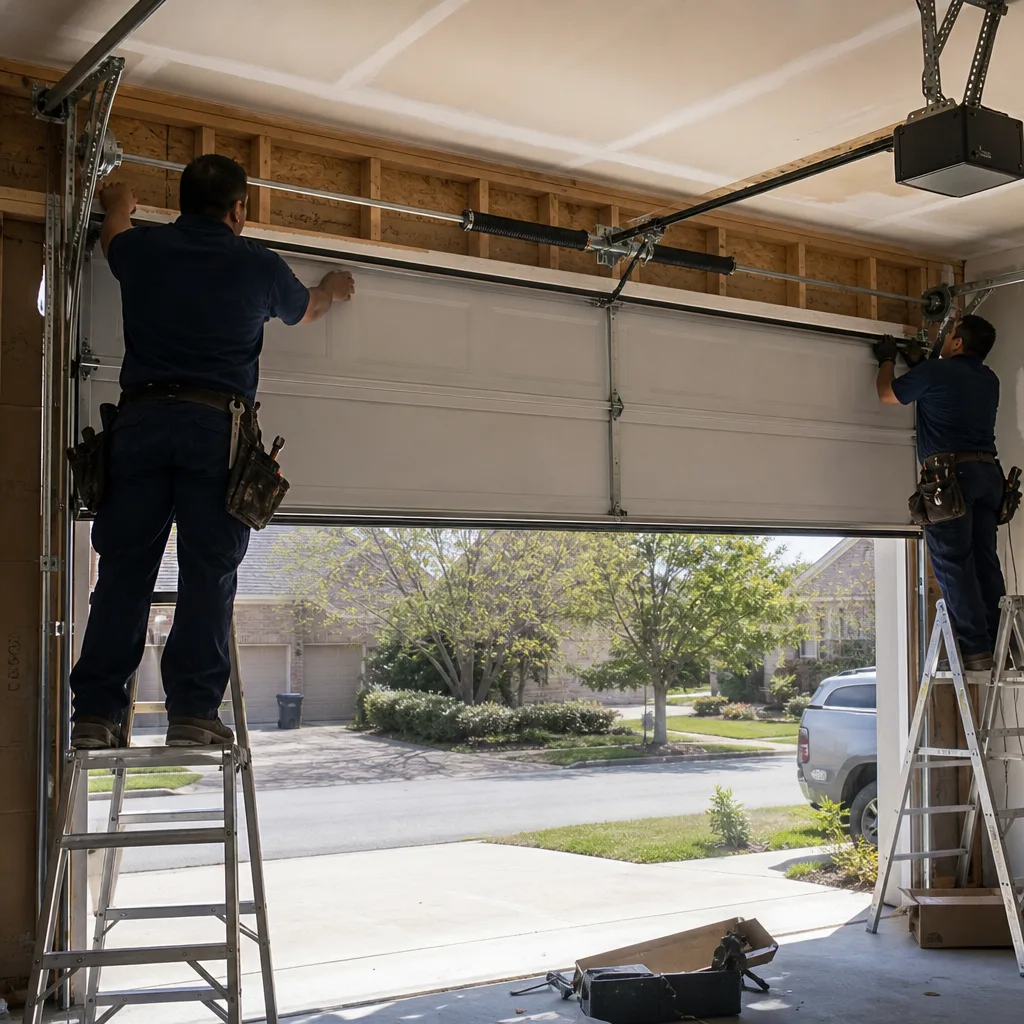
No. A torsion or extension spring replacement is a component repair on an existing door, and neither Johns Creek nor unincorporated Fulton County requires a permit for it. You’ll pay for the spring, the labor, and nothing else. Call (470) 380-0642 for a written price before any work starts.
Johns Creek’s residential door permit fee varies by project scope and is calculated at the time of application. The fee is a small fraction of the total replacement cost, and it’s itemized in the written scope we deliver before work begins. For an exact figure on your project, call the Johns Creek Community Development Department with your address, or call us with your measurements and we’ll run the numbers for you.
No. Openers are accessories mounted to the ceiling and the door, not part of the building envelope. Swapping an opener motor, logic board, or trolley carriage needs no permit in Johns Creek or unincorporated Fulton County. At Garage Door Opener Repair & Installation in Johns Creek, we include the permit determination in every written quote: when the scope says no permit is required, you can rely on that.
You have an unpermitted improvement on your property record. If an insurance adjuster connects a future loss to that work, your policy’s permit exclusion may limit or deny the claim. If a buyer’s inspector finds it during a sale, you’ll negotiate a credit or fix it before closing. The permit fee and inspection cost less than either outcome.
No. The flat written price we deliver before work starts is the price you pay, per Clause 1 of The Haven Standard. The written scope states what’s included, what’s not included, and the permit status. You agree to the price before we begin. Call (470) 380-0642 for a free estimate with no obligation.
Look for the manufacturer’s certification label on the inside of the door panel. The label states the design pressure rating in psf, and that rating must meet or exceed the requirement for your wind zone. If the label is missing or illegible, the door cannot be verified as code-compliant. We photograph the label on every visit as part of the documented photo record, so you see the verification yourself.
The Bottom Line
Georgia’s garage door permit rules are a scope question, not a blanket requirement. Repairs don’t need permits. Replacements sometimes do, and the answer depends on whether your Johns Creek address sits inside city limits or in the unincorporated county pocket around it. The wind load label on the door, the permit number in the lookup tool, and the closed permit in your files are the three pieces of paper that protect you from insurance exclusions and resale complications. Verify your jurisdiction before you start, get the permit number before work begins, and keep the paperwork when it’s done. That’s the entire system, and it’s simpler than most people assume once you know which line your project falls on.
Written by Marcus Deller, Owner at Servo Garage Doors Johns Creek, serving Johns Creek since 2015.