
Full 25-point door and opener safety check with every visit - springs, cables, rollers, tracks, and your LiftMaster or Chamberlain opener included
You get a price before we start. It does not change when the truck arrives.
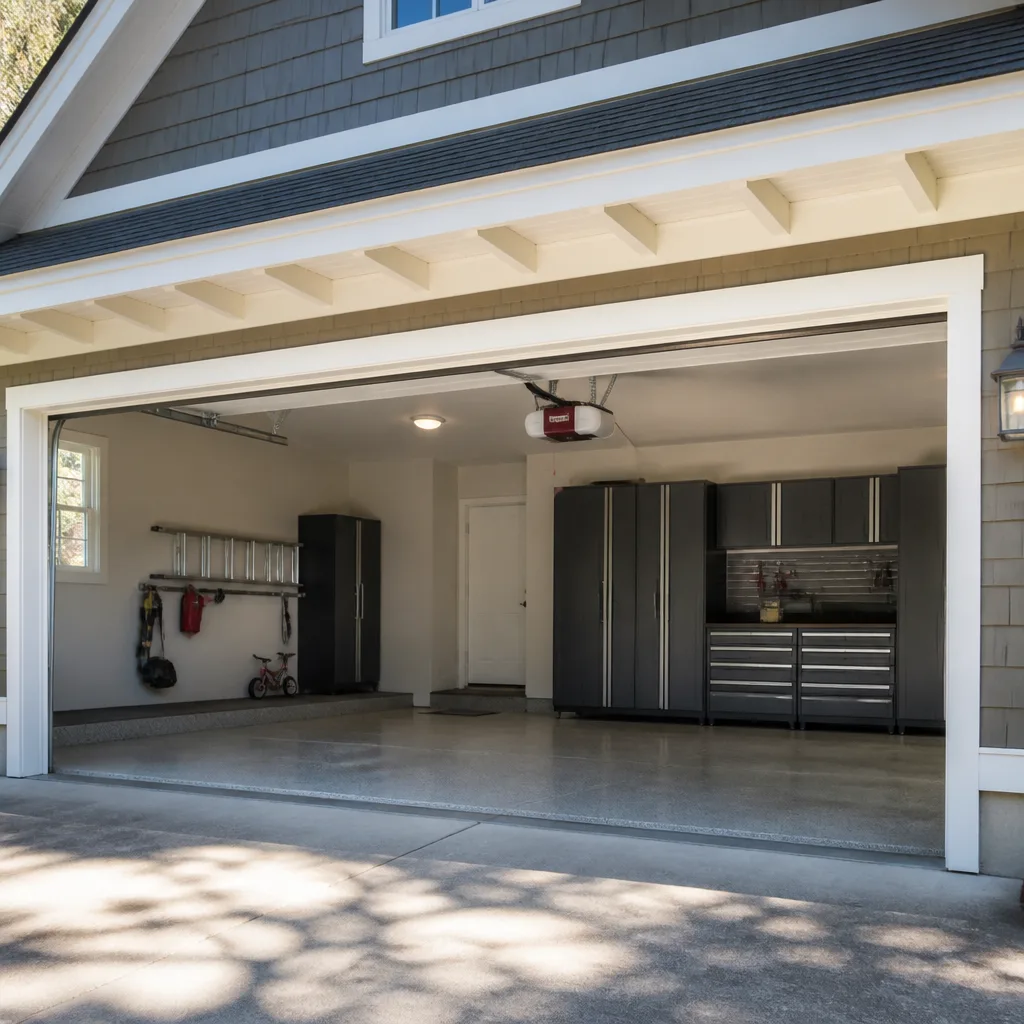
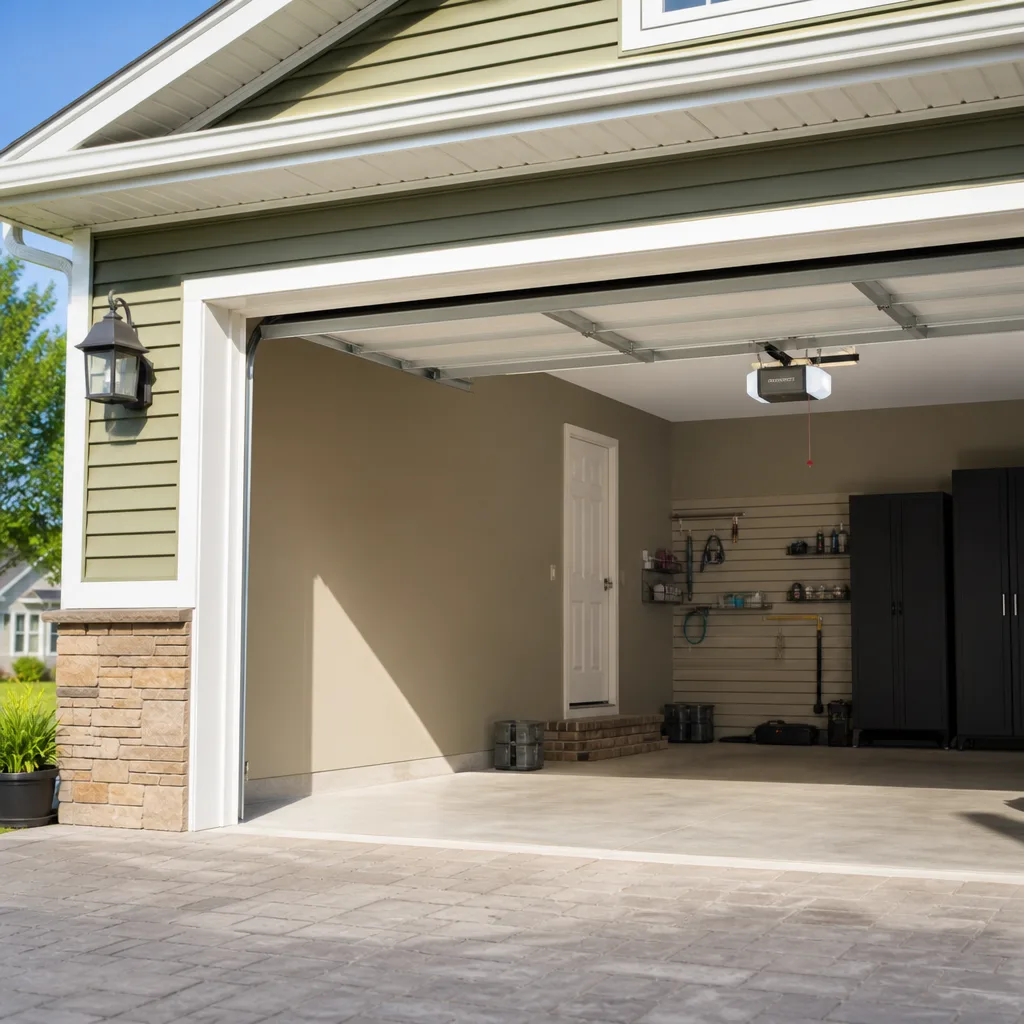
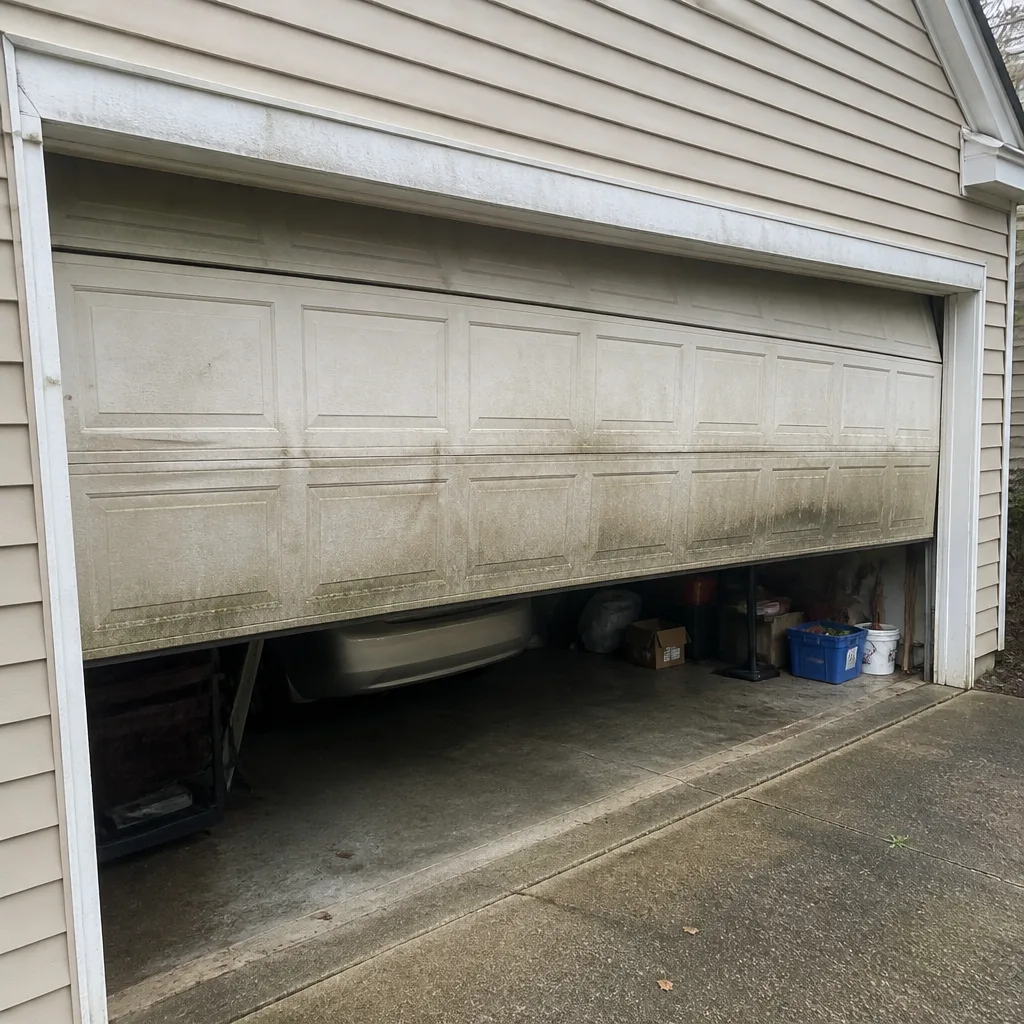 Before
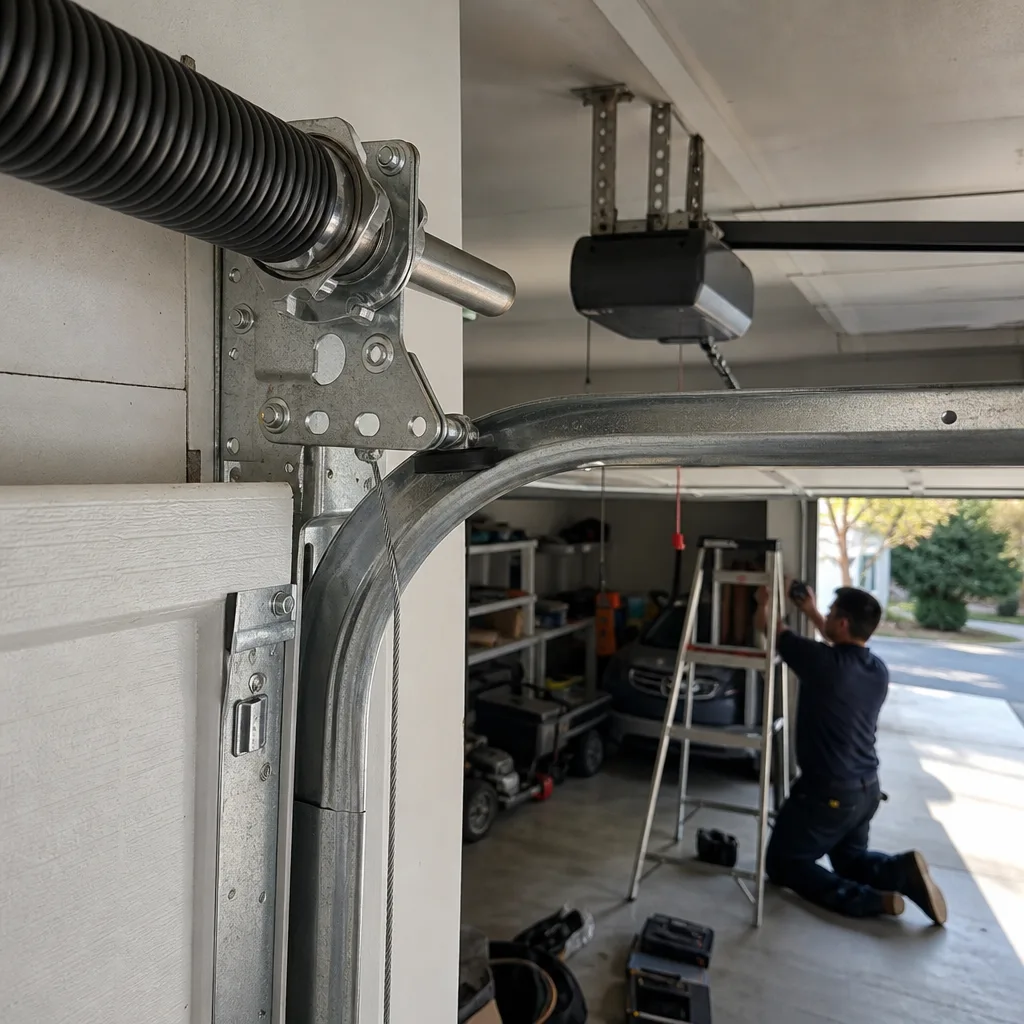 After
After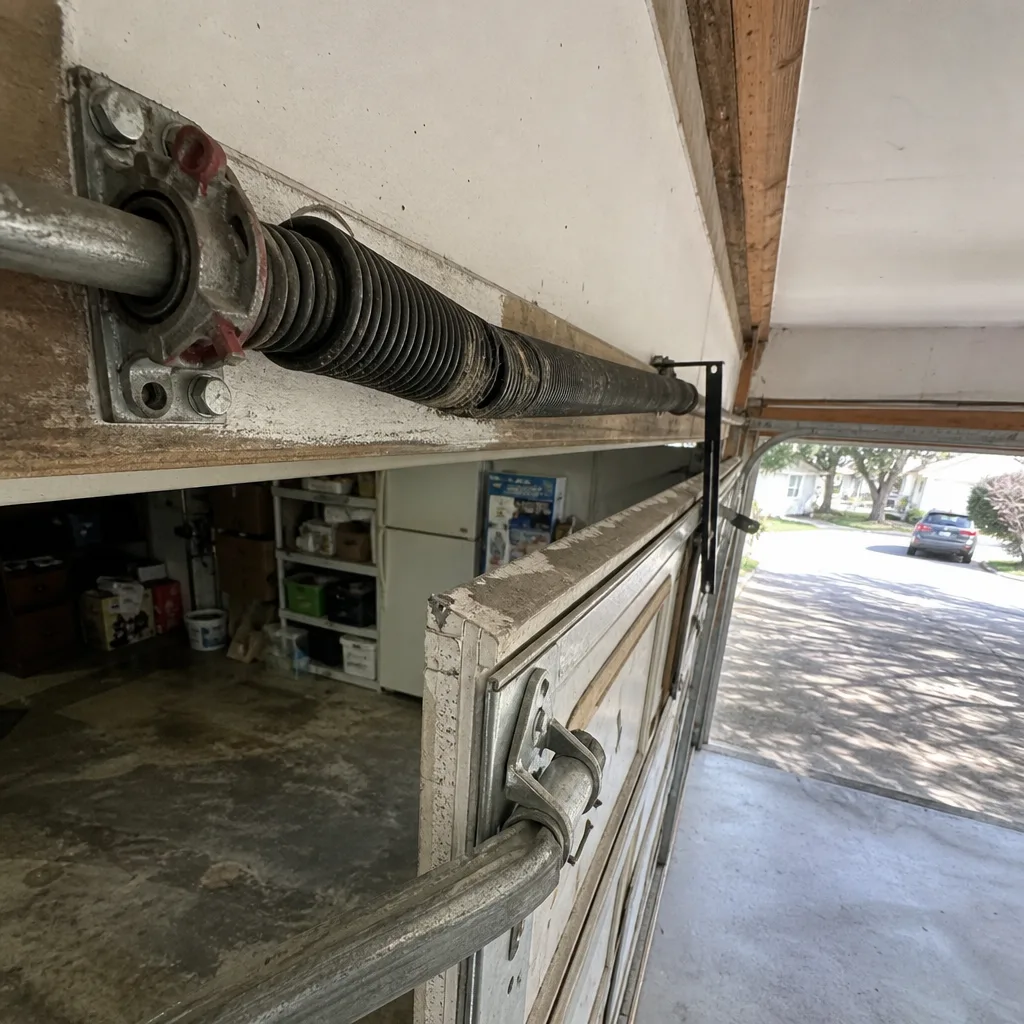 Before
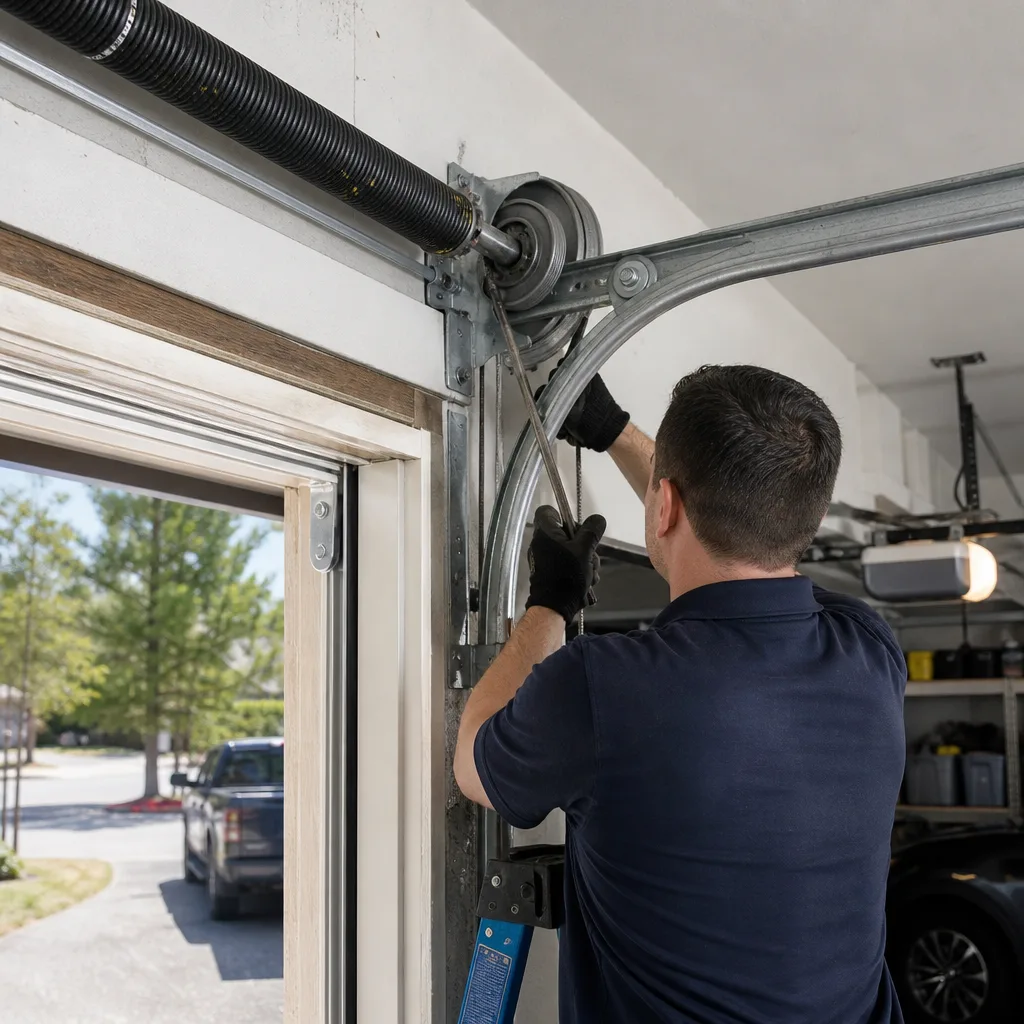 After
After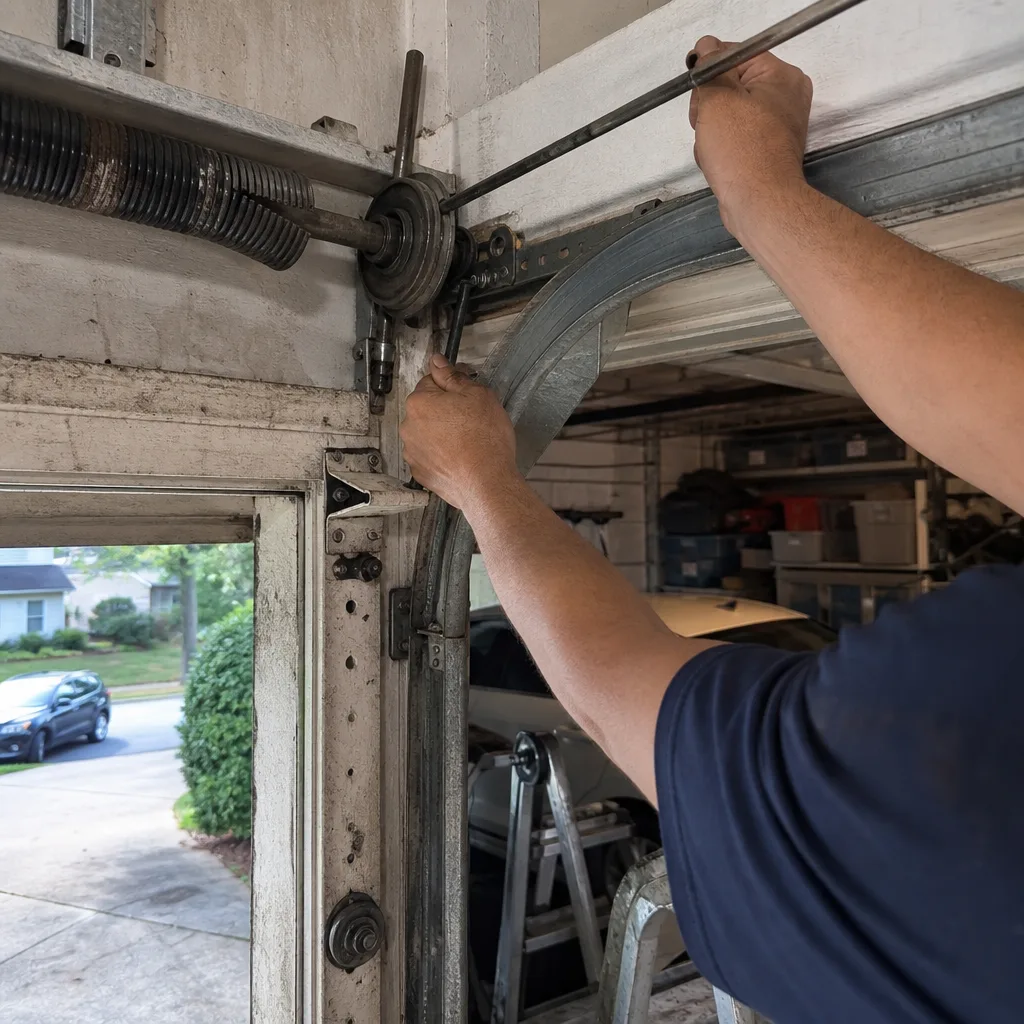 Before
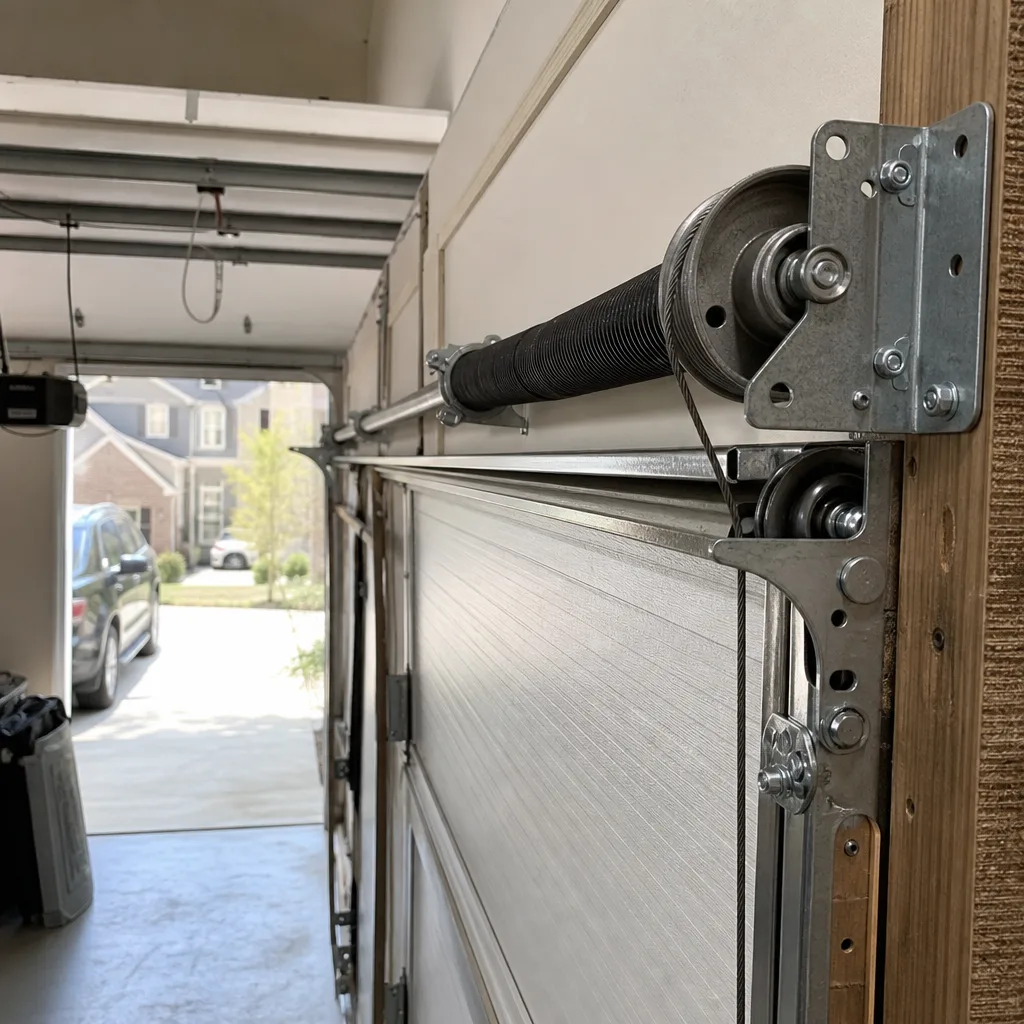 After
AfterRaynor Weather Seal Replacement: The Johns Creek Owner’s Guide
A Raynor weather seal replacement in Johns Creek typically runs $110-$220 installed, depending on your door’s width and whether we’re swapping just the bottom seal or the perimeter stops too. We carry Raynor-compatible seals on the truck and can usually complete the job in one visit. Most homeowners discover the problem the same way: they see daylight under the door, feel a draft in the garage, or find water pooling near the threshold after a Georgia downpour.
The weather seal is the rubber strip that runs along the bottom of your garage door, and on many Raynor models it’s a T-style or bulb-style extrusion that slides into an aluminum retainer. When it hardens, cracks, or pulls away, the door no longer seals against the slab. In Johns Creek, where summer humidity and winter temperature swings work that rubber hard, seals rarely make it past five or six years before they start showing their age. The good news: it’s a straightforward fix when you know which Raynor profile you’re dealing with.
Which Raynor Models This Applies To
Raynor has used several bottom seal profiles across its residential line, and they’re not always interchangeable. The most common ones we see in Johns Creek garages are the T-style bead seal on the Aspen, AP200, and Relante series, and the bulb-style seal on older Ponderosa and Decade models. If you have a Raynor door with an aluminum retainer at the bottom, you likely need a T-bead. If the rubber is captured directly in a round channel, you’re looking at a bulb.
Here’s the compatibility gotcha many owners hit: a generic big-box T-seal will often slide into the Raynor retainer, but the bead dimensions don’t match. Too narrow, and it sags. Too wide, and it binds. That’s why we stock three Raynor-specific profiles on the truck along with a quality aftermarket line that matches the OEM extrusion exactly. For most residential Raynor doors in this area, we’re quoting the aftermarket equivalent, which runs about 30% less than the Raynor-branded part and carries the same expected lifespan. If you’d rather pay for the OEM label, we’ll order it and have it within a few days. Either way, we photograph the old seal and the new one side by side before we install, so there’s no mystery about what changed.
Servo Garage Doors Johns Creek is an independent service provider. We’re not affiliated with Raynor, which is exactly why we can tell you when the aftermarket part is just as good and when it’s not.
Signs Your Raynor Weather Seal Replacement Is Failing
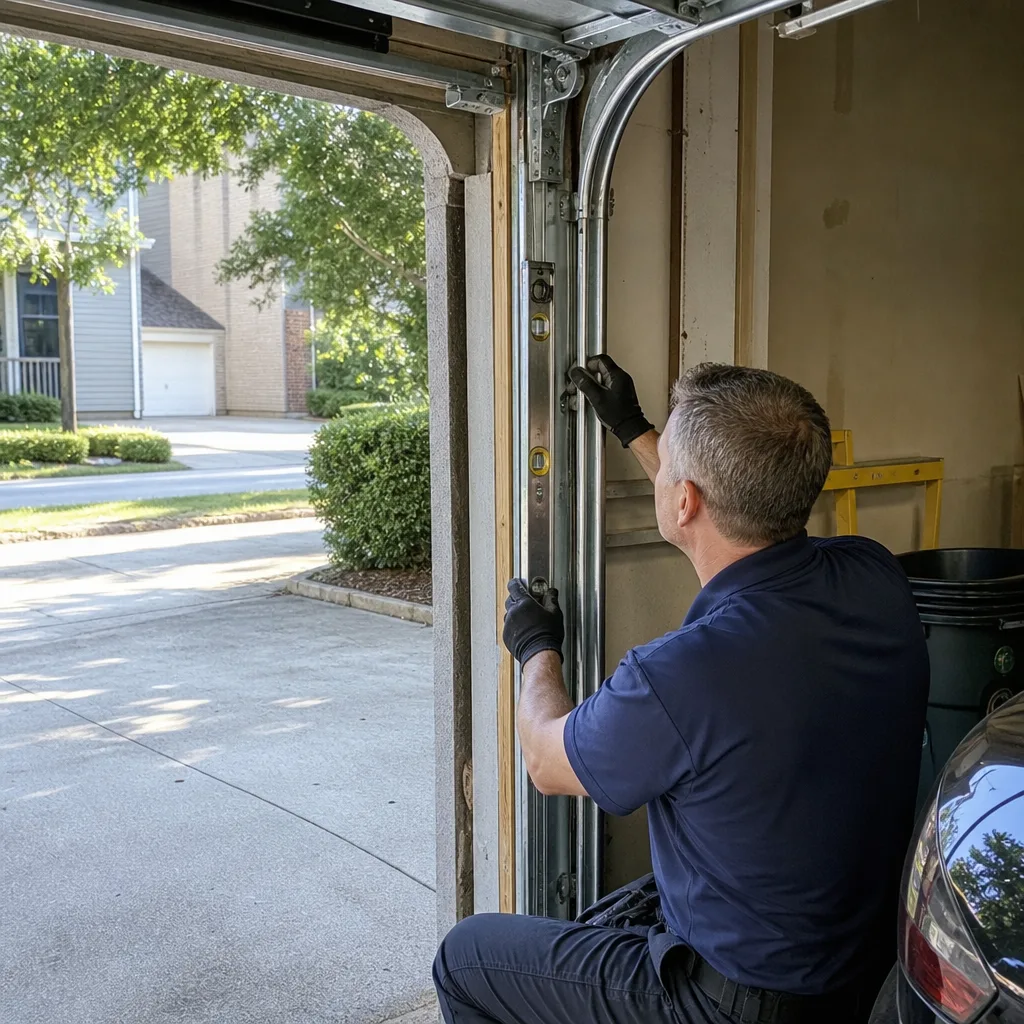
- Daylight showing under the door. The seal has compressed, torn, or pulled out of the retainer at one end. This is the most common failure we see in Medlock Bridge corridor garages, usually starting at the corners where the door flexes during operation. The seal loses contact with the slab, and you can see it from inside with the door closed.
- Water pooling near the threshold after rain. Johns Creek gets steady summer storms, and a failed bottom seal channels that runoff right into your garage. If you’re finding damp cardboard or rusting tool bases near the door, the seal isn’t doing its job. The slab may also have a low spot that a new seal alone won’t fix, which is something we check during the quote.
- A rubber smell or visible cracking when you flex the seal. Raynor’s weather seal rubber, like all EPDM and vinyl blends, hardens over time. Georgia’s UV exposure accelerates that. If the material feels brittle or shows surface cracks, it’s no longer compressing against the slab the way it should.
- Drafts or temperature swings in the garage. The bottom seal is a thermal barrier as much as a weather barrier. A garage that’s noticeably colder in January or hotter in July than it used to be often has a seal that’s lost its profile.
- Leaves, dirt, or pests getting in. The gap under a worn seal is an open invitation. If you’re sweeping out more debris than usual or seeing signs of insects near the door, the seal’s contact patch has likely opened up.
BeforeAfterReplacement Cost & What’s Included
For most Raynor doors in Johns Creek, a bottom weather seal replacement runs $110-$220 installed. The range breaks down like this: a 16-foot T-bead seal is on the lower end, while an 18-foot bulb-style or a door that also needs the retainer channel straightened or replaced moves toward the higher end. If you want the perimeter weatherstripping done at the same time, that’s a separate line item, and we’ll put it in writing before any work starts.
That’s a flat, written price per Clause 1 of The Haven Standard. What it includes: the seal itself, removal of the old material, cleaning the retainer channel, installation, a function check, and a documented photo record of the failed seal and the new seal installed. If the old seal is seized in the channel, we’ll tell you before we quote, not after we’ve started. The seal itself carries a manufacturer’s warranty, and our workmanship is covered by the 365-Day Done Right Promise. If something we installed isn’t right, we come back and make it right.
We answer calls at (470) 380-0642 with a live person, 24/7. When you call about a Raynor seal, we’ll ask the width of your door and whether you can see the bottom retainer from inside. That tells us which profile to load on the truck before we arrive.
DIY or Call Us?
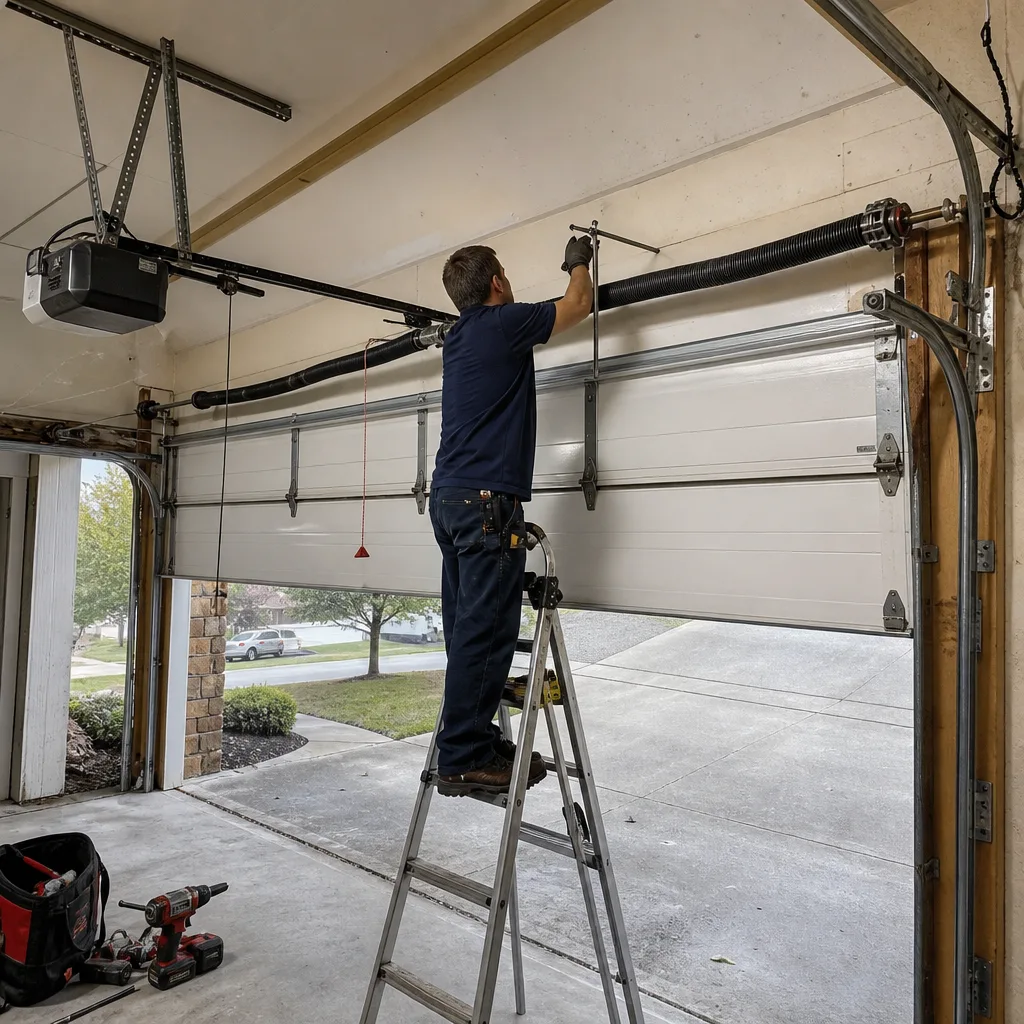
Replacing a T-bead or bulb-style bottom seal is one of the more straightforward garage door repairs. It doesn’t involve the torsion spring system, the cables, or anything under tension. The honest answer from Marcus Deller, who’s been working these systems for more than two decades, is that a patient homeowner with the right seal profile can usually get it done in an afternoon. The catch is getting the right profile and getting the old seal out of the retainer without bending the aluminum.
What an owner can safely check: look at the bottom of the door, identify whether the seal slides into an aluminum channel or fits into a round groove, and measure the door width. What goes wrong in practice: people buy a universal seal, fight it into the retainer, and end up with a seal that drags on one side or doesn’t reach the slab at all. Or the old seal has hardened and welded itself into the channel, and you’ll bend the retainer prying it out. If you’d rather not spend a Saturday discovering which Raynor profile your door actually has, call us at (470) 380-0642. We’ll name the part, quote the range, then do the work.
FAQs
Expect four to six years in this climate, with south-facing doors tending toward the shorter end. Georgia’s summer UV and humidity cycle is harder on rubber than a dry, mild climate would be. If you’re replacing the seal for the second time and it’s failing quicker than that, we’ll look at whether the slab is uneven or the retainer channel is misaligned. Call (470) 380-0642 and we’ll take a look: estimates are free.
No. Once the rubber has hardened, cracked, or pulled out of the retainer, there’s no reliable way to patch it. Adhesives won’t hold on EPDM, and the seam always fails first. The fix is removing the old material and installing a new seal. We typically complete that in under an hour once the right profile is confirmed.
About 30 to 45 minutes for a standard 16-foot Raynor door, plus time to clean the retainer channel if the old seal left residue behind. If the channel itself is damaged, that adds time, and we’ll tell you before we quote. Most customers have the job finished in a single visit.
Yes. We carry three Raynor-compatible profiles, covering the majority of Aspen, AP200, Relante, Ponderosa, and Decade doors in Johns Creek. We also stock parts for LiftMaster, Chamberlain, and Genie opener systems, so if your Raynor door has another issue we catch during the visit, the parts are likely already in the van. If we don’t have your exact profile, we’ll have it ordered before we leave and schedule the install once it arrives.
If your Raynor door is letting in water or daylight, call (470) 380-0642. We’ll give you a flat, written price before any work starts, photograph the failed seal so you can see what we found, and have the replacement installed without the upsell runaround. Name the part, quote the range, then do the work. That’s how we operate in Johns Creek.
Written by Marcus Deller, Owner, Servo Garage Doors Johns Creek at Servo Garage Doors Johns Creek, serving Johns Creek and nearby areas.