
Last updated September 20, 2026
Full 25-point door and opener safety check with every visit - springs, cables, rollers, tracks, and your LiftMaster or Chamberlain opener included
You get a price before we start. It does not change when the truck arrives.
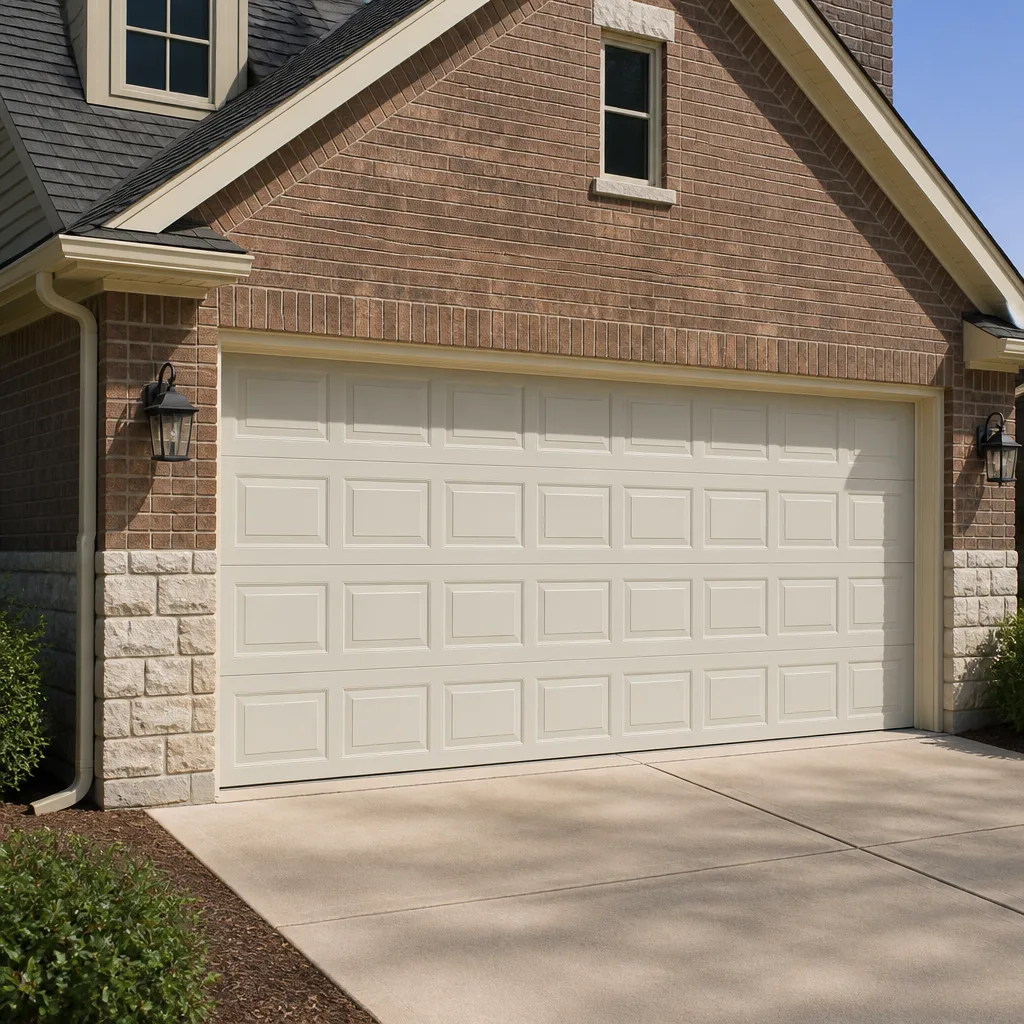
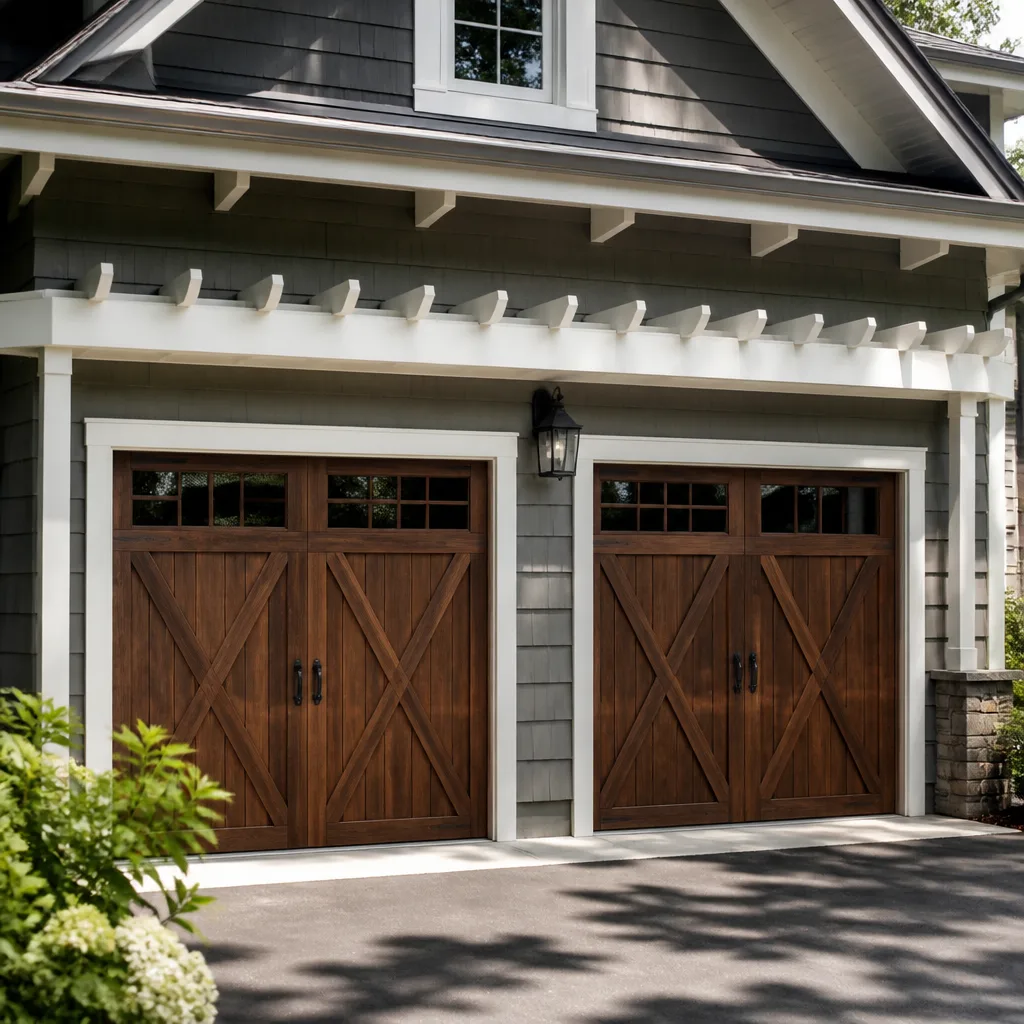
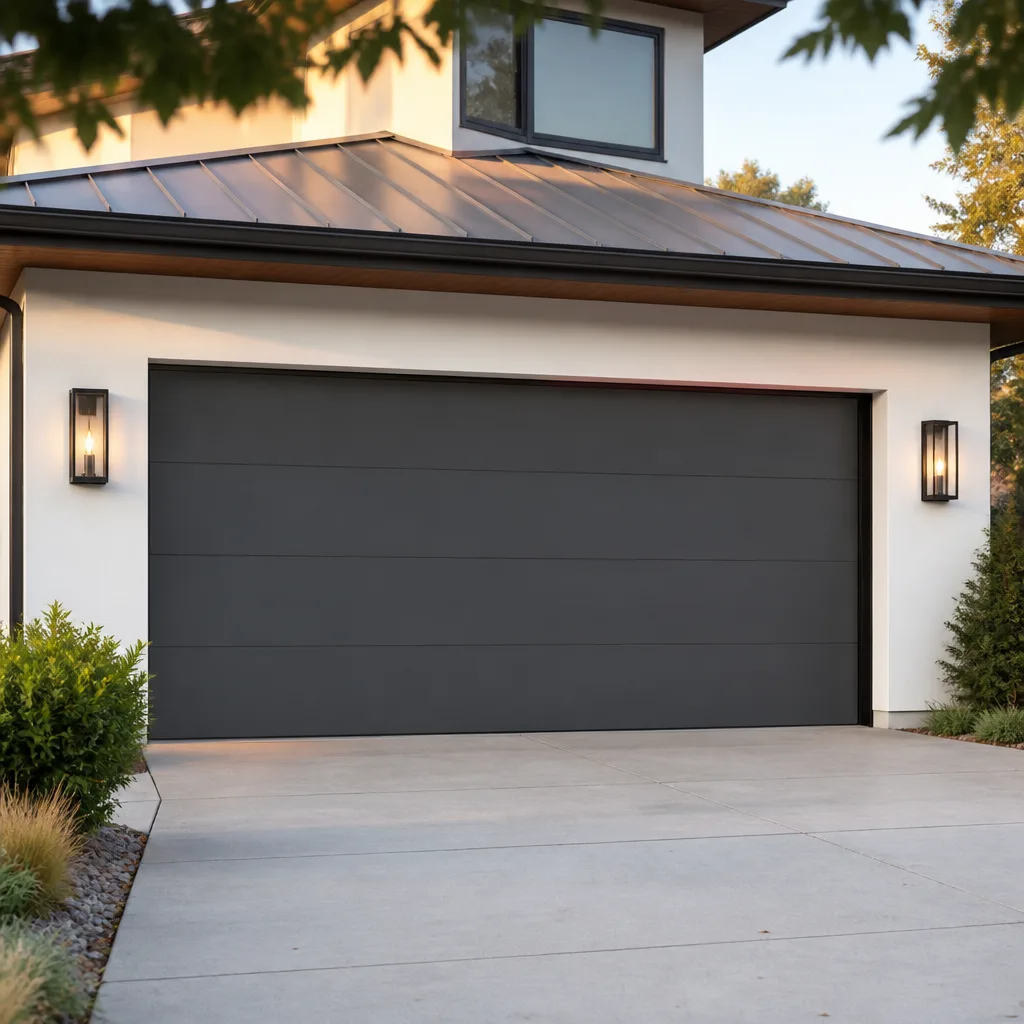
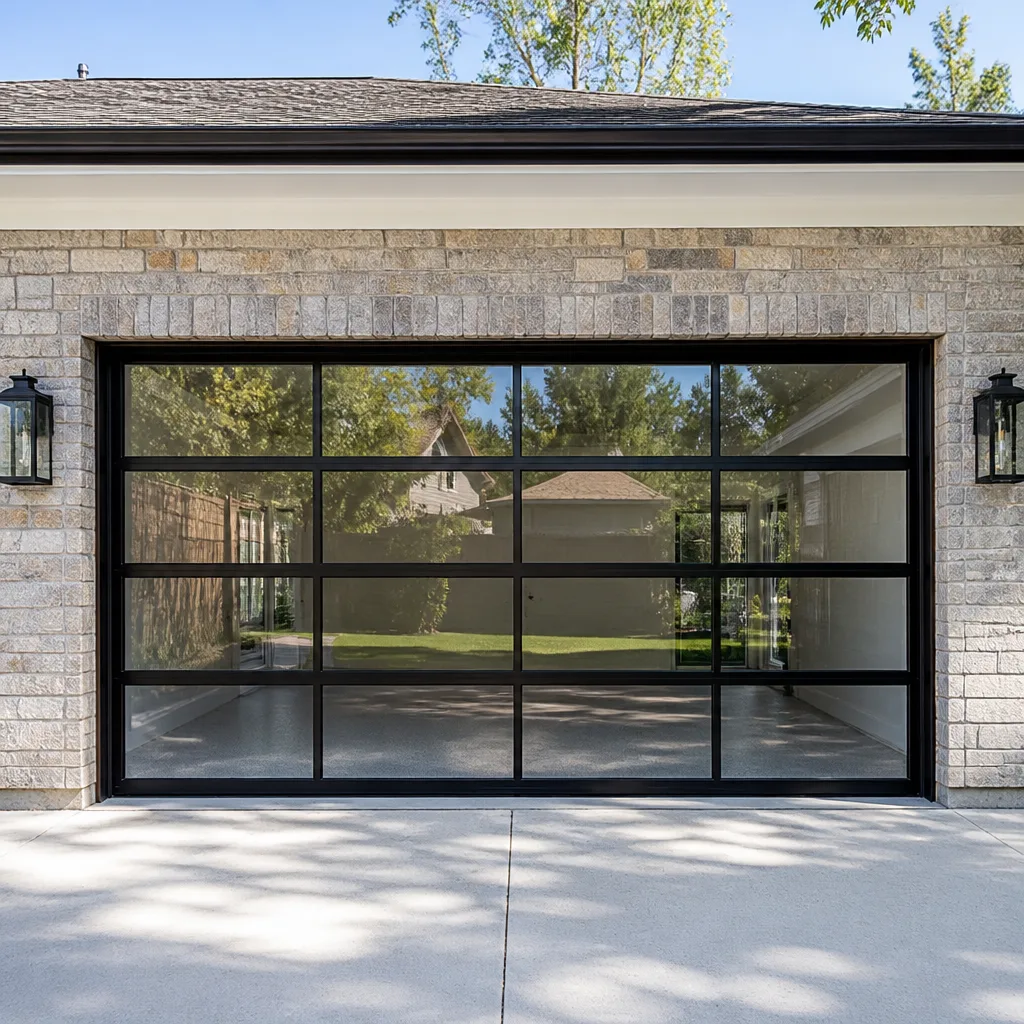
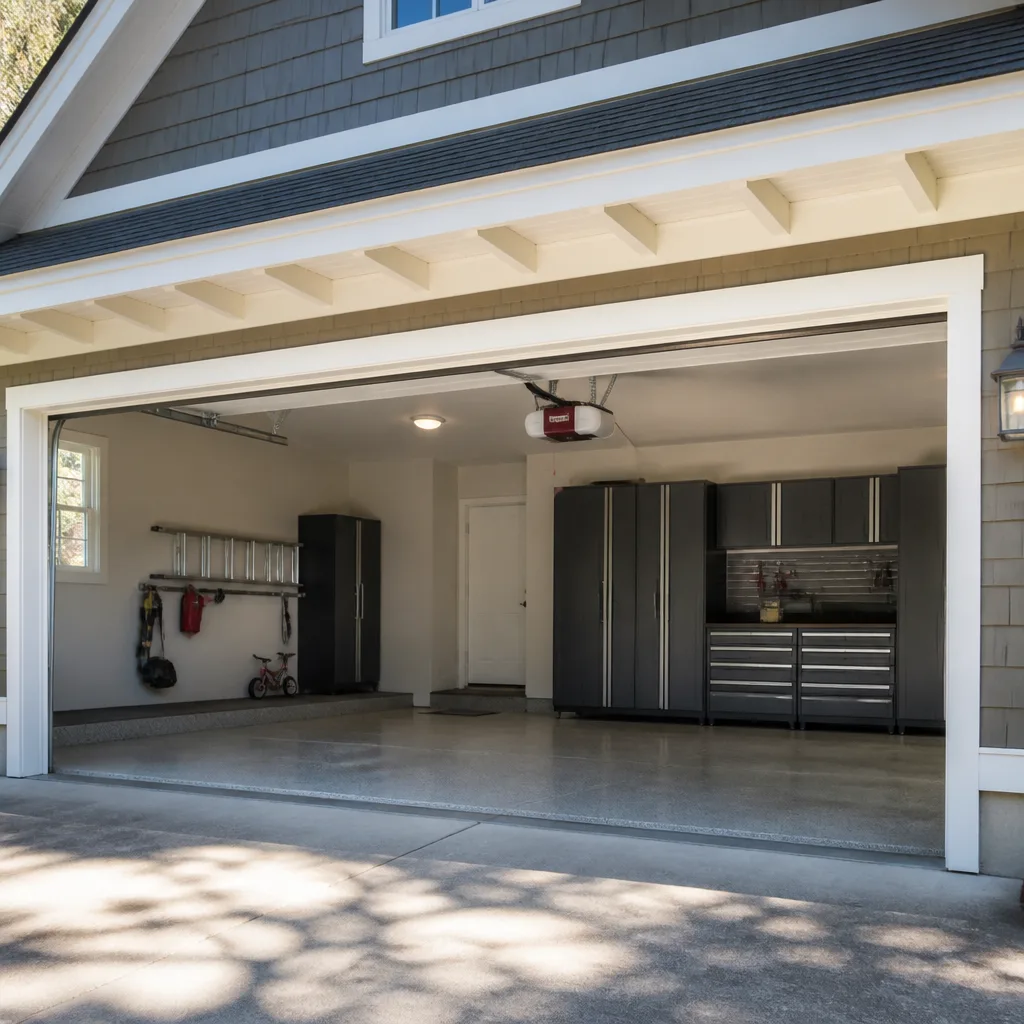
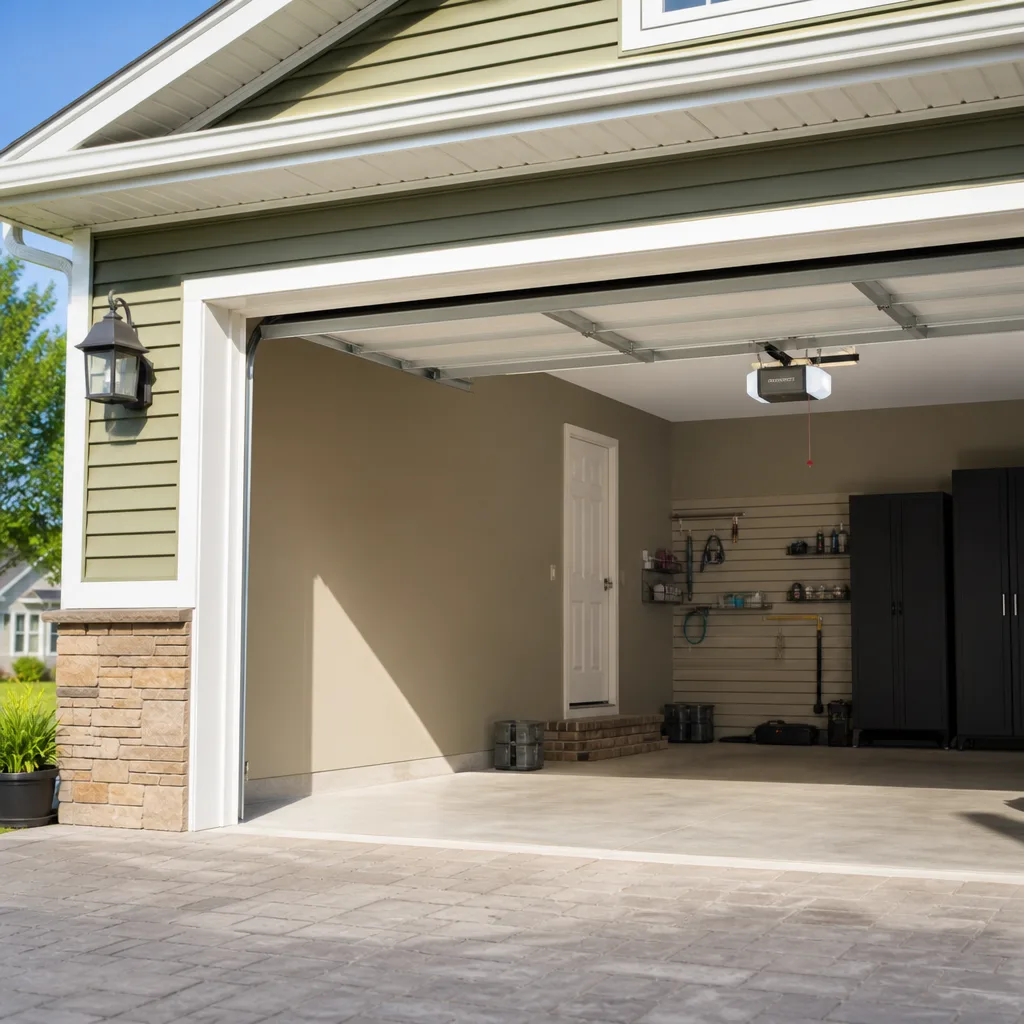
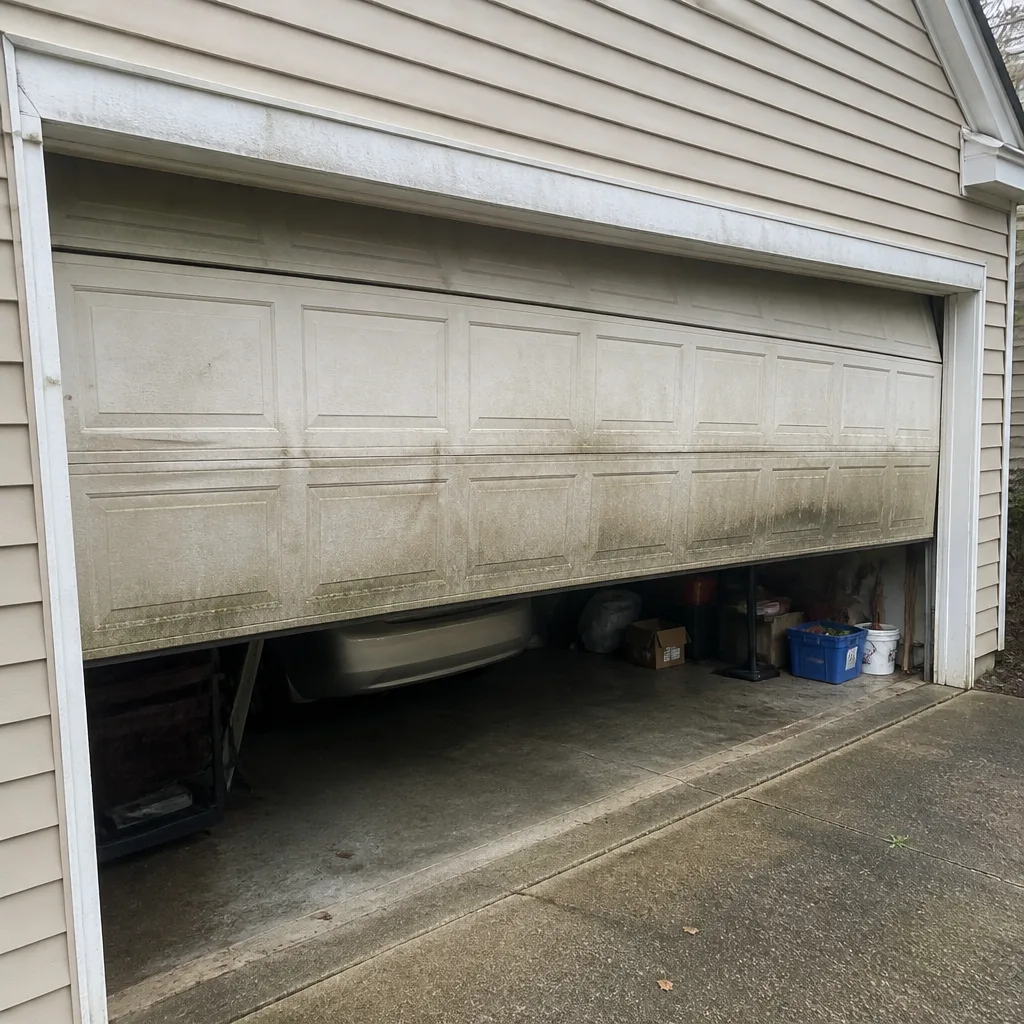 Before
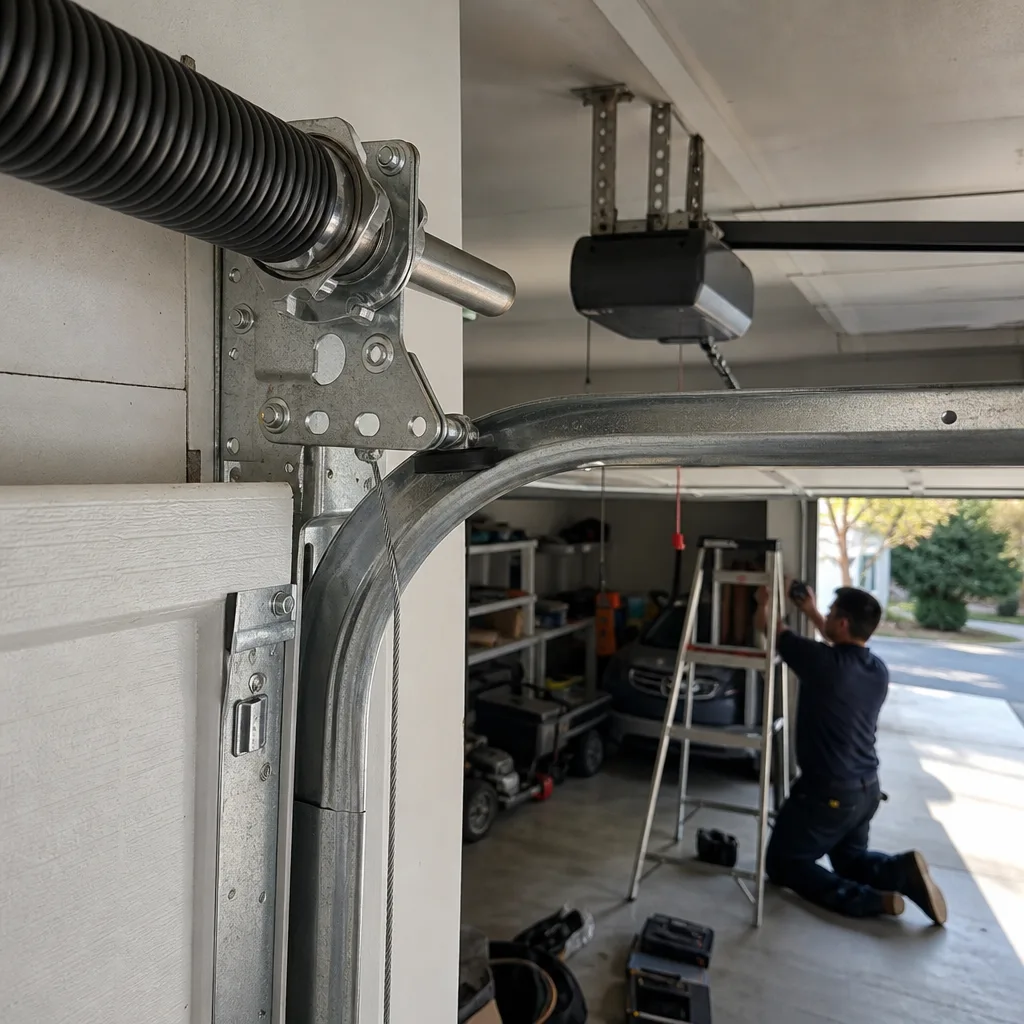 After
After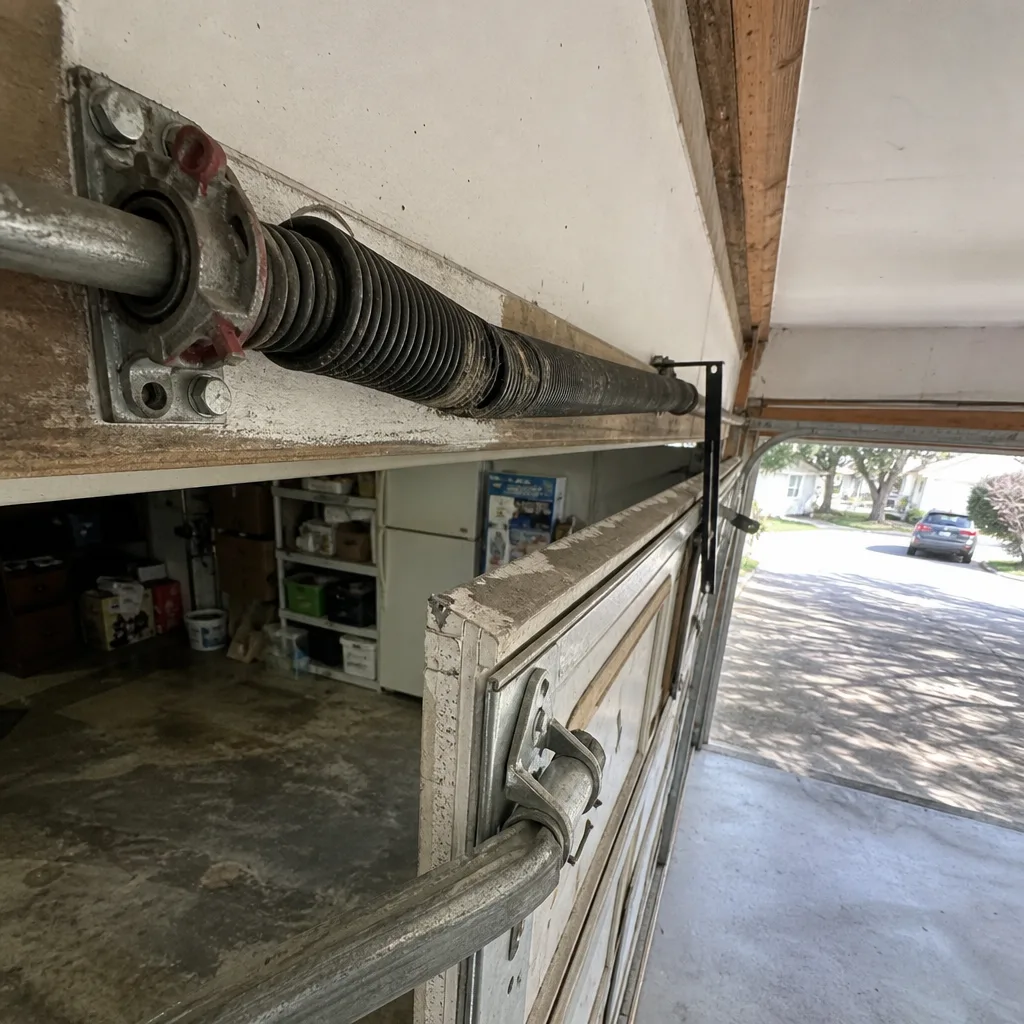 Before
 After
After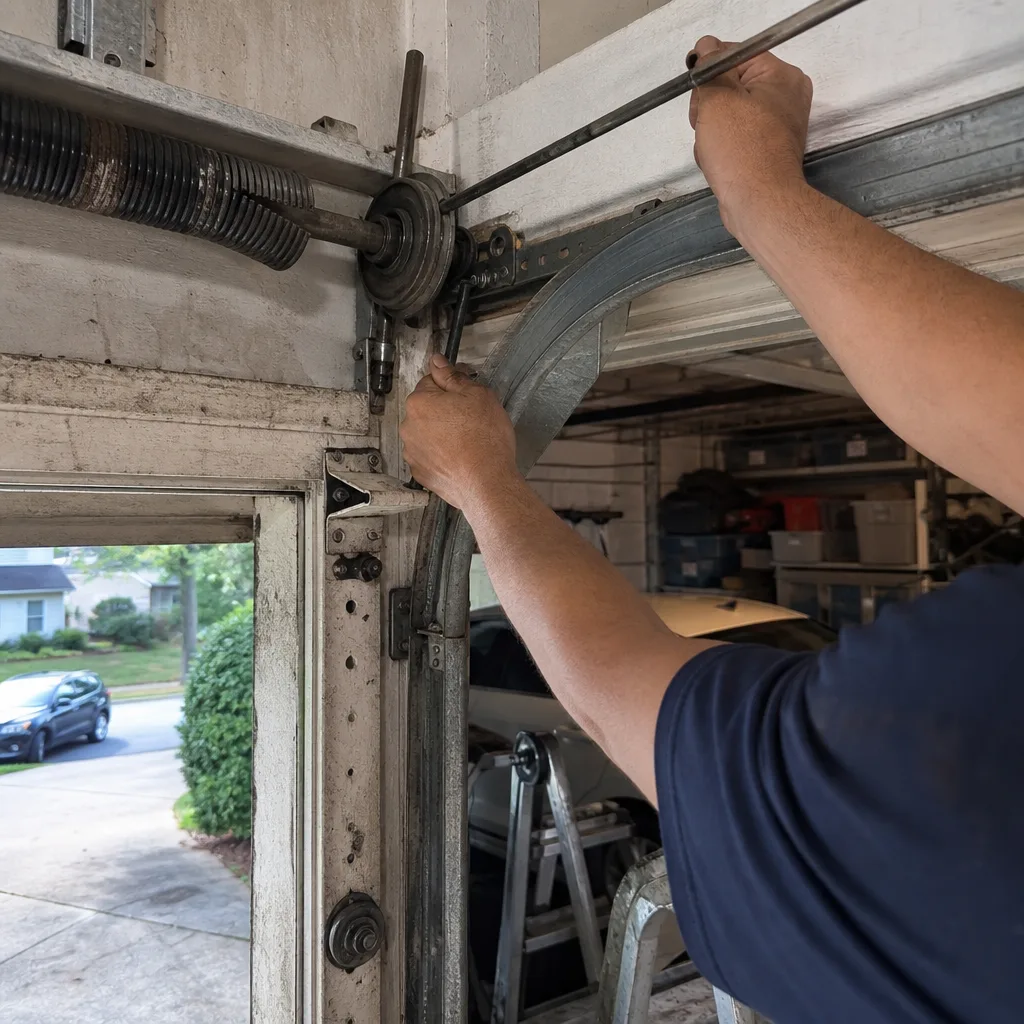 Before
 After
AfterThe Complete Guide to Garage Door in Johns Creek
Most Johns Creek homeowners replace their garage door twice in 20 years. Not because the first one failed, but because they bought for curb appeal and ignored the spring system, weatherseal spec, and opener torque rating that actually determine longevity. This guide maps every decision from panel material to torsion spring gauge so you buy the right system once, and you can explore more guides & resources for ongoing maintenance. You’ll learn what your HOA will and won’t allow, what Georgia’s humidity does to different door materials, and what each component actually costs to replace in Johns Creek.
Quick Answer
Choosing a garage door in Johns Creek means matching panel material to Georgia’s humidity, selecting a torsion spring with at least a 25,000-cycle rating for daily-use households, verifying your HOA’s architectural guidelines before ordering, and pairing the door with an opener sized for its actual weight. Done correctly, a mid-range steel door with proper weatherseal and a high-cycle spring system delivers 15 to 20 years of service with predictable maintenance costs. Done incorrectly, you’ll replace springs every 4 to 6 years and the door itself within 12.
Table of Contents
- Reading Your HOA Guidelines Before You Order
- Panel Materials and Georgia’s Humidity Problem
- Torsion Springs: The Component That Predicts Everything
- Headroom and Opener Compatibility in Johns Creek Homes
- Component-by-Component Lifespan and Cost Table
- Weatherseal Specs That Stop Callbacks
- Common Mistakes to Avoid
- When to Call a Professional
- Frequently Asked Questions
BeforeAfterReading Your HOA Guidelines Before You Order
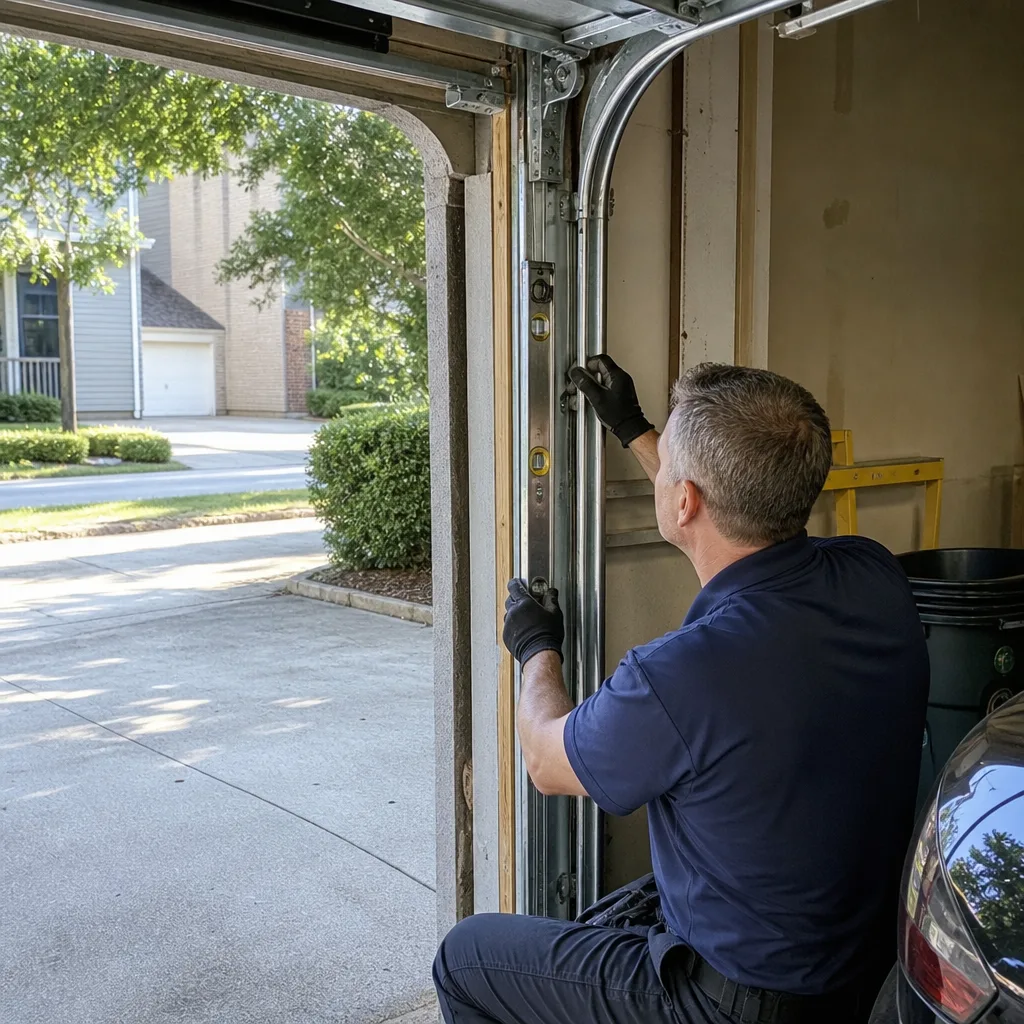
Johns Creek has one of the highest concentrations of HOA-governed neighborhoods in metro Atlanta. Windermere, St. Ives, Country Club of the South, Medlock Bridge, and The Falls of Autry Mill all have architectural review committees with specific language about garage doors. The time to read your CC&Rs is before you pay a deposit, not after the door arrives.
Here’s what we see in practice. Windermere covenants restrict panel style to raised or recessed steel in specific color families, and window placement on the top section only. St. Ives goes further: carriage-house styling is permitted, but only in specific manufacturers and models, and windows must use frosted or obscure glass. Some streets in St. Ives have color-locked palettes of four or five approved tones. If you’re on a corner lot or your garage faces the street, the review committee will almost certainly require an application.
Here’s how to read your CC&Rs without getting lost:
- Find the “Architectural Standards” or “Design Guidelines” section. This is usually separate from the general covenants. Look for the word “garage” specifically.
- Check for approved materials. Most Johns Creek HOAs approve steel and fiberglass. Some restrict wood or wood-look overlays due to maintenance or uniformity concerns.
- Note any color restrictions. “Neutral tones” is common language. What the committee means is usually white, almond, sandstone, or a specific brown or gray family. If the range isn’t clear, ask for examples of approved doors in your section.
- Confirm window rules. Many Johns Creek HOAs allow windows only on the top panel. Others require no windows at all on street-facing doors. Obscure or tinted glass is a frequent requirement where windows are permitted.
- Check for replacement approval requirements. Even replacing an existing door with an identical model may require a quick application in some neighborhoods. Replacing with a different style almost always does.
If you’re unsure, photograph a few neighbors’ doors before you shop. What’s already approved on your street is the strongest guide to what your committee will accept. And if the committee rejects your first application, most Johns Creek HOAs allow a resubmission with modifications, so factor that timeline in before you schedule installation.
Panel Materials and Georgia’s Humidity Problem
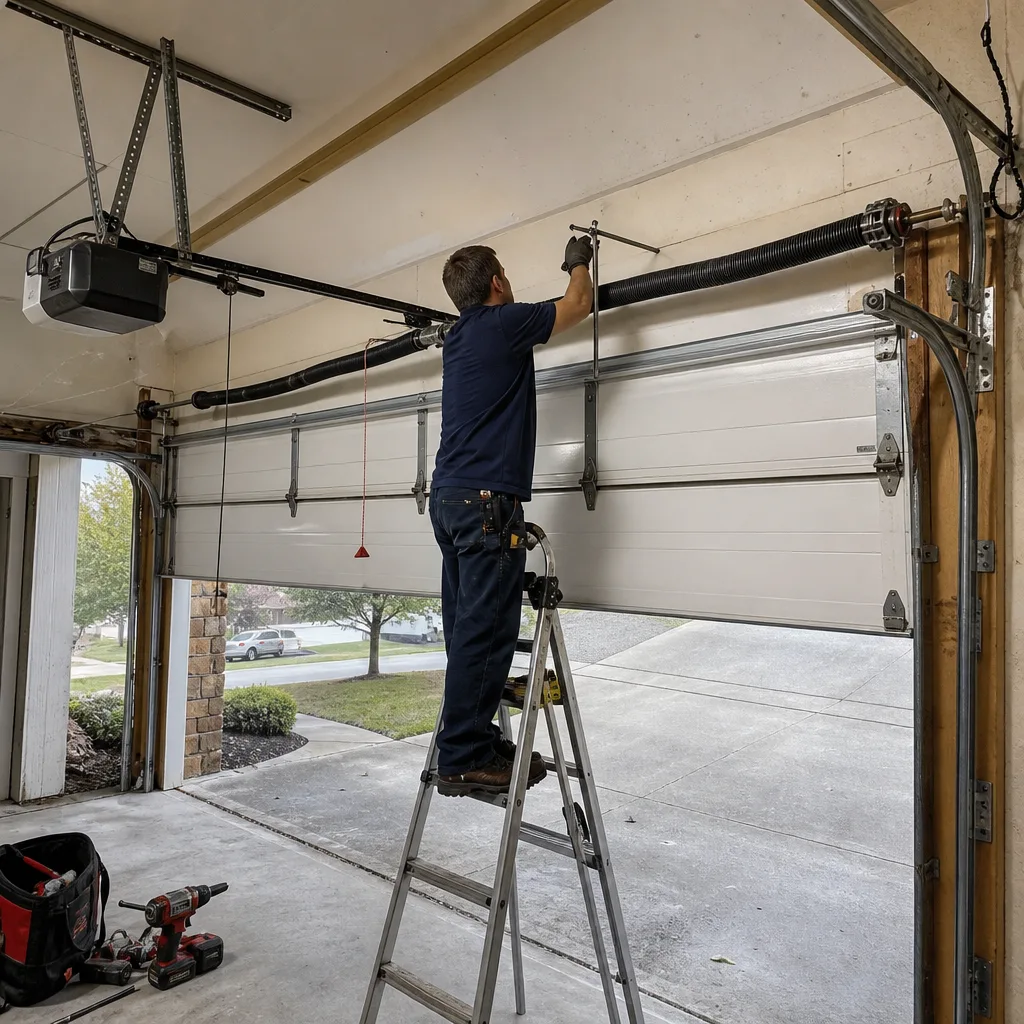
Fulton County’s climate is harder on garage doors than most people realize. Summer humidity regularly sits above 80 percent, and the UV index in July and August punishes south-facing and west-facing exteriors. This is why the steel gauge and finish coating matter more than panel aesthetics in Johns Creek.
Here’s what each material does in our climate:
- 24-gauge steel is the thin side of standard. It dents more easily and transmits more heat into the garage. It’s fine for a lightly used, shaded, north-facing door, but it’s not what we recommend for a daily-use two-car door that takes direct afternoon sun.
- 26-gauge steel is thicker and structurally stronger, but the gauge number drops as thickness rises, which confuses people. 26-gauge is a solid mid-range choice for most Johns Creek homes.
- 24-gauge vs. 26-gauge: the lower the number, the thicker the steel. A 24-gauge panel is thicker than a 26-gauge panel. Many manufacturers use 24 and 26 in the same door: 26-gauge on the interior layer and 24-gauge on the weather-facing exterior.
- Fiberglass resists humidity and never rusts, but it can fade and yellow under Georgia UV after 8 to 10 years, especially in darker colors.
- Wood and wood-composite doors need the most maintenance in our humidity. They absorb moisture, swell, and can warp if the weatherseal fails or if they’re not resealed every two to three years. We see warped wood doors most often in neighborhoods like The Falls of Autry Mill where doors face tree shade and hold moisture.
Finish matters as much as substrate. Look for a polyester or polyurethane topcoat over a zinc or zinc-aluminum primer on any steel door. Without that primer layer, scratched paint becomes a rust point within one season. With it, a scratched steel door stays structurally sound until you repaint. The finish spec is in the manufacturer’s cut sheet, and it’s one of the first things we check when a Johns Creek homeowner asks us to quote a door that another company proposed.
Torsion Springs: The Component That Predicts Everything
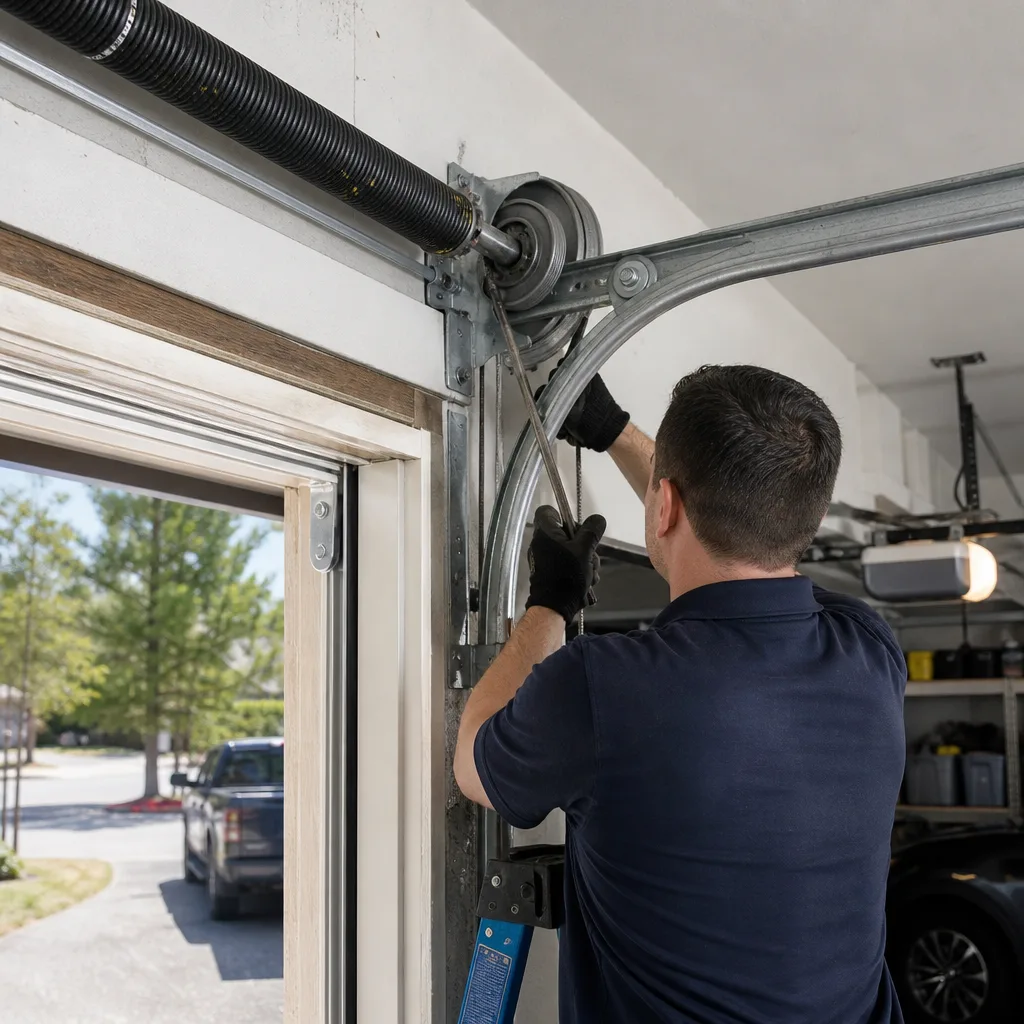
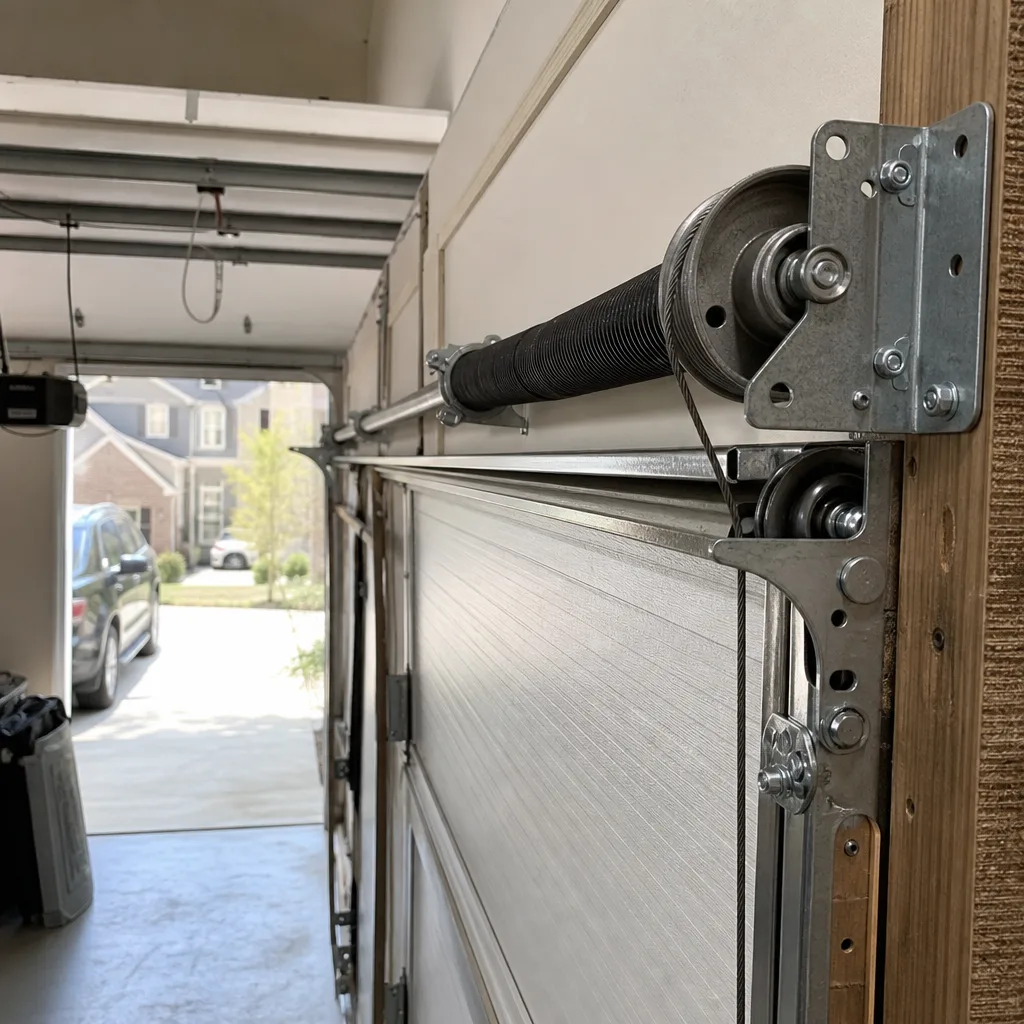
The torsion spring is the coiled steel component mounted above the door that counterbalances its weight. When it fails, the door stops opening or slams shut. It’s the highest-stress component on any garage door, and its cycle rating is the single spec that most directly predicts how often you’ll be replacing it.
A “cycle” is one full open and one full close. A standard torsion spring is rated for 10,000 cycles. In a household where the door operates four times a day, that’s roughly 6 to 7 years of service. A high-cycle spring is rated for 25,000 cycles or more, which in the same household translates to 15 to 17 years.
Here’s the math that matters. In our experience across Johns Creek, the typical two-car household runs the garage door 5 to 8 times a day during the week: mornings, school runs, afternoons, and evenings. That pushes a 10,000-cycle spring to failure in as little as 4 years. A 25,000-cycle spring lasts three times longer but costs only 20 to 30 percent more on the initial install. That’s the single best value decision you can make on a new door.
- 10,000-cycle springs: Standard builder-grade. Appropriate for a garage used once or twice a day. Expect replacement every 4 to 7 years in a busy household.
- 25,000-cycle springs: High-cycle, oil-tempered or powder-coated. The right choice for daily-use two-car garages. Expect 12 to 17 years in a busy household.
- 50,000-cycle springs: Commercial-grade. Overkill for most homes but worth considering if the garage serves a home office, workshop, or multi-generational household with constant traffic.
Spring replacement is not a DIY project. Torsion springs hold hundreds of pounds of tension, and a spring that releases unexpectedly can cause serious injury. Always have a trained professional handle torsion spring replacement. When you buy a new door, specify the spring cycle rating in writing before you sign anything. A door quote that doesn’t state the spring spec is incomplete.
Headroom and Opener Compatibility in Johns Creek Homes
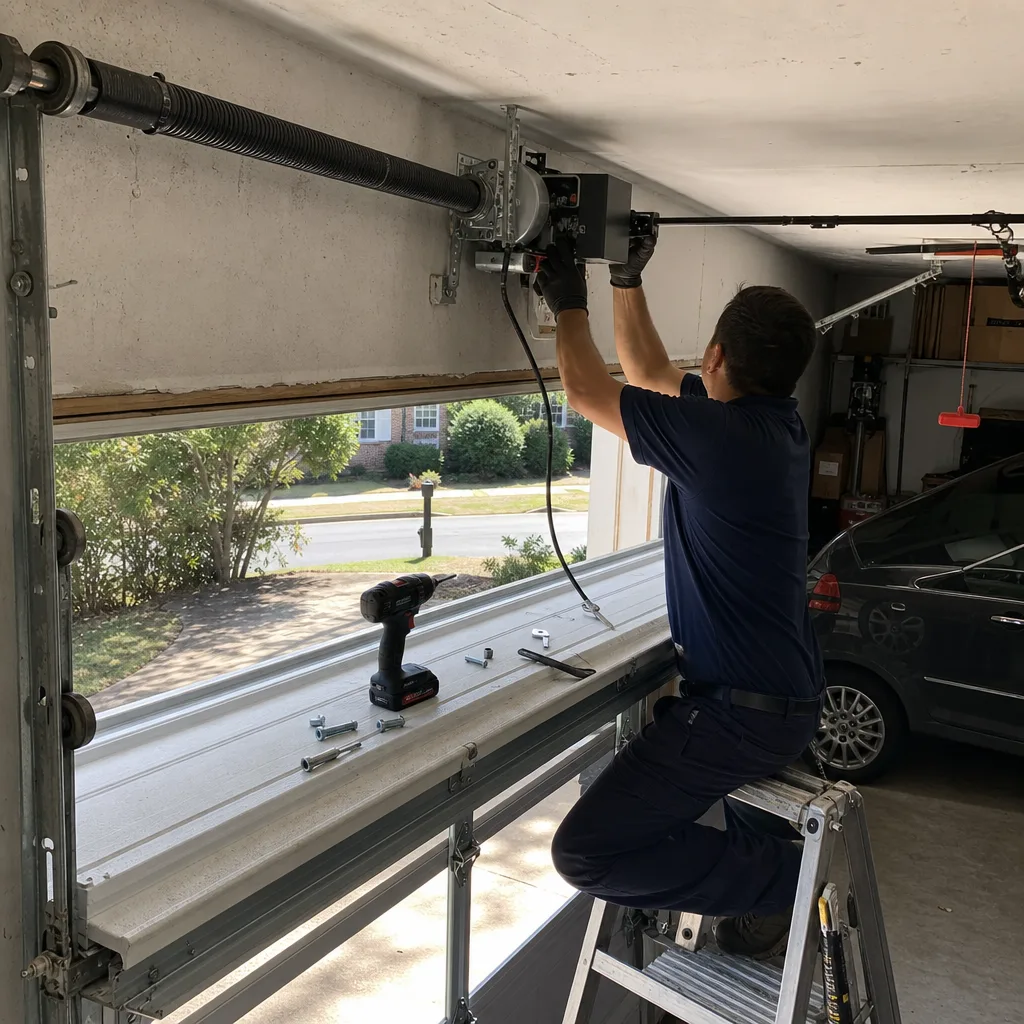
Johns Creek’s housing stock spans two distinct eras. Homes built in the 1980s and early 1990s in neighborhoods like Medlock Bridge and Cambridge often have standard 7-foot garage ceilings with limited headroom above the door opening. Homes built after 2000, especially in Windermere and St. Ives, more frequently have 8-foot or taller garage ceilings and side-mounted opener options.
This matters because the physical space above the door determines what kind of opener you can use and whether you need a standard or low-headroom track configuration.
- Standard headroom requires roughly 12 inches of clearance above the door opening. A standard trolley-style opener mounts on a rail that runs back into the garage ceiling from the center of the door.
- Low-headroom or flush-mount installation uses a double-track configuration or a special track radius to fit into as little as 4 to 6 inches of headroom. It works, but it reduces door smoothness and can limit opener choices.
- Side-mounted (jackshaft) openers bolt to the wall beside the door rather than hanging from ceiling rails. They’re ideal for garages with cathedral ceilings, beams, or high-lift track, but they require a torsion spring system and enough side clearance.
Here’s what we check before citing an opener for a Johns Creek home: the actual measured headroom above the opening, the condition and type of the existing track, the door’s weight (which determines the opener’s torque requirement), and whether the garage has an outlet near the ceiling. On older Johns Creek homes with low headroom, the track configuration may be the limiting factor, not the opener itself. A door that weighs 180 pounds needs a different torque class than the same-size door that weighs 130. The right opener prevents the motor and gear from burning out early, which is the most common opener failure we see in Fulton County’s heat.
Component-by-Component Lifespan and Cost Table
A garage door isn’t one component with one lifespan. It’s a system, and the pieces wear at different rates. Knowing the replacement cost for each part before you purchase-see our Garage Door Cost Breakdown: The Johns Creek Homeowner’s Reference for 2026-means your 10-year total cost of ownership is calculable, not a surprise.
| Component | Typical Lifespan in Johns Creek | Replacement Cost Range | Notes |
|---|---|---|---|
| Torsion spring (10,000-cycle) | 4-7 years | $220-$380 per spring | Two springs on most doors. High-cycle upgrade adds 20-30% but lasts 2.5x longer. |
| Torsion spring (25,000-cycle) | 12-17 years | $280-$450 per spring | Best value for daily-use households. |
| Steel cables | 8-12 years | $85-$175 per pair | Replace both at once. Frayed cable is a safety hazard. |
| Rollers (steel) | 5-8 years | $12-$20 each | Ten rollers standard on a two-car door. |
| Rollers (nylon) | 10-15 years | $15-$28 each | Quieter and smoother. Worth the upgrade. |
| Weatherseal (bottom) | 3-5 years | $60-$120 installed | Humidity and sun degrade seals faster in Johns Creek. |
| Weatherseal (side and top) | 5-8 years | $90-$180 installed | Prevents insect entry and heat loss around the perimeter. |
| Garage door opener | 10-15 years | $320-$650 installed | Full opener with rail, motor, and safety sensors. |
| Logic board / control board | 8-12 years | $140-$260 | Most common electronic failure from Georgia heat and power surges. |
| Full door replacement | 15-25 years (steel) | $1,400-$4,500 depending on series | Mid-range steel with quality finish runs $1,800-$2,800 in Johns Creek. |
These are street-level ranges for the Johns Creek market, not national averages. When you’re comparing quotes, the line items should be spelled out. A door estimate that only shows a total with no spring cycle rating, no weatherseal spec, and no finish class is not a complete quote.
For a full breakdown of what repair pricing looks like on individual service calls, see our Garage Door Repair in Johns Creek page. And if you’re starting fresh with a new system rather than repairing an existing one, the Garage Door Installation in Johns Creek guide covers what a properly scoped installation includes.
Weatherseal Specs That Stop Callbacks
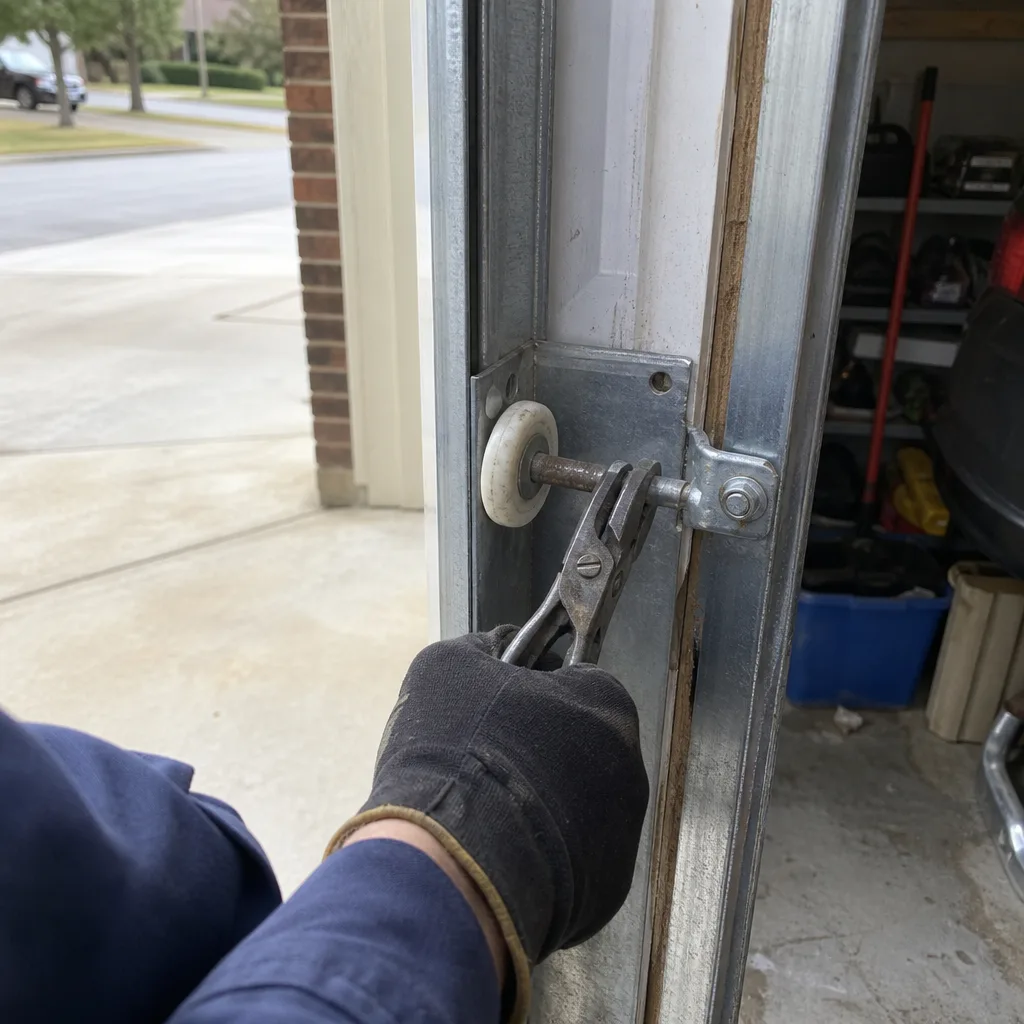
Georgia heat and humidity do two things to a garage door weatherseal: the heat dries and cracks the rubber, and the humidity creates gaps where the door settles or where seal material compresses over time. In Johns Creek, we replace bottom seals on average every 3 to 5 years, and the first sign is usually a streak of daylight along the floor or a damp smell in the garage after rain.
The bottom seal is a length of flexible PVC or rubber that runs along the bottom edge of the door and compresses against the concrete to close the gap. It’s inserted into an aluminum retainer that bolts to the bottom panel. When the seal cracks or compresses, you lose the barrier against water, insects, dust, and conditioned air.
Two specs matter here. First, the bulb diameter must match the retainer, and there are multiple profiles. A T-style seal fits one retainer; a P-style fits another. Match them or the seal will fall out within weeks. Second, the material should be a UV-stabilized PVC or EPDM rubber. Standard PVC without UV stabilizer degrades faster under direct sun, and doors that face south or west in Johns Creek take the most punishment.
Side and top seals use a vinyl weatherstrip that nails or screws into the jamb. Over time, these strips harden and shrink, leaving gaps that let in drafts and insects. In Fulton County, look for signs of entry around the door frame, especially near the corners where the side seal meets the header. Replacing all four perimeter seals at once is usually more cost-effective than doing them one at a time.
A properly sealed garage door keeps the garage 10 to 15 degrees cooler in a Georgia summer and noticeably dryer in spring and fall. It’s the least expensive component on the door and one of the most consequential for comfort and energy loss.
Common Mistakes to Avoid
- Buying a door without checking HOA rules first. In Johns Creek neighborhoods like Windermere and St. Ives, a non-compliant door can trigger a notice to remove and replace at your own cost. Read the architectural guidelines before you order anything.
- Accepting a 10,000-cycle spring on a daily-use two-car door. You’ll replace it in 4 to 6 years. The 25,000-cycle upgrade costs 20 to 30 percent more and lasts roughly 2.5 times longer in a busy Johns Creek household.
- Picking panel color based on a website swatch. Colors look different in full Georgia sun than they do on a screen. Ask to see the door installed, or request a physical metal sample before you commit.
- Ignoring the weatherseal spec. A bottom seal that doesn’t match its retainer profile will pull out. And non-UV-stabilized PVC will crack in two summers on a south-facing door.
- Choosing an opener without weighing the door. Torque rating is specific to door weight, not just door size. A mismatched opener motor fails early, especially when summer heat pushes operating temperatures up.
- Replacing only one spring when both are worn. Torsion springs wear at nearly the same rate. Replacing one leaves you with a misbalanced door and a second service call within months.
- Scheduling installation without a written line-item quote. If the spring rating, weatherseal type, track configuration, and finish class aren’t on the page, you don’t have a document to hold anyone to.
When to Call a Professional
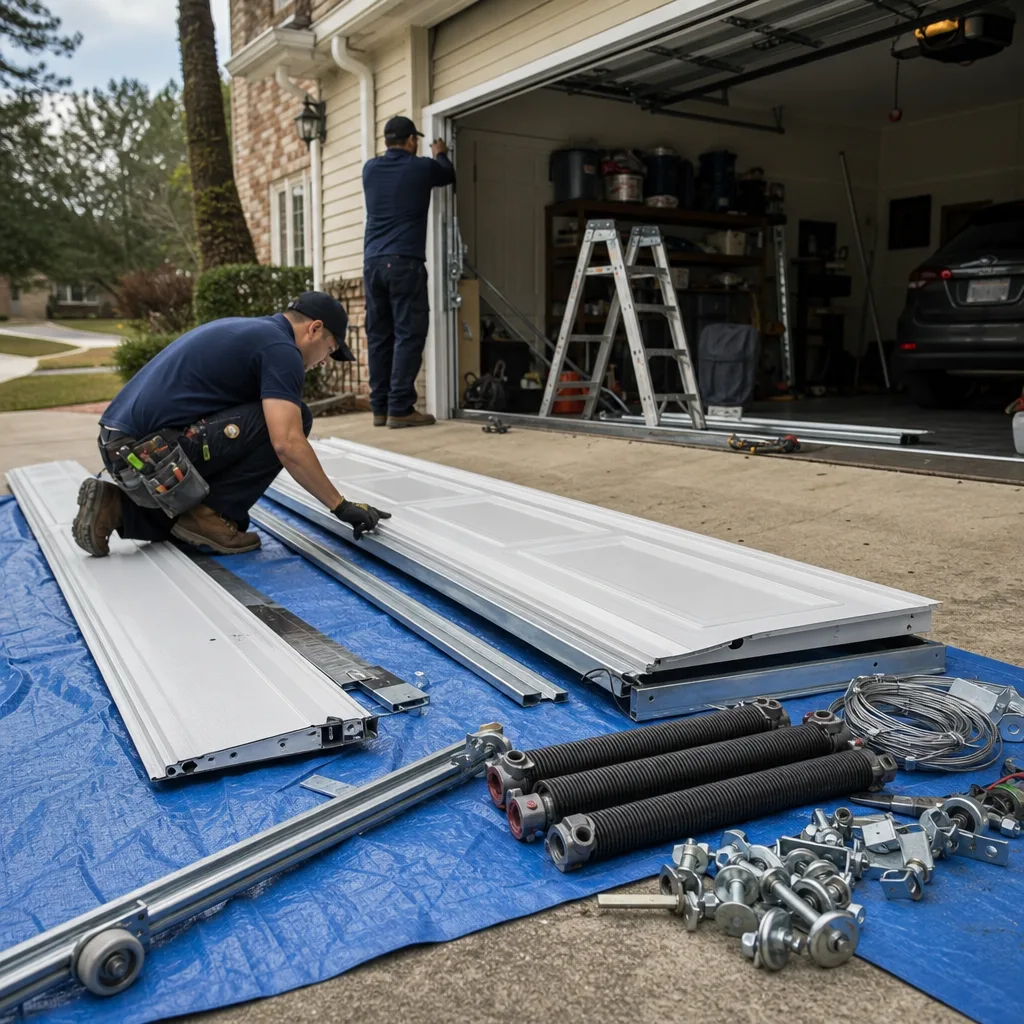
Some garage door decisions are worth a professional’s eyes and documented measurements. If your door shakes or binds when opening, the track or the balance is wrong and continued use accelerates wear on other components. If you hear a loud snap from the spring area, stop using the door and schedule immediate service. Torsion springs and cables are under high tension and are dangerous to work on without the right tools and training. If your HOA application was rejected and you need guidance on what will pass, we can help you navigate the resubmission. If your door is 15 or more years old and you’re planning to stay in the home, a full system evaluation is usually smarter than a series of patch repairs. Servo Garage Doors Johns Creek home is the starting point for all of this. We offer free estimates in Johns Creek, and we quote a flat written price with a written scope before any work starts. Call (470) 380-0642.
Frequently Asked Questions
A mid-range steel garage door installed in Johns Creek typically costs between $1,800 and $2,800, with premium series and custom work running higher depending on materials, window options, and track configuration. Every Servo quote is a flat written price with a written scope before work starts, per Clause 1 of The Haven Standard.
We service and install all eight major brands: LiftMaster, Chamberlain, Genie, Clopay, Amarr, Wayne Dalton, Craftsman, and Raynor. If you’re deciding between Amarr and Wayne Dalton for a Johns Creek home, the bigger variable is the spring rating and finish spec, not the brand sticker.
In most Johns Creek neighborhoods with architectural review, yes. Windermere and St. Ives have specific covenants governing panel style, color, and window placement. Check your CC&Rs before you purchase, and review Garage Door Permits, Codes & Inspections in GA: What You Need to Know if the language is unclear.
A 10,000-cycle spring lasts roughly 4 to 7 years in a daily-use household, while a 25,000-cycle spring lasts roughly 12 to 17 years for about 20 to 30 percent more upfront. For a busy Johns Creek two-car garage, the high-cycle spring is almost always the better value.
A well-made steel door with a proper primer and topcoat typically lasts 15 to 25 years in Johns Creek, but the springs, cables, rollers, and weatherseal will all need replacement well before the panels. Planning for component replacement is how you avoid replacing the whole system prematurely.
For repair calls, our technicians carry the most common springs, cables, rollers, seals, and opener components in the van, so most repairs in Johns Creek are completed on the first visit. Call (470) 380-0642 and we’ll tell you over the phone what a live person knows, not a recording.
The Haven Standard is the written service system Servo Garage Doors operates under. Clause 1 requires a flat written price and written scope before any work begins. Clause 4 is the reason our technicians photograph the failed component before quoting a replacement. You receive documentation of what we found and what we did on every visit.
Yes, if the opener is sized to the door’s actual weight and not just its width. Side-mounted jackshaft openers are a common choice for heavy doors in Johns Creek homes with limited headroom, but they require a torsion spring system and enough side clearance to mount properly.
The Bottom Line
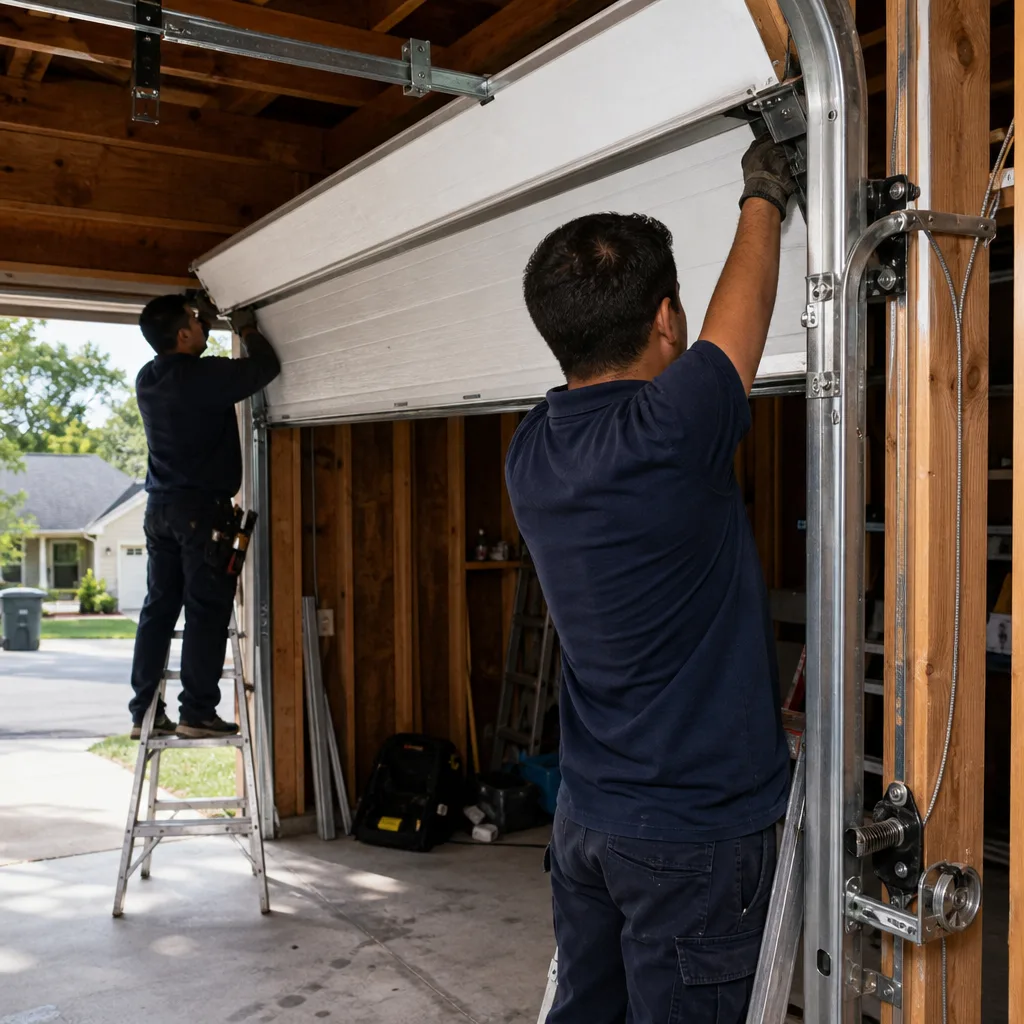
A garage door in Johns Creek is a documented mechanical system with HOA constraints, Georgia climate stressors, and component lifespans that determine your real 10-year cost. Read your CC&Rs first. Buy the highest cycle-rated spring your budget allows. Confirm the finish has a proper zinc primer under the topcoat. Match the weatherseal to the retainer profile and buy UV-stabilized material. Size the opener to the door’s actual weight, not its width. Do all of that, and you won’t buy this door twice. When you’re ready for a written, flat-price quote with a documented photo record, call (470) 380-0642. We photograph the failed component before we quote a replacement, and the price you see in writing is the price you pay.
Written by Marcus Deller, Owner at Servo Garage Doors Johns Creek, serving Johns Creek since 2015.