
Last updated September 20, 2026
Full 25-point door and opener safety check with every visit - springs, cables, rollers, tracks, and your LiftMaster or Chamberlain opener included
You get a price before we start. It does not change when the truck arrives.

 Before
 After
After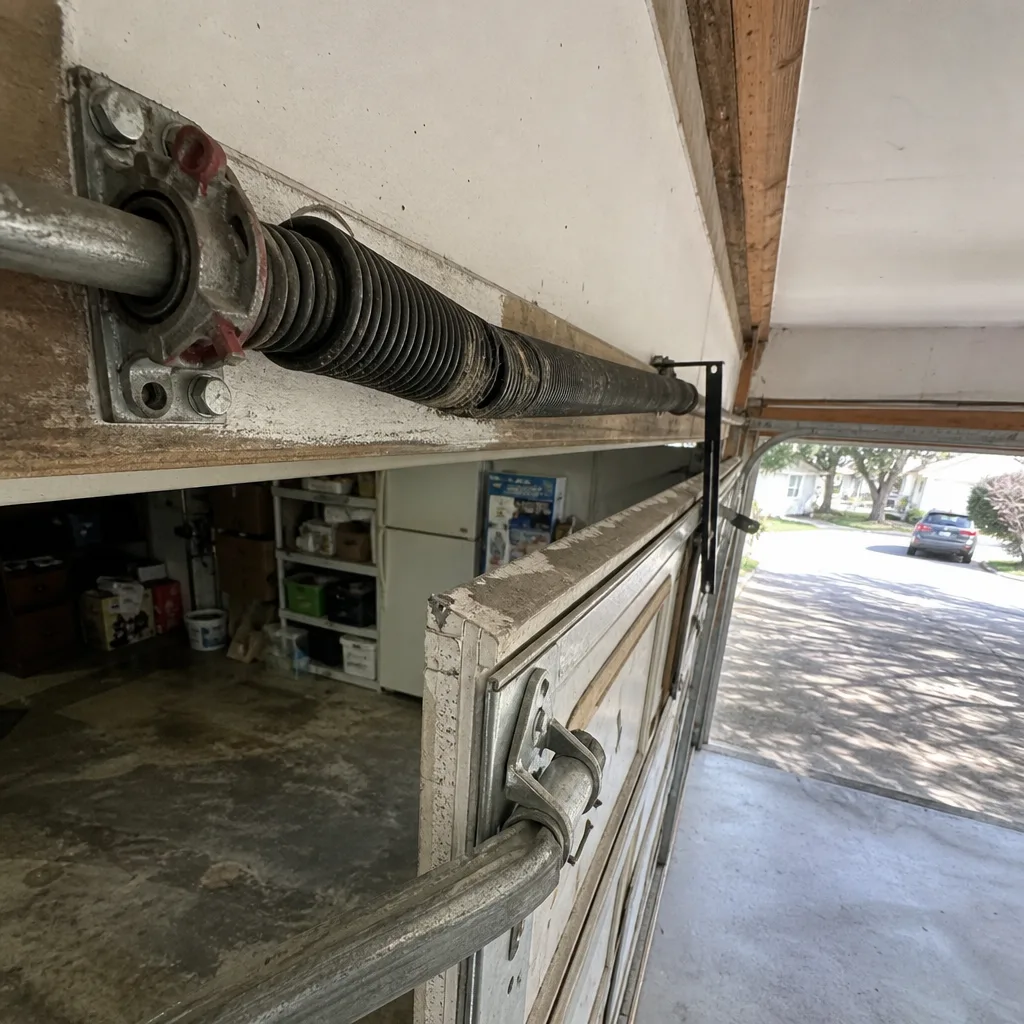 Before
 After
After Before
 After
AfterSeasonal Garage Door Care for Johns Creek: Year-Round Homeowner’s Guide
Most seasonal garage door guides are written for Minneapolis. Johns Creek gets eight months of humidity and a handful of nights below 28°F - a combination that corrodes fasteners, swells wooden bottom seals, and degrades torsion spring lubrication on a completely different schedule. This guide covers the maintenance tasks that actually matter in this climate: pollen-clogged weatherseal tracks in March, condensation-driven rust on panel seams in July, and the single hard freeze in January that seizes a bottom bracket to the floor plate. You’ll learn what to do each month, what tools you’ll need, and how to know the job was done correctly - not just done.
Quick Answer
Seasonal garage door maintenance in Johns Creek means cleaning pollen from the weatherseal track in March, checking panel seams for condensation rust monthly through summer, lubricating rollers and hinges every six months with a lithium-based lubricant, and preparing the bottom bracket and weatherseal for brief January freezes. Most tasks take under 30 minutes and require nothing more than a rag, white lithium grease, and a flathead screwdriver, though DIY vs professional help is worth considering for complex issues. The complete schedule below covers every month, the specific condition each task addresses, and when to stop and call a professional.
Table of Contents
- Why Johns Creek’s Climate Demands a Different Maintenance Schedule
- March: The Pollen Cleanout Nobody Does (And Why It Matters)
- Summer Humidity and Steel Panel Seams: Where Rust Actually Starts
- Summer Opener Performance: Why Your Chain-Drive Runs Hotter Than Its Duty Cycle Assumes
- November Freeze Prep: Not Freeze Prevention - Single Hard Freeze Preparation
- The Month-by-Month Task Calendar: Tools, Time, and Done-Right Conditions
- Common Mistakes to Avoid
- When to Call a Professional
BeforeAfterWhy Johns Creek’s Climate Demands a Different Maintenance Schedule
Johns Creek sits at roughly 32 degrees north latitude, which puts it in a humid subtropical zone. That’s a technical way of saying the air stays wet for most of the year. Average relative humidity runs above 70 percent from May through September, and dew point temperatures routinely cross 70 degrees in July and August. For a garage door, that means condensation cycles happen every single morning, not just seasonally. Overnight, the steel panels cool. By mid-morning, warm humid air hits the cooler metal surface, and moisture forms. That moisture seeks the lowest point - which on a sectional door is the bottom panel seam and the fasteners holding the hardware.
Compare that to a Minneapolis door, which spends five months frozen dry. The maintenance priorities there involve snow clearance, ice dam prevention, and cold-weather lubricant thickening. None of those apply here. What does apply is a stress-cycle pattern: humidity that corrodes, UV that degrades seals, and occasional hard freezes that exploit any gap or crack created by the other two stressors. We’ve seen torsion springs in Johns Creek garages fail at eight years with visible rust pitting along the coil, while the same spring in a drier climate might go twelve. The schedule below is built around those actual stressors, not a generic seasonal template.
One more point worth making: Johns Creek homes built between 2015 and 2025 commonly have non-climate-controlled garages. That means no HVAC, no dehumidifier, and full exposure to whatever the outside air is doing. The door is the largest moving object in the house and it faces the most environmental abuse. Treating it with a schedule calibrated to this climate extends its service life by years - and reduces the odds of a 2 a.m. spring failure that turns into an emergency call.
March: The Pollen Cleanout Nobody Does (And Why It Matters)
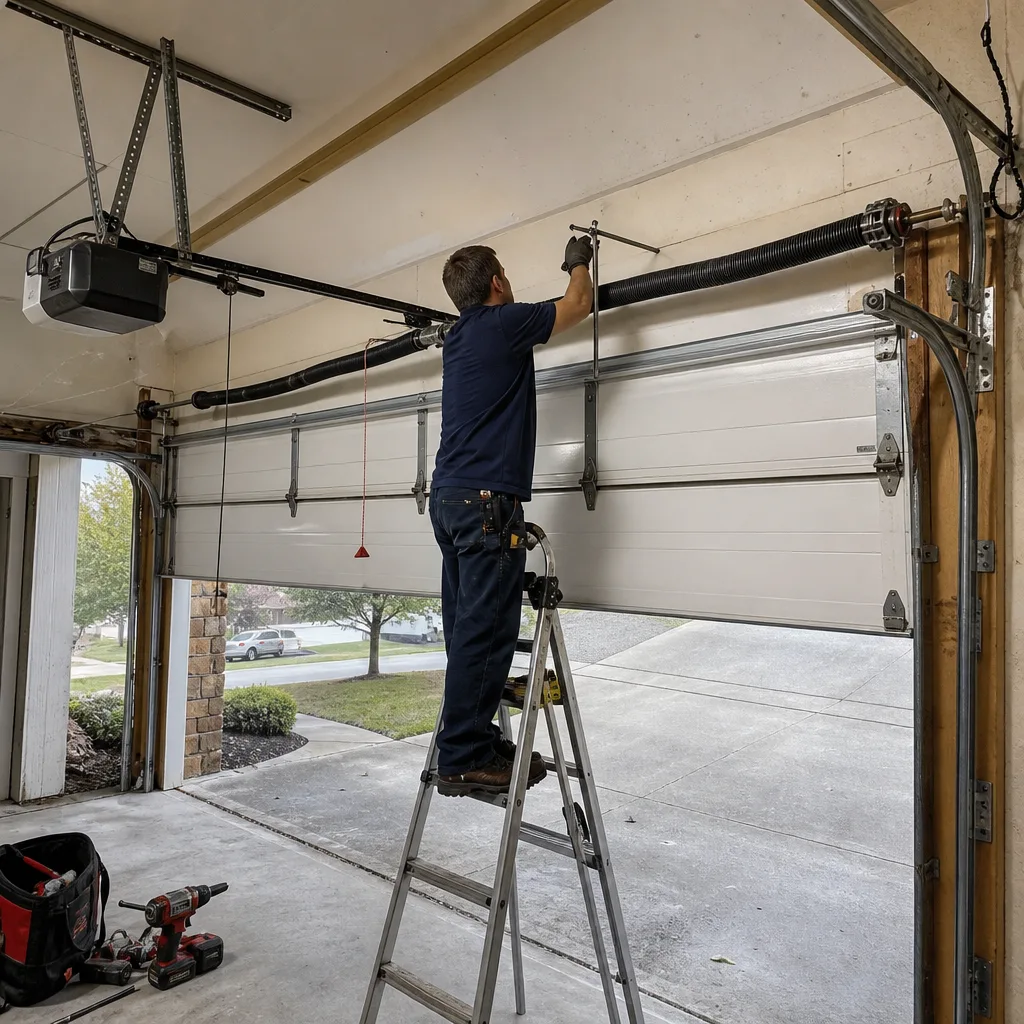
Every March, metro Atlanta turns yellow. Pine pollen counts in Johns Creek routinely exceed 3,000 grains per cubic meter during peak season, and that pollen doesn’t just settle on cars and patios. It works its way into the bottom weatherseal track of your garage door. The weatherseal is the rubber strip that runs along the bottom of the door. Its track is the channel that holds it in place. When pollen accumulates in that channel and gets compressed by the door’s repeated opening and closing, it forms a hard, caked layer that pushes the seal slightly away from the threshold. That creates an air gap - maybe an eighth of an inch - that lets conditioned air escape all summer and lets humid outdoor air in.
The fix is simple and takes about fifteen minutes:
- Open the door fully so the bottom panel is at eye level.
- Run a flathead screwdriver gently along the length of the weatherseal track to loosen caked pollen and debris.
- Wipe the track with a damp rag until no yellow residue transfers to the cloth.
- Check the seal itself for cracks, flattening, or brittleness. If the rubber has a memory - meaning it stays compressed rather than rebounding - it’s failing.
- Test the seal by closing the door on a dollar bill placed at three points along the width. The bill should resist a gentle pull at each point. If it slides out freely, the seal isn’t seating.
The done-right condition is simple: no visible pollen residue in the track and a seal that passes the dollar-bill test at all three points. If the seal fails that test, replacement weatherseal is a standard job - and it’s the kind of repair where a written price before work starts should be non-negotiable. For readers researching their options on garage door repair in Johns Creek, the weatherseal is one of the most common items we replace in early spring, right after the pollen peak.
This task matters more in Johns Creek than it would in most climates because our pollen season is front-loaded. By the time you notice a draft in June, the seal has been compromised for months. Catching it in March protects the entire cooling season.
Summer Humidity and Steel Panel Seams: Where Rust Actually Starts
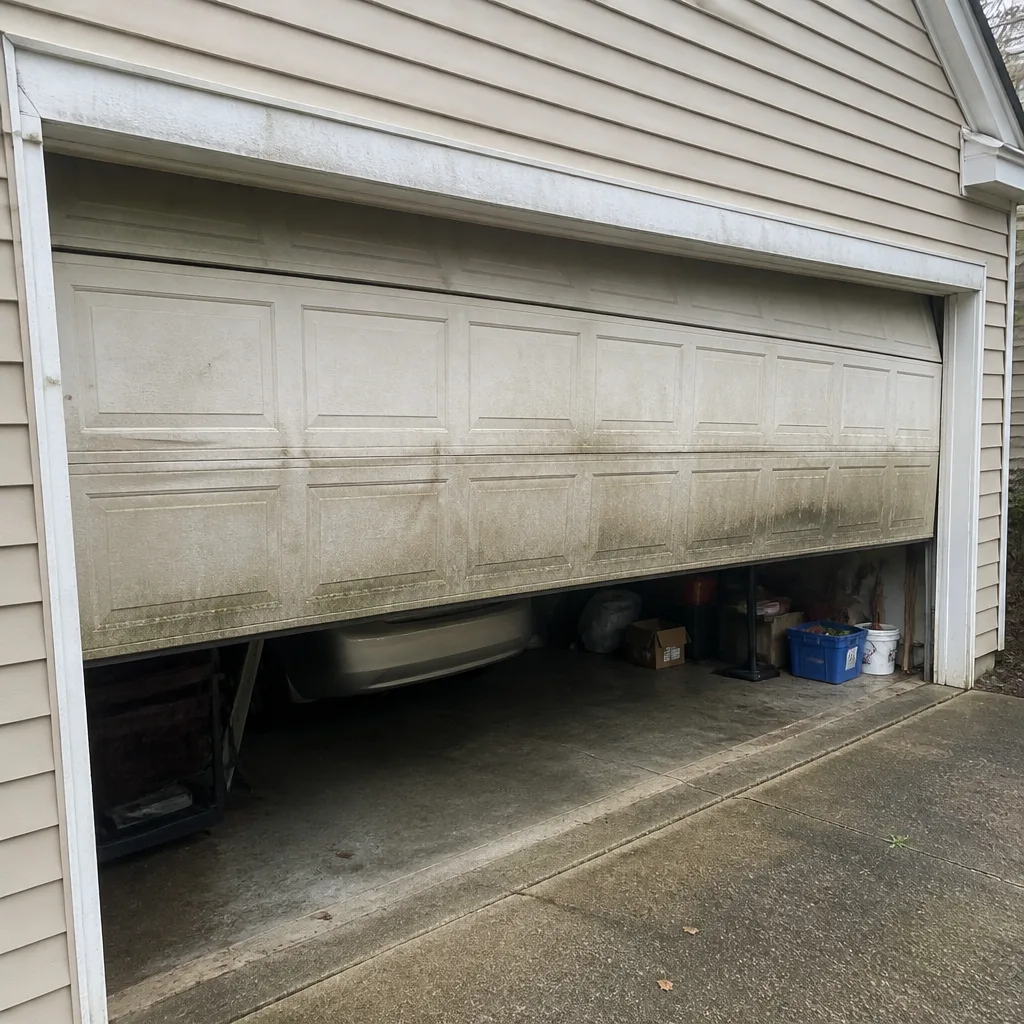
Steel garage door panels in Johns Creek begin rusting at the seams, not on the face. The face is protected by a factory-applied paint or powder coat. But every sectional door has seams where panels meet, and those seams create small gaps. When morning condensation forms on the panel surface, capillary action draws moisture into the seam. That water sits against the raw steel edge - usually unpainted - and initiates surface rust. From there, it spreads under the paint film, and by the time you see a blister on the panel face, the substrate is already compromised.
The places to check monthly during summer are the bottom seam of each panel, the areas around the handle hardware on the interior side, and the bottom corners of the lowest panel. Run your finger along these seams after a humid morning. If you feel paint bubbling or a rough, orange-tinted edge, you have early surface rust. At this stage, the fix is a rust-inhibiting primer touch-up, applied only after the area is dried and lightly sanded. The window to catch this before it penetrates to the substrate is typically two to three months of continuous exposure. Miss it, and the panel starts pitting - which becomes a replacement conversation.
There’s a local angle here. Johns Creek’s tree canopy keeps many garages shaded through midday, which sounds helpful but actually slows moisture evaporation. A door in direct sun dries quickly after morning condensation. A door under shade - common in neighborhoods like Medlock Bridge and Country Club of the South - stays damp longer. Those homeowners need to be checking panel seams a little more frequently, not less. If you spot early rust, documenting it with a photo helps you track whether it’s spreading. That’s the same principle we apply at Servo Garage Doors Johns Creek: photograph the failed component, then decide what it needs. A homeowner can do the same with a smartphone and a record of what the seam looked like last month.
For homeowners considering new doors, this is also where material choice matters. Steel doors with a thermally broken design perform better in humid climates because the interior and exterior skins don’t conduct condensation to each other. If you’re weighing garage door installation in Johns Creek, ask about thermal breaks and seam sealing. It’s a detail that matters more here than it does in thirty other states.
Summer Opener Performance: Why Your Chain-Drive Runs Hotter Than Its Duty Cycle Assumes
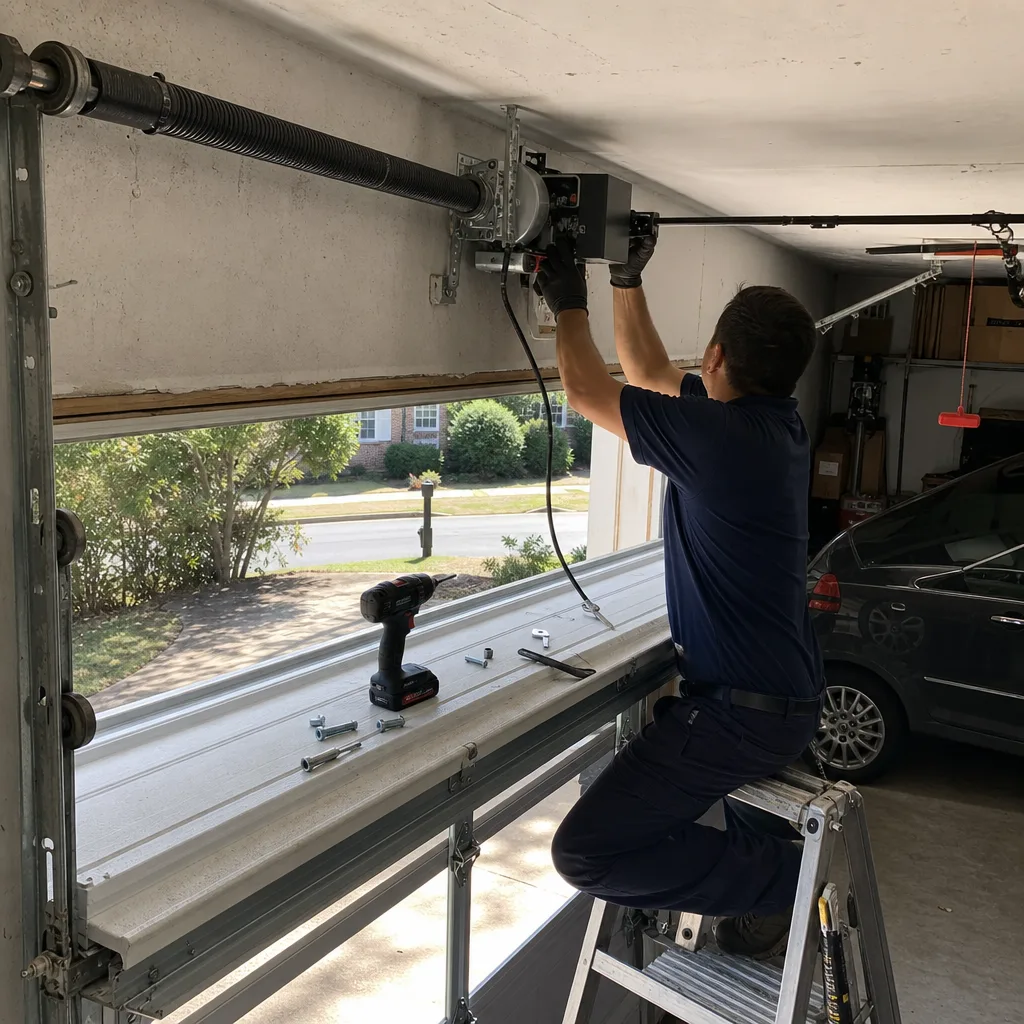
A chain-drive opener in a non-climate-controlled Johns Creek garage in August is operating in 95 to 105 degree ambient heat. The motor itself adds heat from operation. Combined, that pushes internal temperatures well above what the manufacturer’s duty cycle assumes. The duty cycle on most residential openers - the ratio of run time to cool-down time - is calculated for a 70-degree environment. Johnson County’s heat doesn’t follow that spec. The result is that your opener works harder than it was designed to, and the first component to complain is the thermal cutout switch.
The thermal cutout is a safety device that shuts the motor off when internal temperature exceeds safe limits. The symptoms are specific: the opener runs fine in the morning, stops responding in the mid-afternoon, and works again an hour after the sun goes down. That pattern is the opener telling you it’s overheating. Ignoring it doesn’t fix anything - every overheat cycle degrades the motor windings slightly. A few dozen cycles and the motor burns out permanently.
Here’s what to do before that happens:
- Check the opener’s chain tension in June. A loose chain forces the motor to work harder, generating more heat. The chain should sag no more than half an inch at the midpoint of the rail.
- Confirm the door is balanced. A door that’s heavy on one side makes the opener work against the full weight, not just the portion it was designed for. Disconnect the opener and lift the door manually to mid-height. It should stay put without drifting. If it falls or creeps upward, the springs need attention.
- Clean the opener’s ventilation slots. Dust and pollen accumulate on the motor housing and block airflow. A vacuum with a brush attachment once a month through summer is enough.
- Listen for changes in the motor’s sound. A struggling motor is louder, with a strained pitch. That’s the early warning before the thermal cutout starts tripping.
If your opener is already displaying thermal cutout symptoms, it’s time to get it looked at rather than wait. We carry replacement parts for LiftMaster, Chamberlain, and Genie models on the truck, and garage door opener repair in Johns Creek is one of our most frequent summer service calls - usually for exactly this heat-related failure pattern.
November Freeze Prep: Not Freeze Prevention - Single Hard Freeze Preparation
Johns Creek doesn’t get long freezes. It gets a handful of nights each winter where the temperature dips below 28 degrees for four to six hours. That’s not enough to freeze pipes or crack concrete, but it is enough to seize a garage door bottom bracket to the floor plate if conditions are right. The mechanism is simple: condensation or standing water on the threshold freezes, the bottom bracket sits in direct contact with it, and by morning the door is locked down. You hit the opener button, the opener strains against the resistance, and the emergency release gets yanked harder than it should - or the opener’s safety reversal kicks in and the door won’t budge.
The November task is aimed at that specific failure mode:
- Dry the threshold and the bottom bracket area completely. If there’s any visible moisture, wipe it away. Pet water bowls near the door in a garage are a common culprit.
- Check the weatherseal’s contact with the threshold. If it doesn’t sit flush, air gets under the door and brings moisture with it. Seal gaps before the first freeze.
- Apply a thin coat of silicone spray to the bottom bracket and the hinge points near the floor. This isn’t about lubrication as much as it is about water repellency. Silicone creates a barrier so condensation beads and rolls off instead of adhering.
- Test the opener’s force settings. A properly adjusted opener in Johns Creek winter should reverse with only light resistance - the kind that wouldn’t damage the door if it hit a patch of thin ice. If your opener fights hard against a manual pull, the force setting is too high.
The done-right condition: the threshold is dry, the seal sits flush, and the door opens and closes smoothly with no visible strain from the opener. This isn’t about making the door freeze-proof - nothing is freeze-proof if water is present. It’s about making sure the single hard freeze we do get doesn’t turn a minor weather event into a broken bracket or a burned-out opener gear.
The Month-by-Month Task Calendar: Tools, Time, and Done-Right Conditions
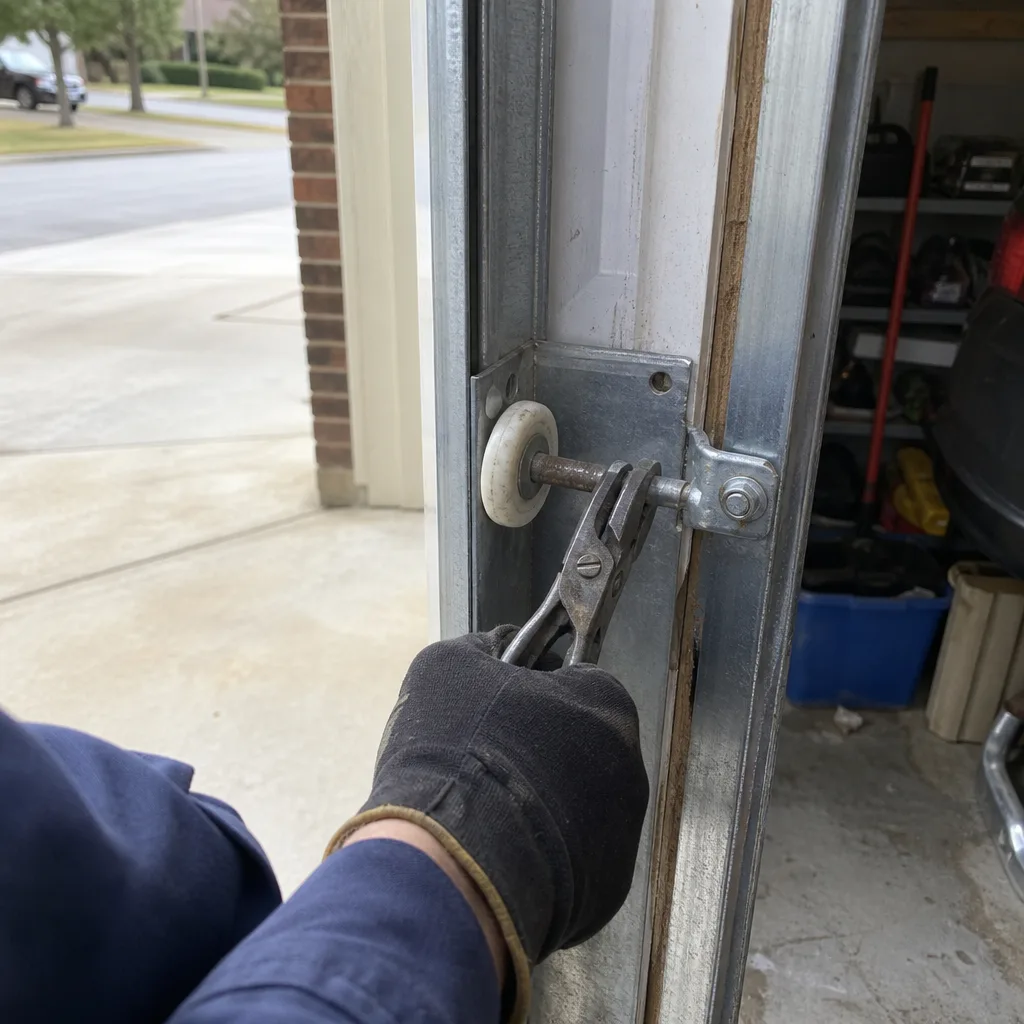
Here’s the complete year-round schedule, organized by month. Each task lists the tools required, the estimated time, and the specific condition that tells you the job was done correctly.
January
Task: Post-freeze inspection. After each overnight freeze, check the bottom bracket for ice adhesion before opening the door. If the door resists, don’t force it - pour a kettle of warm (not boiling) water along the threshold and wait five minutes.
Tools: Kettle, flashlight
Time: 5 minutes per check
Done right: Door opens without strain or grinding sounds after a freeze night.
February
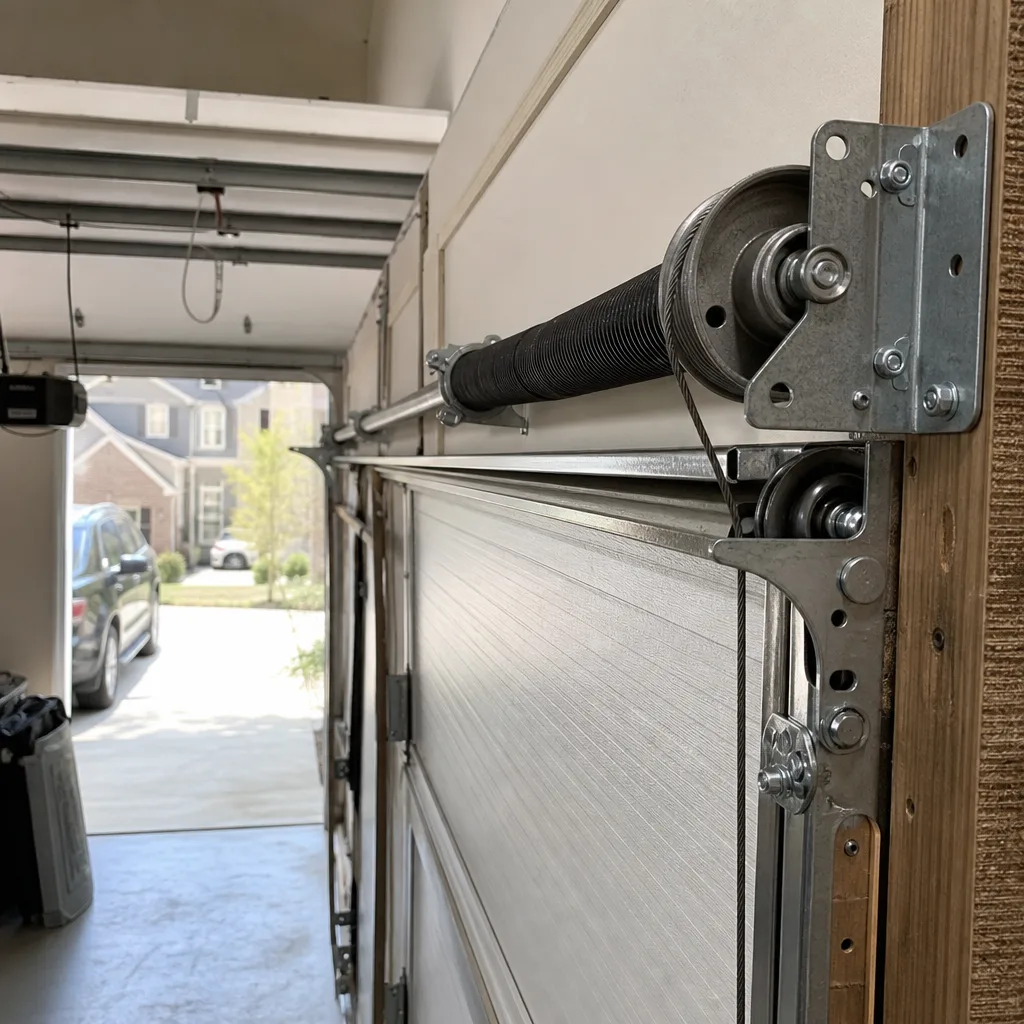
Task: Spring and cable visual inspection. With the door closed, inspect torsion springs for rust, gaps, or separation between coils. Check cables for fraying. Do not touch the springs - a broken torsion spring under tension is dangerous. Look only.
Tools: Flashlight
Time: 10 minutes
Done right: You can clearly see both springs, and neither shows visible gaps or rust pitting.
March
Task: Pollen cleanout of the weatherseal track, as described above.
Tools: Flathead screwdriver, damp rag, dollar bill
Time: 15 minutes
Done right: No visible pollen residue; seal passes the dollar-bill test at three points.
April
Task: Roller and hinge lubrication. Apply white lithium grease to all rollers, hinges, and the lock mechanism. Spray the torsion spring lightly with a lithium-based lubricant to prevent surface rust. Wipe excess.
Tools: White lithium grease spray, clean rag
Time: 20 minutes
Done right: The door operates noticeably quieter, and there’s no visible grease dripping onto the door face.
May
Task: Balance test. Disconnect the opener with the release handle and lift the door manually to mid-height. It should stay put. If it drifts down more than two inches, the springs are weakening and should be professionally evaluated.
Tools: None (manual test)
Time: 5 minutes
Done right: Door holds position at mid-height without drifting more than two inches.
June
Task: First panel seam inspection and opener chain tension check. Run fingers along panel seams for paint bubbling. Check chain sag - no more than half an inch at the rail midpoint.
Tools: Tape measure or ruler
Time: 15 minutes
Done right: No new paint blisters since last inspection; chain sag within spec.
July
Task: Second panel seam inspection, focused on the bottom two panels. This is peak condensation season. Also vacuum opener ventilation slots.
Tools: Vacuum with brush attachment
Time: 15 minutes
Done right: Seam edges are dry to the touch at mid-morning; opener vents are clear of dust.
August
Task: Photo documentation. Take clear photos of both panel seams, the weatherseal condition, and the spring coils. This creates a record so you can detect change over time.
Tools: Smartphone
Time: 10 minutes
Done right: You have a dated photo record you can compare against next year.
September
Task: Track and roller alignment. With the door closed, check that the tracks on both sides are parallel and the rollers sit fully inside the track channel. Listen for scraping or rattling during operation.
Tools: Flashlight
Time: 10 minutes
Done right: Door travels smoothly with no scraping or side-to-side movement.
October
Task: Weatherseal condition check. The summer heat degrades rubber. Look for cracks, flattening, or shrinkage at the corners. Test with the dollar bill again if you haven’t since March.
Tools: Dollar bill
Time: 10 minutes
Done right: Seal is pliable, seats flush, and passes the dollar test.
November
Task: Freeze prep as described above - dry the threshold, apply silicone to bottom brackets, test force settings.
Tools: Silicone spray, clean rag
Time: 20 minutes
Done right: Threshold is dry, brackets are coated, opener reverses with light pressure.
December
Task: Full-service review. Walk through the entire door system: springs, cables, rollers, hinges, tracks, seal, opener. Note anything that’s changed. If anything looks concerning, schedule a professional inspection before winter fully sets in.
Tools: Flashlight, notebook
Time: 30 minutes
Done right: You have a written list of observations and a clear sense of what needs attention next year.
Common Mistakes to Avoid
- Skipping the March pollen cleanout. It’s the single most common miss among Johns Creek homeowners, and it directly reduces cooling efficiency all summer while accelerating weatherseal wear.
- Using WD-40 on rollers and hinges. WD-40 is a penetrant, not a lubricant. It strips existing grease and leaves metal surfaces drier than they were. Use white lithium grease instead.
- Lubricating nylon rollers. Nylon rollers have sealed bearings and shouldn’t be greased. Greasing the nylon wheel itself attracts dust that accelerates wear. Grease only the metal hinge points.
- Ignoring thermal cutout symptoms. An opener that “takes a break” every hot afternoon is not fine. It’s degrading. The fix is cheaper now than the motor replacement later.
- Forcing a frozen door open. If the bottom bracket is iced to the threshold, yanking on the door stresses the cables, the bracket, and the opener gear. Warm water and patience are the correct tools.
- “Inspecting” torsion springs by touch. Torsion springs are under hundreds of pounds of tension. A broken spring can release that energy violently. Visual inspection from a few feet away is the only homeowner-level inspection that’s safe.
- Assuming a balance test isn’t necessary because the opener “handles it.” The opener is not designed to compensate for weak springs indefinitely. A door that’s out of balance burns the opener out years early.
When to Call a Professional
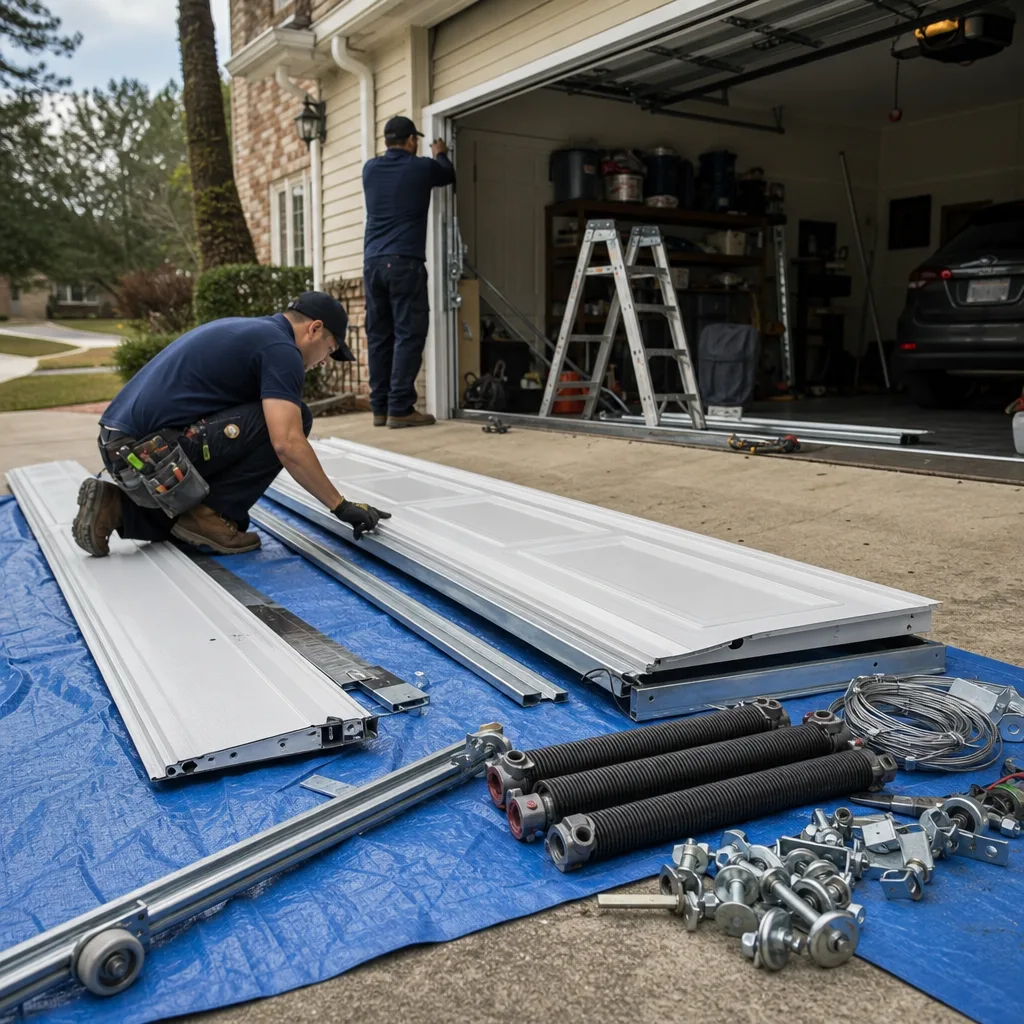
Some things are homeowner maintenance. Some things are not. If your torsion spring shows a visible break or gap, stop using the door and call a professional immediately - that spring is under dangerous tension and no amount of YouTube research makes it a DIY job. If your balance test reveals significant drift, that’s a spring issue, not an adjustment issue. If your opener is repeatedly tripping thermal cutout even after you’ve cleaned the vents and checked the chain, the motor is failing. And if you see rust that has progressed beyond a surface stain into pitting, the panel needs a professional assessment. Servo Garage Doors Johns Creek offers free estimates in Johns Creek - call (470) 380-0642. You’ll get a written price and a written scope before any work starts, per Clause 1 of The Haven Standard, and a documented photo record of what was found and what was done when the technician leaves.
Frequently Asked Questions
Most DIY seasonal maintenance costs under $30 for supplies - a can of white lithium grease, silicone spray, and rags - but see our Garage Door Cost Breakdown for professional service pricing. If you’d rather have a professional perform a full inspection and tune-up, expect to pay between $89 and $149 in the Johns Creek market, depending on what’s included. The price should be quoted in writing before any work begins. Call (470) 380-0642 for an exact quote - estimates are free.
In Johns Creek’s humidity, every six months is the right interval. Lubrication in April and October covers the two stress seasons: summer heat and winter’s brief freezes. If your garage is non-climate-controlled and you park a hot car in it daily, you can extend the interval to every four months during summer without harm.
Yes, visually. Stand a few feet back with a flashlight and look for rust pitting, separation between coils, or an obvious break. Do not touch the springs, do not attempt to adjust them, and do not loosen or tighten anything connected to them. If you see a gap in the spring coil, the spring is broken and needs professional replacement.
That’s thermal cutout - the opener’s internal safety switch tripping because the motor is running hotter than its design spec. In a Johns Creek summer, non-climate-controlled garages routinely reach 100 degrees, and a chain-drive opener working against that ambient heat can trip the cutout. Persistent cutout cycling burns motor windings. Cleaning the vents, checking the chain, and verifying door balance are the first steps; if those don’t resolve it, the opener needs professional evaluation.
Routine maintenance - lubrication, cleaning, inspection - requires no permit anywhere in Johns Creek. A door replacement or structural modification (like converting a garage to living space) may fall under city permitting requirements. For a straightforward swap of a sectional door on an existing opening, no permit is typically required, but it’s worth confirming with the city’s building department if your HOA or community has additional rules.
A standard torsion spring rated for 10,000 cycles lasts six to eight years in a typical Johns Creek home, where the door opens three to four times daily and humidity accelerates coil surface rust. Higher-cycle springs (20,000 cycles or more) can last twice that long. If your spring is seven years or older, have it inspected before it fails unexpectedly - a proactive replacement costs less than an emergency call at 2 a.m.
The Bottom Line
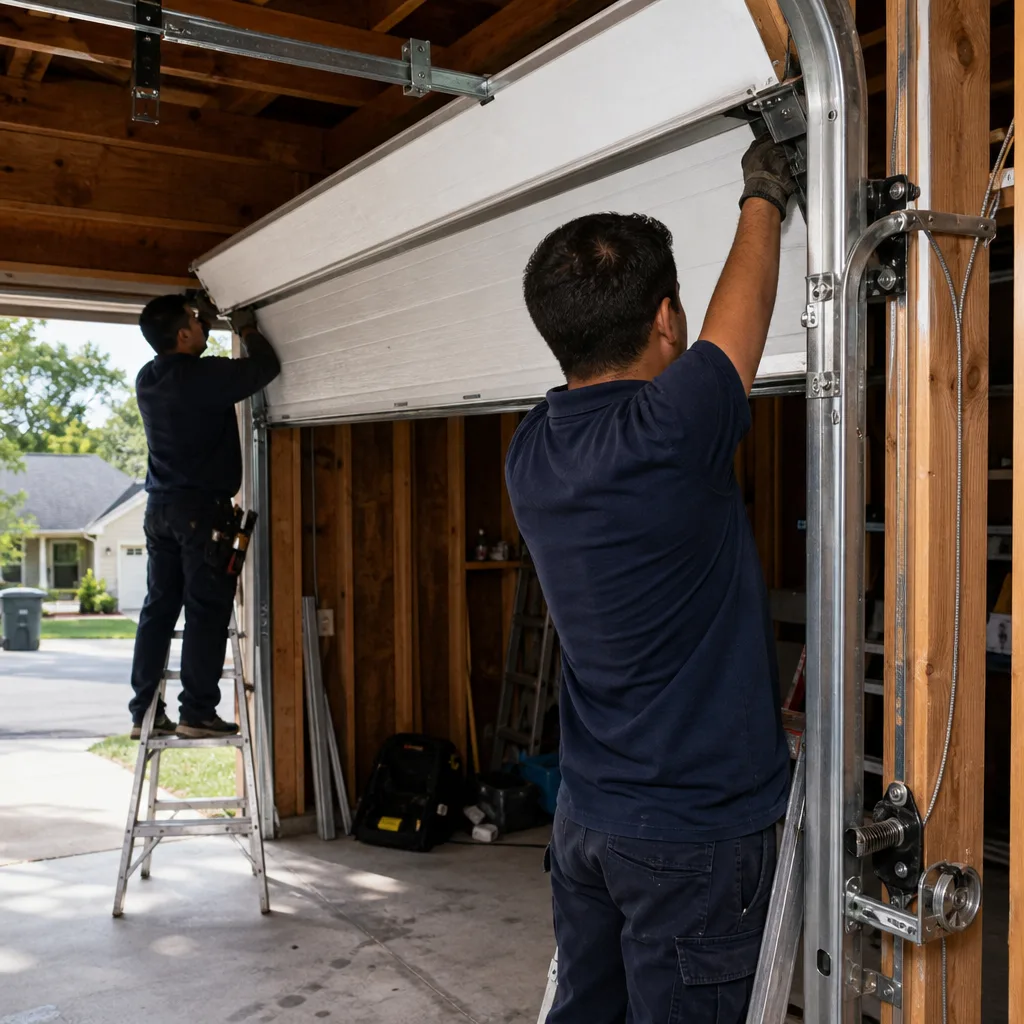
Johns Creek’s garage doors face a specific set of stressors: relentless humidity, concentrated pollen, and a handful of hard freezes that exploit whatever damage the other two have already done. The maintenance schedule above addresses each stressor at the moment it becomes relevant, and you can find more guides & resources on our blog. Fifteen minutes in March protects your cooling bill all summer. Ten minutes in November prevents a January morning where the door won’t budge. A monthly seam check catches rust before it’s a panel replacement. Most of this is homeowner work. When it’s not - broken springs, failing openers, rust that’s gone too deep - get a professional who writes the price down before touching the door. That standard exists in Johns Creek, and it’s the one we’ve worked to since 2015.
Written by Marcus Deller, Owner at Servo Garage Doors Johns Creek, serving Johns Creek since 2015.